Coastal tar balls perplex Pacific Northwest officials

Add Axios as your preferred source to
see more of our stories on Google.
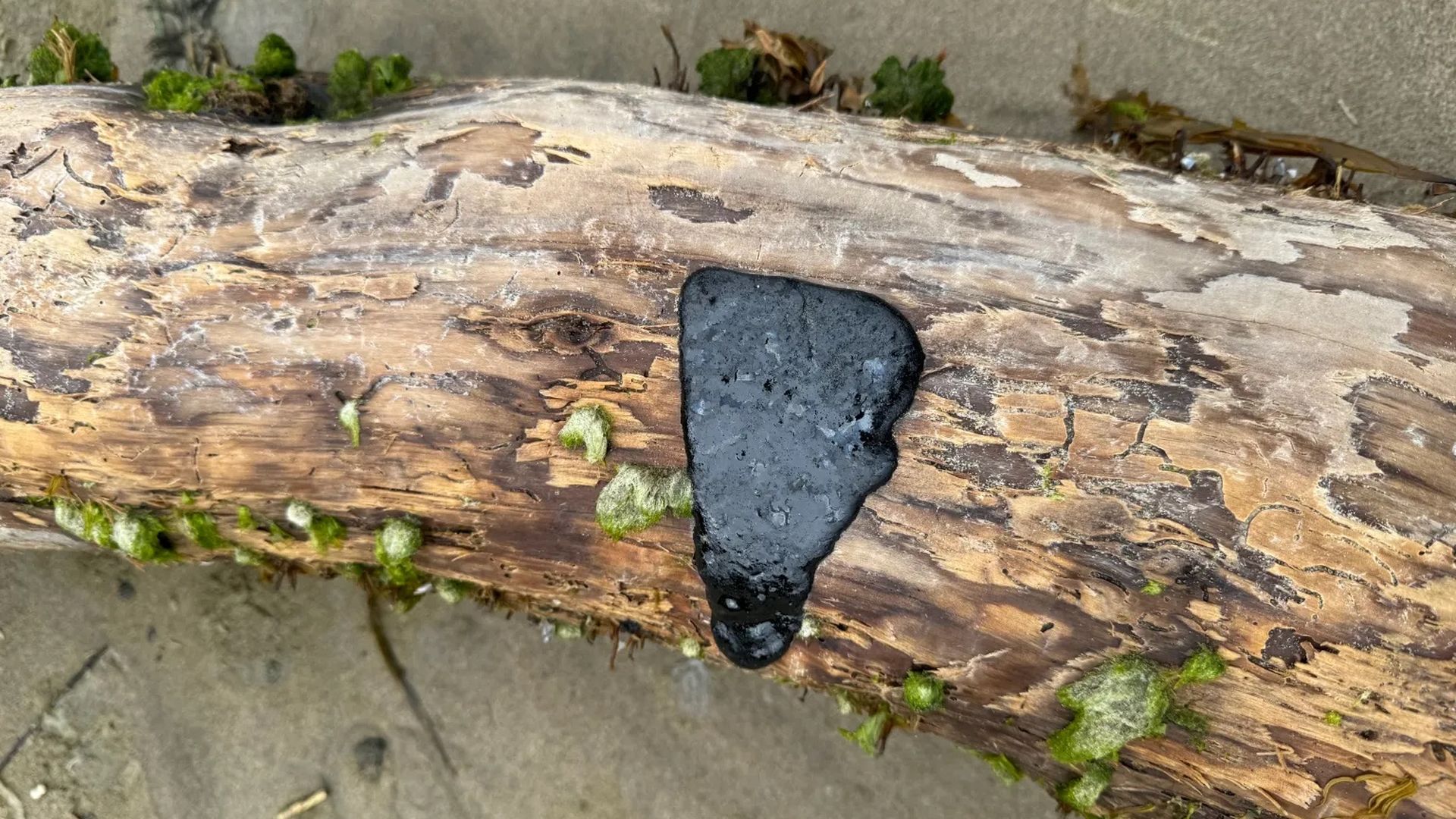
A tar patty found near Cannon Beach last month. Photo: Courtesy of Oregon Department of Environmental Quality
Environmental officials in the Pacific Northwest are still trying to figure out why tar balls — dark, sticky, petroleum-based patties — have been found along parts of the Oregon and Washington coast in recent weeks.
Why it matters: As the summer recreation season starts to pick up, federal and state officials are warning beachgoers to avoid contact with tar balls they may encounter on the coast, which can be harmful to some humans and pets.
The latest: Several agencies — including Oregon's departments of fish and wildlife and environmental quality — have been working to clean up shorelines between Waldport and Moclips, Washington, where sightings of tar balls were first reported on May 19.
- Beaches with sensitive habitats have top priority, including snowy plover bird management areas. Nearly a dozen birds, mostly common murres, were found covered in oil, three of which later died.
- Three other birds were successfully rehabilitated by Focus Wildlife, a Washington-based oiled wildlife service provider, and relocated off the coast of Anacortes.
What they're saying: The joint emergency response may soon disband, though, as new reports have slowed and an obvious source has yet to be found, Dylan Darling, a spokesperson for the state's Department of Environmental Quality, told Axios.
- This is despite laboratory analyses and multiple overflights by the U.S. Coast Guard for signs of possible pollution.
Context: Tar balls are not new to coastlines across the country. When oil spills from a vessel or seeps from a natural, underwater well, it sits atop the water and is weathered by winds and waves, creating a thick, sticky emulsion.
- Tar balls range in size — as small as a coin or as large as a pancake — and have a crunchy outer layer and gooey insides, like a marshmallow, per the National Oceanic and Atmospheric Administration.
- They can travel hundreds of miles, picking up sand and debris along the way.
- Scientists have been unable to recreate a weathered tar ball in the lab.
The intrigue: Tar washing ashore is common in places with natural offshore oil seeps like California, but it is rare in Oregon and Washington, due to the ecological makeup of the region, per Darling.
- "When it does occur, it is usually in association with vessels," he said, which is perplexing considering no vessel-related oil incident has been reported near the affected areas.
Threat level: Tar balls are not immediately toxic, but anyone coming in contact with them should wash with soap or degreasing dishwashing detergent and water.