Portland's cold streaks are getting shorter


Add Axios as your preferred source to
see more of our stories on Google.
If this winter's weather has felt more erratic than usual, it's not just in your head.
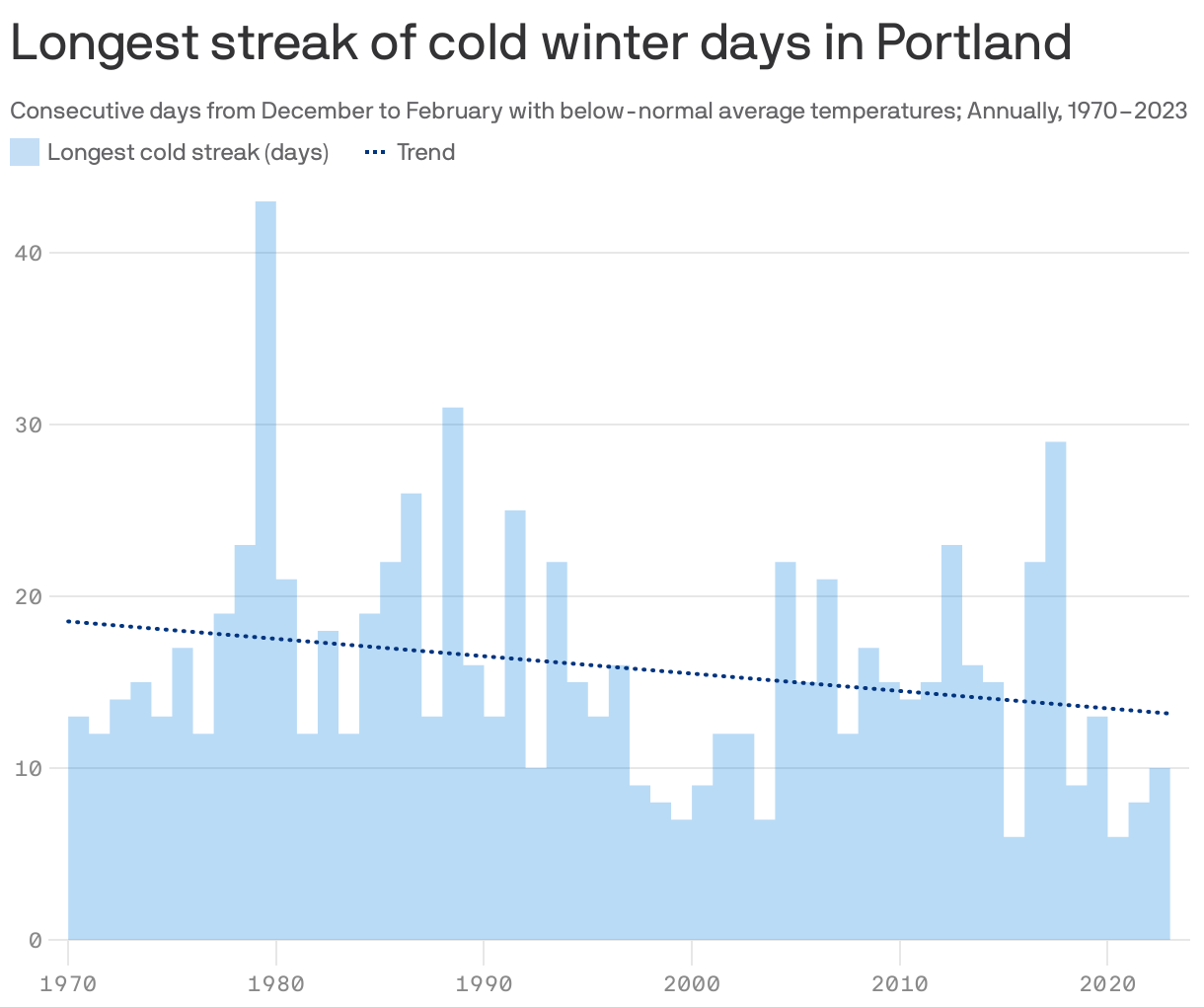
By the numbers: Cold weather streaks in Portland have been getting five days shorter on average since 1970, according to an analysis from Climate Central, a climate research and communications nonprofit.
Why it matters: Lengthy periods of chilly weather are key for some farmers and winter sports lovers, building essential snowpacks and more.
Yes, but: On average, cold streaks are largely getting shorter, according to Climate Central.
- Prolonged cold snaps still happen — for example, Portland's longest streak in 2023 lasted 14 days.
Flashback: In the last 50 years, the Rose City experienced its biggest cold snap overall in 1979, which lasted 43 days.
- That was the year of a January freezing rain storm known as the "silver thaw."
- "Transportation, electric power, communications and all normal work routine broke down in most of Portland," especially on the east side, an article published in 2010 said.
What they did: Climate Central defines a "winter cold streak" as "at least two consecutive December-February days with average temperatures below the 1991-2020 winter normal average temperature" at a given location.
What they found: "Winter's longest cold streaks have gotten shorter since 1970 in 98% of 240 U.S. locations analyzed," per the report.
- "Nearly half of the locations analyzed ... have seen their longest winter cold streaks shrink by at least one week since 1970."