How Parkrose teens helped win $25,000 to fix a street

Add Axios as your preferred source to
see more of our stories on Google.
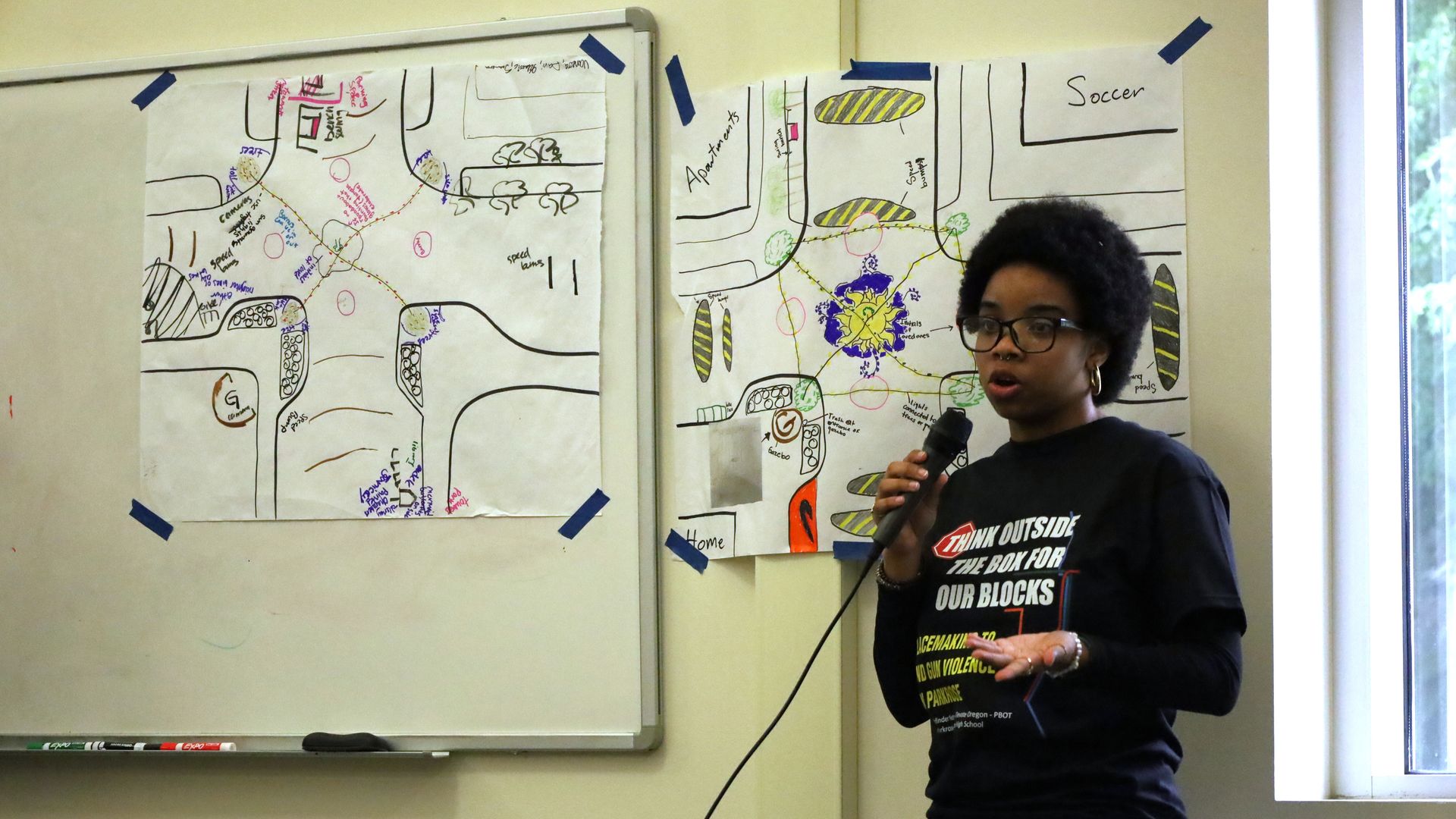
Parkrose High School senior Vanessa Mederos explaining her team's ideas to a group of school and city officials earlier this year. Photo: Courtesy of Kiley Yuthas, The Pathfinder Network
Portland teenagers tapped to help redesign a dangerous intersection near their school say they now think differently about ways to make their community safer — and not just from traffic.
Why it matters: The Argay neighborhood project introduced Parkrose High School students to crime prevention through environmental design — an approach Portland has long used in public housing and more recently in the Mt. Scott neighborhood to slow traffic and reduce drive-by shootings.
Context: Liz Bella is a junior who told Axios she felt "adrenaline and panic" after she and her brother once witnessed a drive-by shooting in the area.
- "But when we made it home and we're talking to my mom, I was just like all right, that's 'just another Tuesday.'"
- With the design project, "I really wanted to focus on changing that" sense that shootings are normal, she said.
Flashback: Attempts to lower crime by changing how public spaces are laid out, lit, painted or planted date back to the 1970s.
- The current project in Parkrose grew out of a neighborhood youth program and two school-based clubs, PATHfinder and Elevate Oregon.
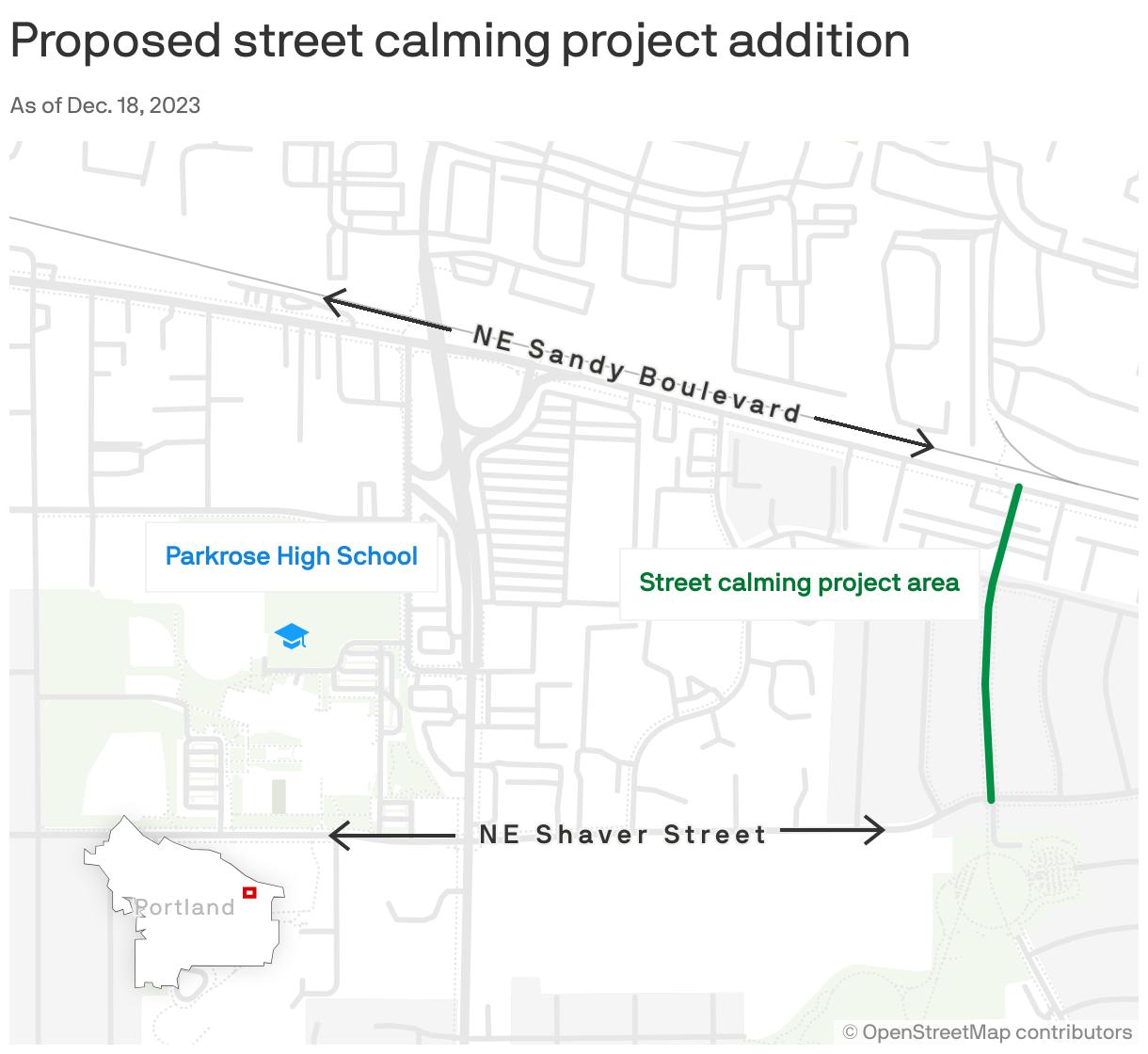
Threat level: According to Portland Police data, more than 100 shootings have taken place over the past five years in the Argay neighborhood — at least a dozen within a block of the project, including three homicides.
What they did: Students applied to join a 15-person cohort for two months of weekly after-school sessions where they heard from traffic engineers, design experts and people directly affected by gun violence.
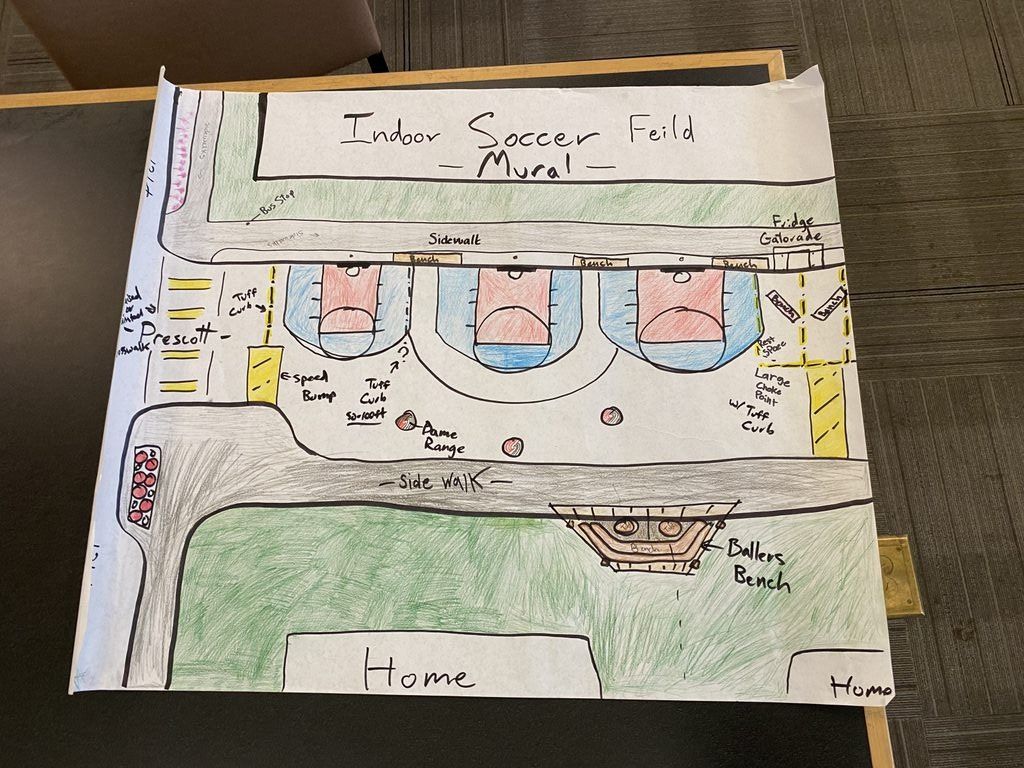
- They came up with ideas ranging from adding speed bumps, concrete islands and basketball court lines in the street to installing benches and bushes that attract butterflies.
What they're saying: Parkrose senior Vanessa Mederos' team designed a mural in the middle of the intersection that included the initials of neighbors impacted by violence.
- Junior Kai Salazar said her team added a spot to pick up free books or hygiene supplies and a place to dispose of needles, which people who use them for drugs leave "on the streets because they have nowhere else," she said.
Meanwhile, "I found it interesting how tiny details" like roundabouts and speed bumps "can make a big impact" on driving speed, said Raheem Andrews-Johnson, a sophomore.
- His group wants to paint basketball courts on a section of the street.
Reality check: Street design "does have an impact" on behavior, Barry Davidson, a co-founder and board member of the Crime Prevention Through Environmental Design Association, told Axios.
- Portland transportation officials say it can discourage drag racing and people doing "doughnuts" in their cars, both of which they cite as a problem in the project area.
Yes but: "By itself it's never going to do enough" to stop crimes like shootings, Davidson says. The point is showing "that somebody actually cares about that space" which can lead to people using it, displacing certain criminal activity.
By the numbers: The Portland Bureau of Transportation paid students to work on the project — $20 per hour — and won a $25,000 grant to offset the estimated $100,000 cost to implement a redesign.
What's next: Transportation officials hope to finalize plans after more community input and start building next spring, folding in at least some of the students' ideas.