Invasive mussels threaten the Columbia River

Add Axios as your preferred source to
see more of our stories on Google.
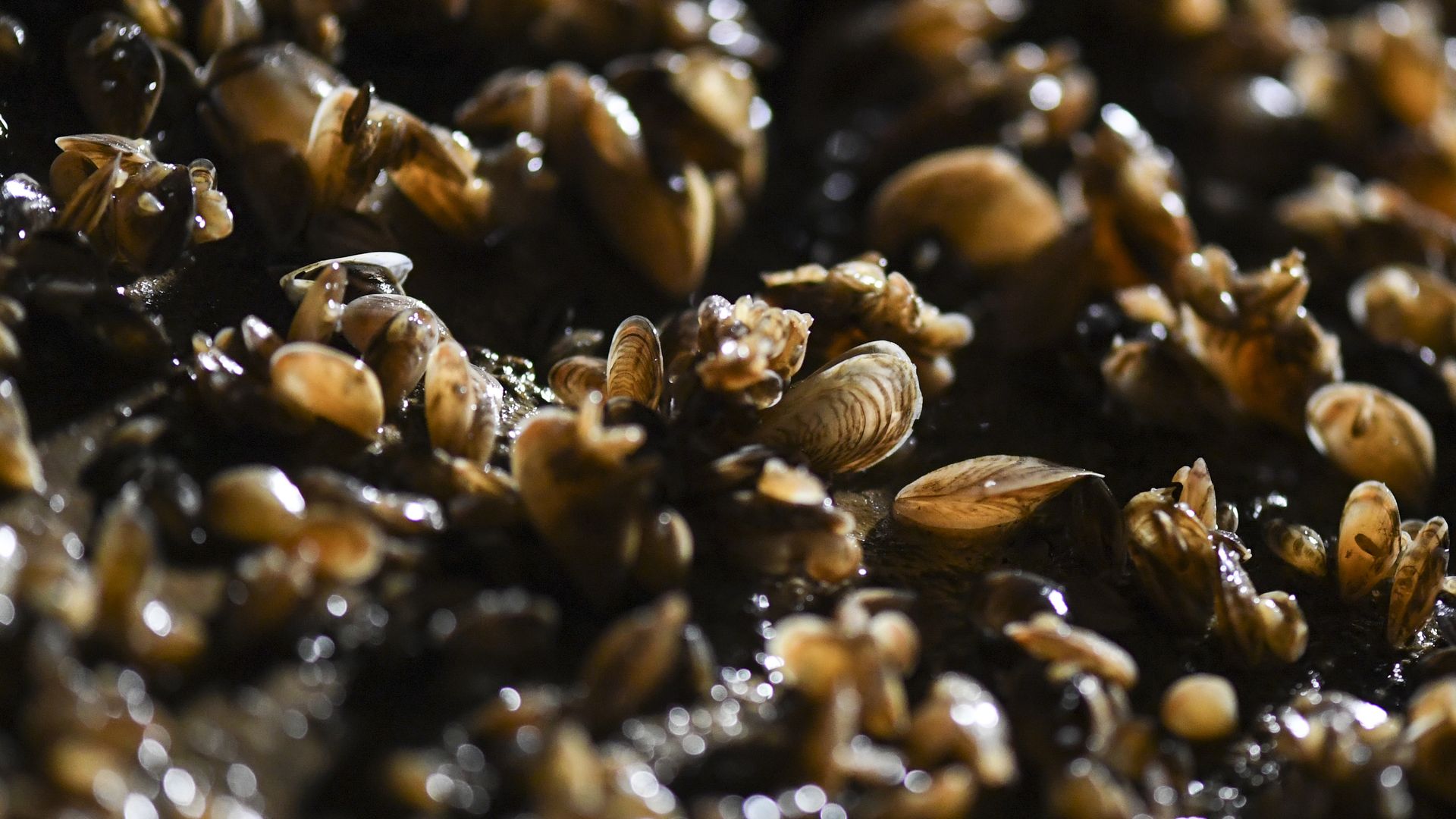
Quagga mussels. Photo: Patrick Seeger/picture alliance via Getty Images
Invasive mussels were recently detected near Oregon's border with Idaho, setting off alarm bells for conservationists and state wildlife agencies who fear the freshwater bivalves could spread through the Columbia River Basin.
Why it matters: The Columbia is one of the only major riverways in the country without an established population of zebra and quagga mussels, which severely alter a body of water's ecosystem by monopolizing food supply and clogging irrigation systems.
- Once these mussels are found they are nearly impossible to remove, Sam Chan, vice chair of The Oregon Invasive Species Council (OISC), tells Axios, and they could cost taxpayers millions of dollars to mitigate. They also could threaten recreation in one of the region's most popular rivers.
State of play: In September, the mussels were found in the Snake River near Twin Falls, Idaho — about 50 miles from Oregon.
- Idaho's State Department of Agriculture deployed 45,000 gallons of copper-based pesticide to eradicate the bivalves throughout a 16-mile stretch of river — also killing thousands of fish.
How it works: Zebra and quagga mussels secrete a protein that can attach to any surface — hard or soft — allowing them to reproduce at a fast rate and high density because they can layer upon each other.
- Mussels produce up to two generations of offspring in a year, Chan said, and quickly become the dominant species by filter-feeding on plankton, taking away a vital food source from other organisms (like insects and invertebrates that fish feed on).
What's happening: Oregon invests millions into its system for boat inspections (one of the main ways mussels move seamlessly through freshwater), but not all sites are manned 24/7, which could prove problematic in the future because some are easily skirted in off-hours.
- Since the Idaho discovery, cross-state coordinated inspections, waterway surveys and outreach have all ramped up — but more could be done to stop future spread of the bivalves, according to a recent U.S. Government Accountability Office report.
- Inspection station data is not shared across state agencies in the Pacific Northwest in a timely or consistent manner, the report found, suggesting the Army Corps of Engineers needs to develop a strategic plan to prevent infestations.
However, researchers say funding for invasive species prevention is limited in Oregon and believe more is needed if the state plans to adequately fight off this invasive threat, at least for now, Catherine de Rivera, co-director at Portland State University's Center for Lakes and Reservoirs, tells Axios.
- "To take next steps beyond the staffing of our check stations just requires lots more money," she said.
The bottom line: Both Chan and de Rivera expressed optimism about early invasive mussels detection and outreach efforts — the OISC is planning to take lawmakers on field trips this spring to inform them of the situation — but believe whether mussels make it here is a matter of when not if.
- "Hopefully we can push that many years down the road," de Rivera said.