Portland is a national electric vehicle hot spot


Add Axios as your preferred source to
see more of our stories on Google.
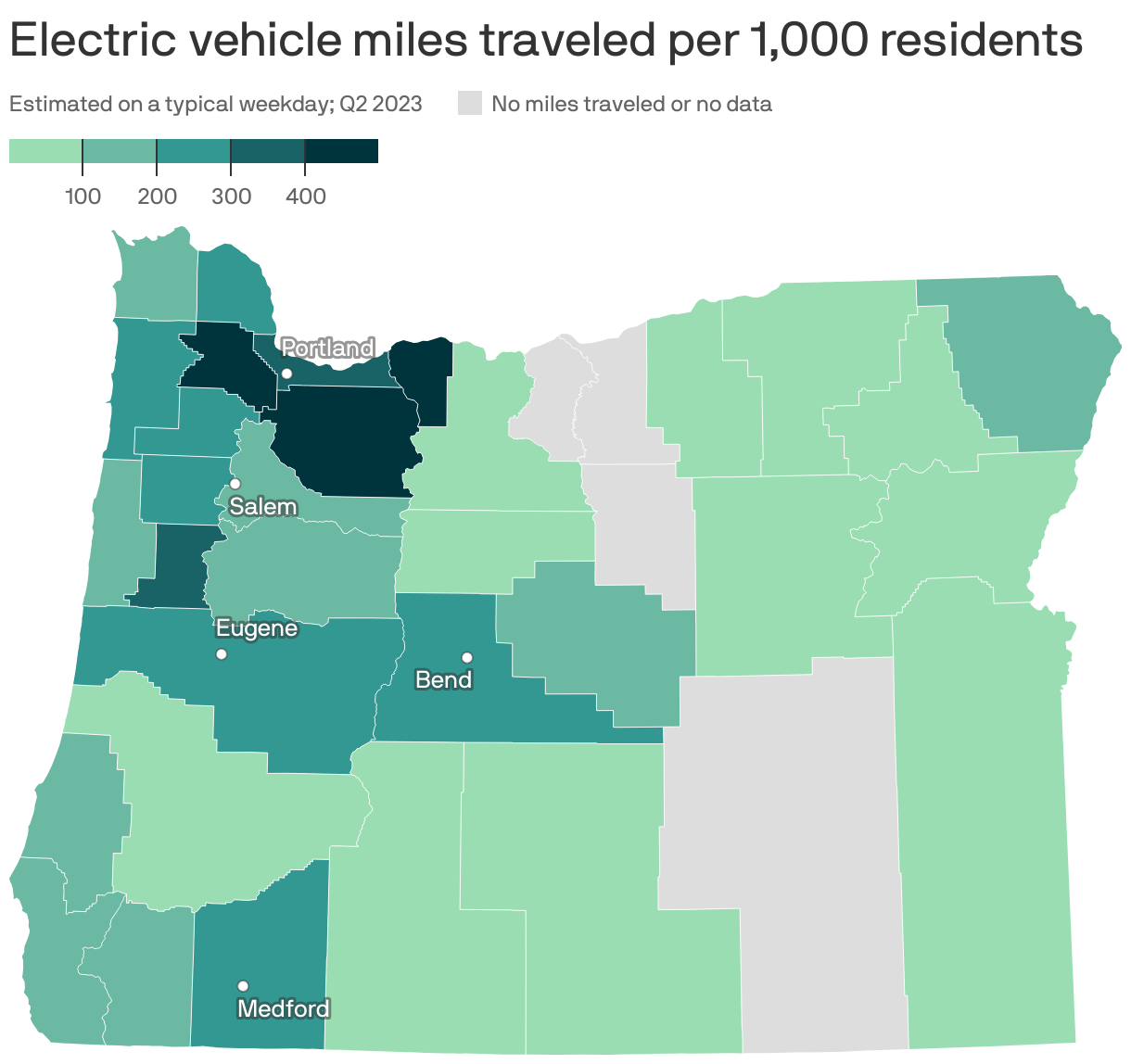
Electric vehicle use in the Portland metro area stands out not only within Oregon, but nationally.
Driving the news: Clackamas County led the state with the most estimated EV miles driven — 493 per 1,000 residents on a typical weekday.
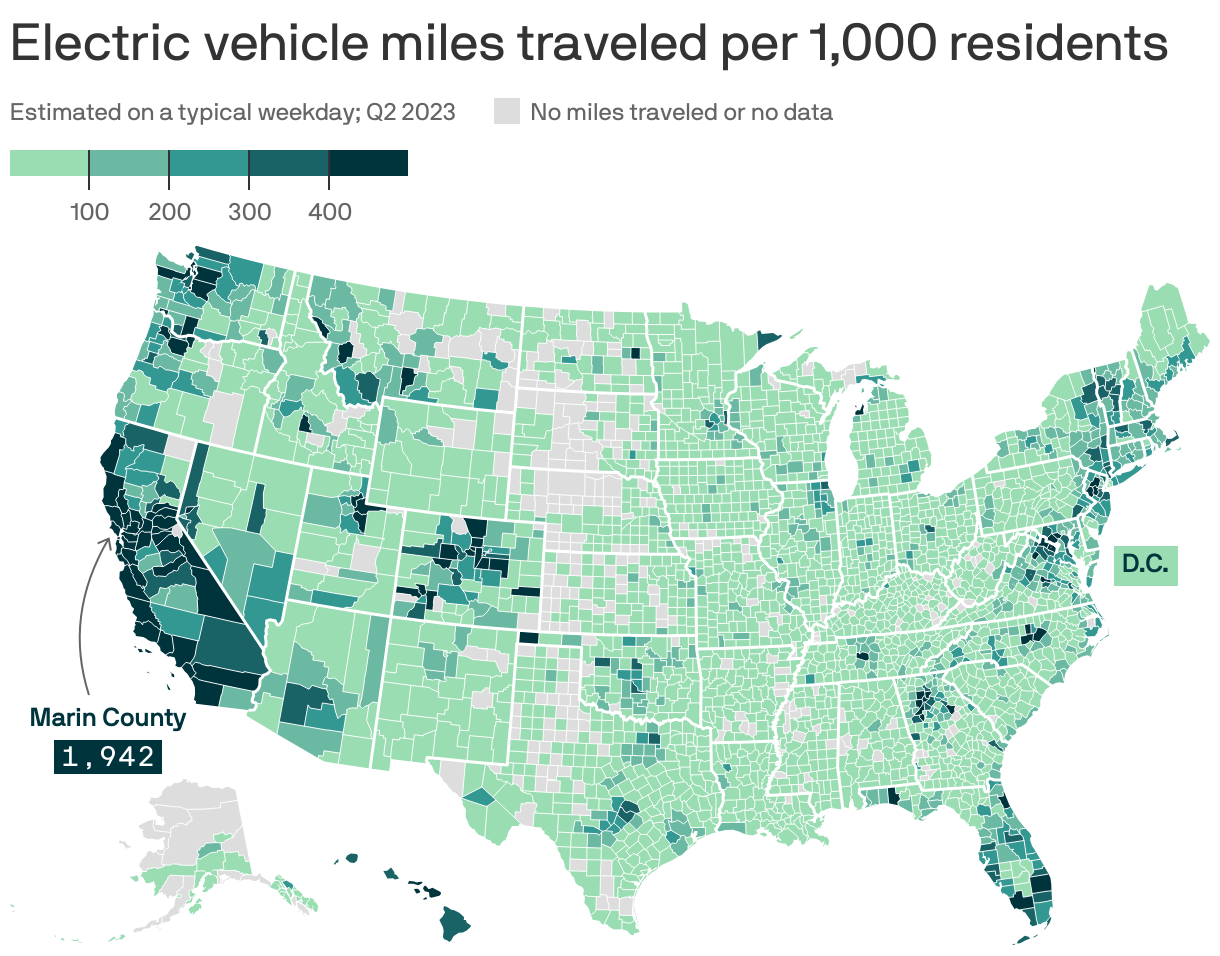
- That's far above the estimated national average of 227 miles per 1,000 residents.
Why it matters: Tracking EV growth helps show what bumps in the road remain for broad adoption, which experts say is a key step to fighting climate change — including its effects in Oregon.
How it works: The data from mobility analytics platform Replica estimates EV miles driven per capita in the second quarter of 2023.
- It's based on anonymized mobile device info, roadside sensors, transit agencies and more.
By the numbers: Hood River County in the Columbia River Gorge racked up Oregon's second-highest share of EV miles driven with 432 per 1,000 residents, followed by Washington County with 419.
- Benton County, west of Eugene, and Multnomah County — where people drive the fewest miles per capita overall out of all Oregon counties — followed in fourth and fifth places.
Across the Columbia, Clark and Skamania counties helped push the greater metro region's EV use still higher. Both are among Washington's top 10 counties for EV miles.
Zoom out: California counties led the country for EV use, taking six of the top 10 spots.
- Colorado counties made up the rest of the top 10.
Between the lines: Registrations of battery-only EVs have been steadily rising across Oregon.
- Still, transportation made up 35% of Oregon's greenhouse gas emissions in 2021 — a higher proportion than nationally or globally.
Flashback: Last December, the state mandated that all new vehicles be "zero-emission" by 2035.
- But a number of reports suggest Oregon is not meeting carbon-reduction goals overall, including the share of registered EVs.
The big picture: Electric car sales are growing across the country, but remain short of automakers' hopes as some potential buyers continue to be skeptical about their range, performance and cost.
Zoom in: The desire to switch to an electric car is affected in part by the availability of charging stations, which have been concentrated in wealthier, urban areas.
What we're watching: Oregon secured $52 million in federal money to build out its current network of charging stations over the next five years.
- The first projects are slated for I-205, I-5 south of Eugene, and Highway 97 which runs from Klamath Falls through Bend to the Columbia.
Pro tip: If you're considering an EV, federal tax credits are still available.
- Oregon's rebate program ran out of money due to high demand but is expected to reopen next year.