Portland-area small farmers adapt to new business models

Add Axios as your preferred source to
see more of our stories on Google.
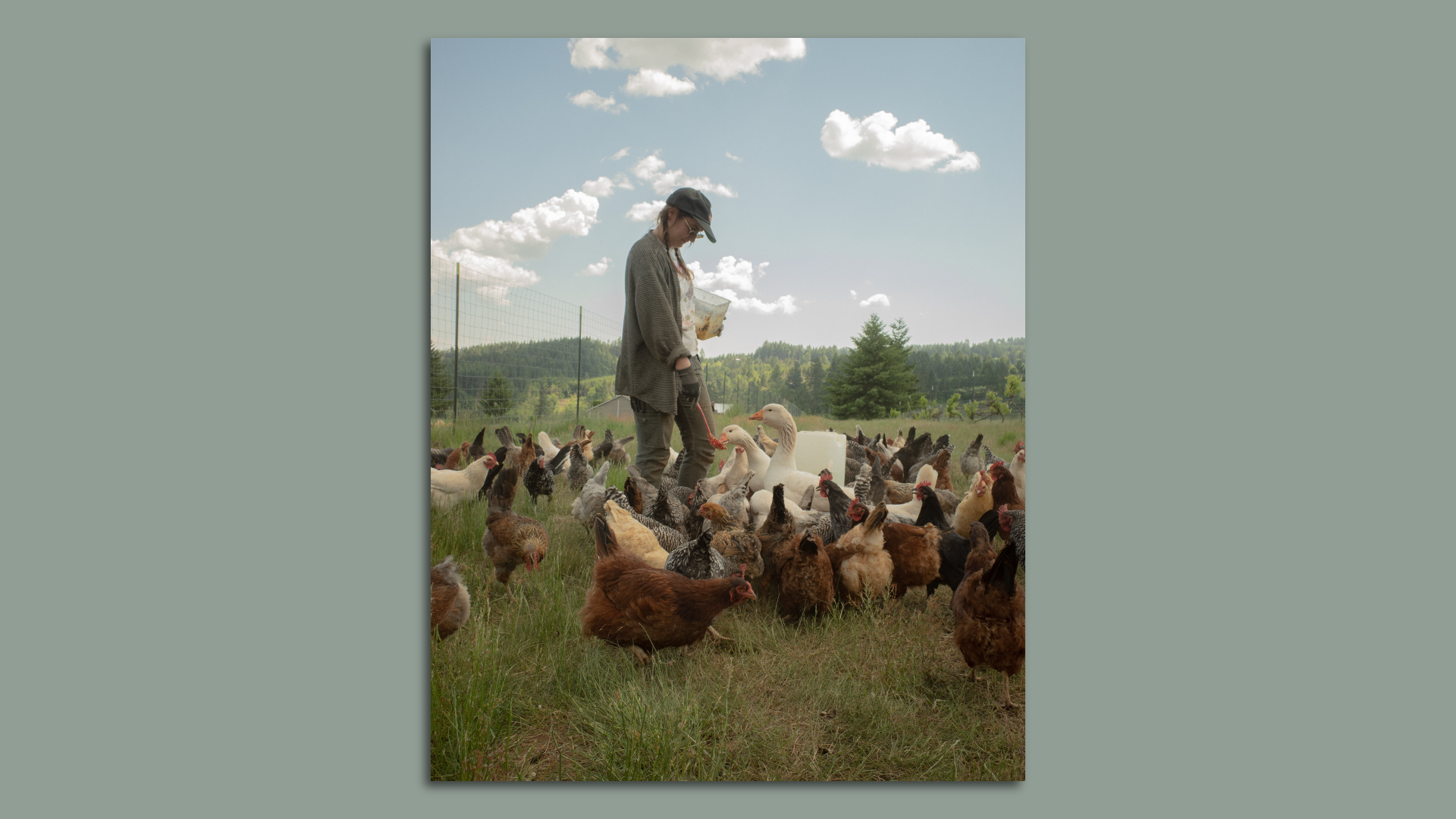
The flock of chickens and ducks at Foglight Farms. Photo: Courtesy of Tatiana Godoy Betancur
Farmers across the Portland area are adapting their businesses as the agricultural industry rapidly evolves alongside a shaky economy and stubborn inflation.
Why it matters: Oregon is home to nearly 37,000 farms, and many of the state's smaller startup farms do not rely on crop harvests to pay the bills, but instead have alternative business models to stay sustainable.
What they're saying: "If the goal was making money, farming is not the thing to do," Prentice Onayemi, co-owner of Foglight Farms in Hillsboro, tells Axios. "It's a bad idea if your goal is profitability; you have to be doing it for other reasons."
The numbers: Access to stable income outside of agriculture is vital for small farmers. According to a study from the University of Missouri, 82% of farms in 2019 relied on off-farm income to cover day-to-day living expenses, retirement and health care benefits.
Meanwhile, Onayemi's financial consulting job helps sustain Foglight's operations, and the farm often acts as the backdrop for his clients' off-site events.
- "The other thing is being pretty ambitious when it comes to value-added products," he said, adding that the farm grows standard regional vegetables but also has fruit trees and shrubs, and Onayemi cans jams and produces baked goods to sell.
The intrigue: Of Oregon's 37,000 farms, 23,500 took in less than $10,000 in 2020, per Oregon Department of Agriculture statistics.
Separately, while farmers markets can be vital for farmers to maintain direct connection with customers and promote their brand, others are opting out.
- "Markets are really saturated right now, at least here in Portland," Jennifer Rose Marie Serna, owner of Wapato Island Farm on Sauvie Island, tells Axios. "It's not really worth it anymore for us to go."
Of note: Instead of figuring out how to attend over 30 farmers markets in the city, Serna has been selling her herbal apothecary remedies directly to consumers via Wapato's website and connecting with others interested in starting their own venture.
- Within the next year, due to overwhelming demand she's received, Serna plans to launch a skill-sharing residency, in which she'll teach eager wannabe farmers how to grow food, save seeds and study the soil to ensure high-calorie production.
The bottom line: Serna and Onayemi's passion for farming doesn't come from monetary benefits, but something much more simple.
- "We believe that it's an honor to serve the land, and everybody needs to eat; that is not a niche," Serna said, adding that if anyone has a curiosity around being connected to food, they can make it a reality.