Mosquito season lingers in Phoenix after warm, wet fall

Add Axios as your preferred source to
see more of our stories on Google.
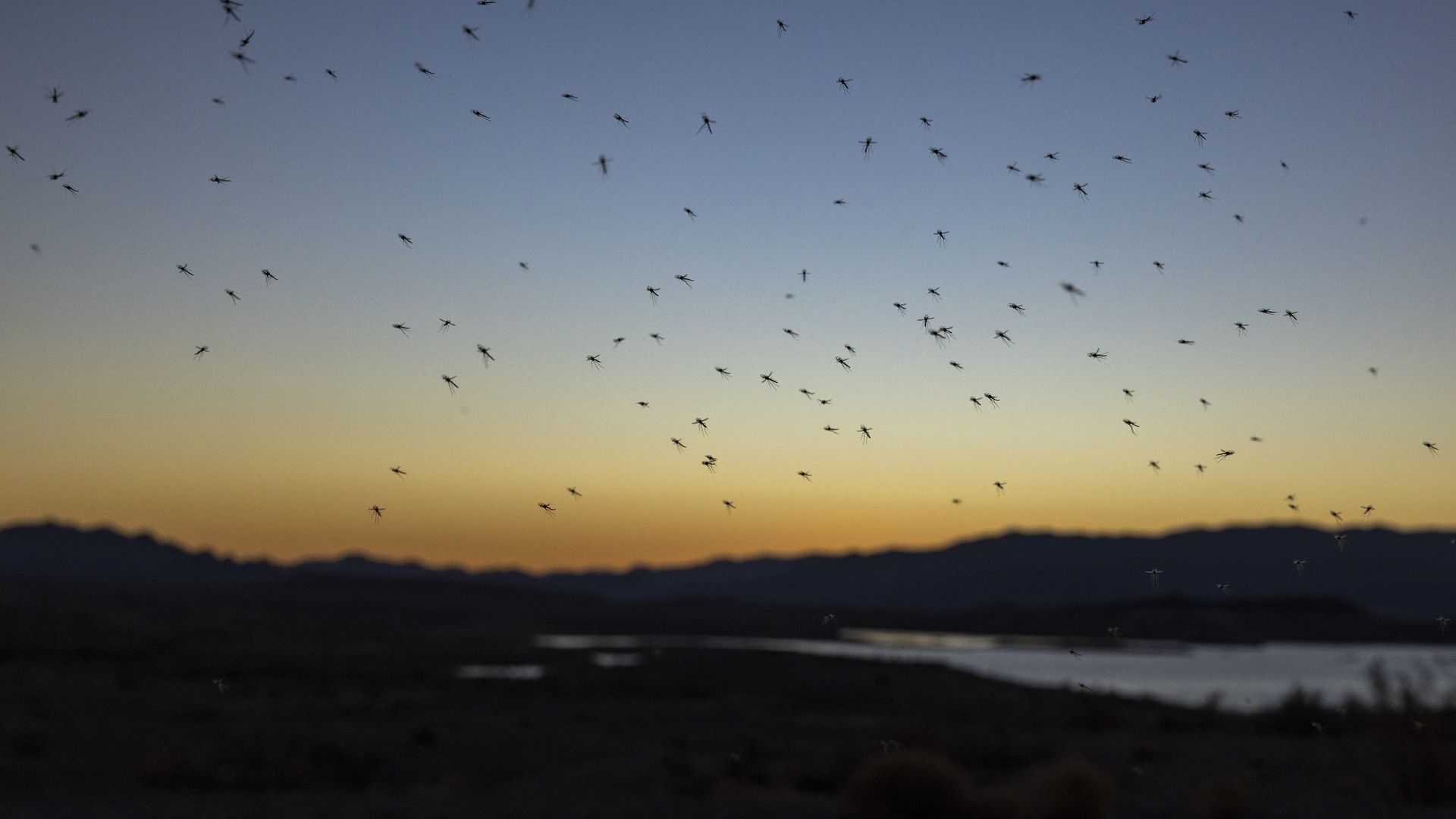
Mosquitoes fly over Lake Mead National Recreation Area. Photo: David McNew/Getty Images
Warm weather and rain have kept our least-favorite summertime pests active for longer than usual — and our mosquito season may get worse before it gets better.
Why it matters: In addition to being annoying and itch-inducing, mosquitoes can carry diseases like West Nile Virus that can cause serious illness or death.
State of play: The Valley saw atypical rainstorms in late September and October, which delivered more than 5 inches of rain — a critical ingredient in mosquito breeding.
- Meanwhile, October and November temperatures have stayed above average, which has allowed skeeter eggs to keep hatching, Maricopa County vector control division manager John Townsend told Axios.
The Valley has two types of mosquitoes: Daytime biters and nighttime biters, Townsend said.
Zoom in: People complain more about the daytime insects (also called floodwater mosquitoes) that disrupt bike rides and afternoon strolls, but this type does not typically carry diseases, according to Townsend.
- Plus, their larvae won't hatch once overnight temperatures consistently stay in the 50s, so our days with them are numbered.
Yes, but: The eggs don't die, they just go dormant until the weather warms up in the spring.
The other side: The nighttime biters, or Culex mosquitoes, are the ones that pass along West Nile and can cause other ailments.
- Their eggs will keep hatching throughout the winter unless they freeze, something that rarely happens in Phoenix, per Townsend.
- Their development process will, however, slow down in the winter, taking weeks to reach maturity instead of days.
Threat level: Maricopa County has reported double the number of West Nile cases (55) compared to all of last year (21) and this week reported its first case of St. Louis Encephalitis Virus, a less-common but similarly dangerous mosquito-borne disease.
- Cases are notoriously underreported since only about 20% of people infected develop symptoms, according to Melissa Kretschmer, the county's investigations epidemiology supervisor for vector-borne disease. For each reported case, there are likely 140 to 250 additional infections.
- Seven people have died of West Nile in Maricopa County this year, per the county's public health department.
Between the lines: The only way to minimize your risk of these diseases is to prevent mosquito bites.
- Dump out standing water, scrub dishes where dormant eggs may be hiding, wear repellent and check window screens for holes, Kretschmer suggests.
What we're watching: This weekend's forecast calls for rain, which may lead to one more major hatchout of daytime biters, Townsend warned.
- Luckily, the rain also likely will bring cooler temperatures, so this could be our last battle with the floodwater variety, he said.
The bottom line: The Valley will get an itch reprieve soon, but residents should remain vigilant year-round.