How water-loving mosquitoes thrive in metro Phoenix

Add Axios as your preferred source to
see more of our stories on Google.
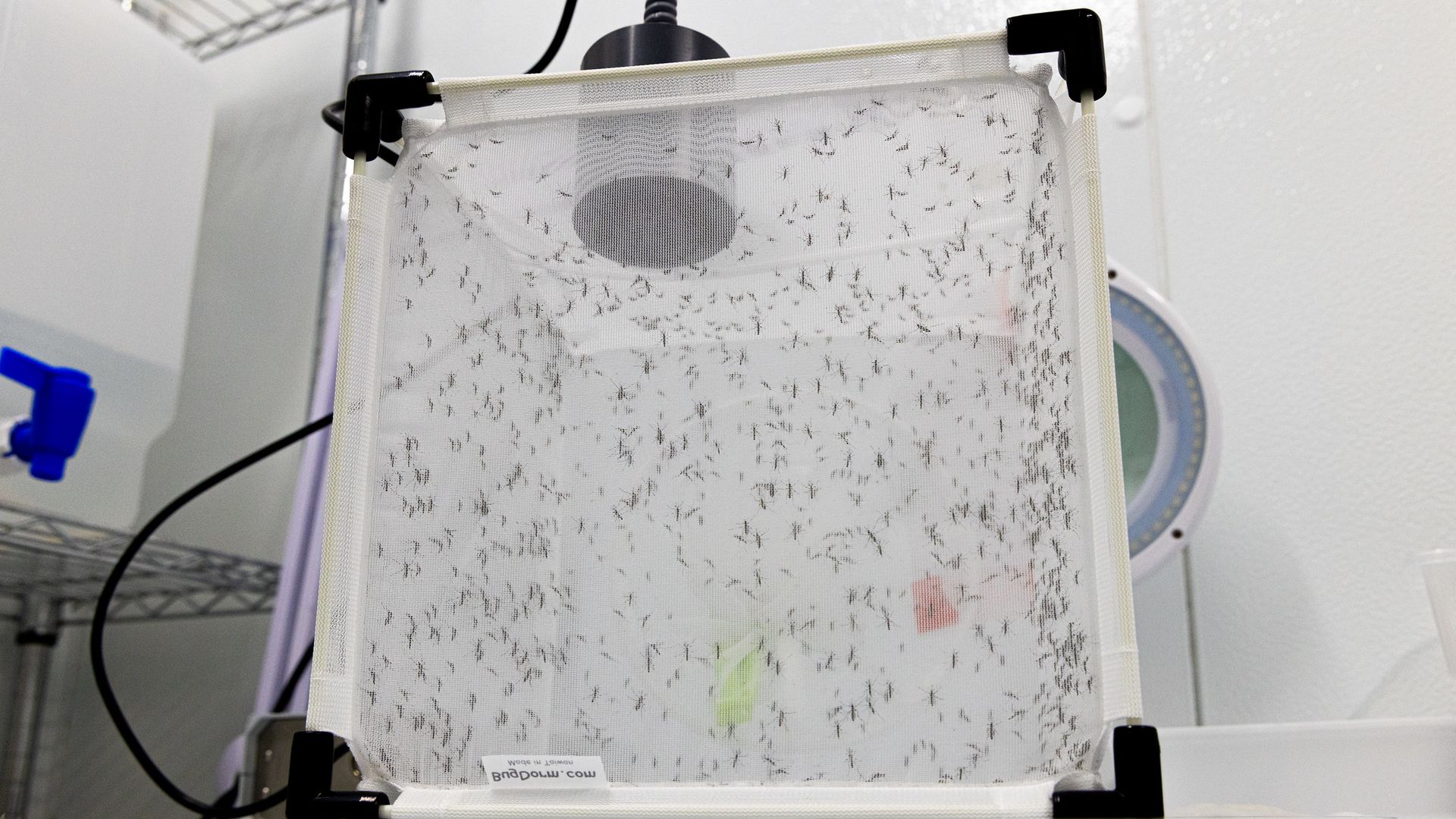
Mosquitoes inside ASU's $2.5 million insectary. Photo: Courtesy of Meghan Finnerty at ASU
Mosquitoes need water to breed, making Arizona's dry climate an unlikely place for them to enjoy.
- Yes, but: Anyone who lives here will tell you that's not stopped the pesky insects from finding ways to survive — and thrive — in the Valley.
Why it matters: Female mosquitoes — they're the ones that suck our blood and leave us with painful, itchy bumps — are the most deadly creatures on the planet.
- They're responsible for 700,000 global deaths each year because they transmit viruses like West Nile, malaria, dengue and Zika.
Zoom in: In 2021, Maricopa County had its largest West Nile outbreak. More than half of all cases recorded in the U.S. were recorded here.
- Last November, the county reported its first case of locally acquired dengue virus.
How it works: They breed in overwatered flowerpots, pools, birdbaths and other small containers that catch water.
The good news: We have two of the country's foremost mosquito experts in our community.
- Husband-and-wife researchers Silvie Huijben and Krijn Paaijmans are professors at ASU's School of Life Sciences.
The latest: Last year, ASU opened a $2.5 million lab where Huijben, Paaijmans and others work with live mosquitoes.
- The researchers are studying how mosquitoes adapt to different climates and how the insects and malaria parasites have evolved to resist insecticides.
- Currently, they're working exclusively with local mosquitoes but plan to bring in tropical species soon.
Of note: Huijben tells us there are double doors, air curtains and other protocols to make sure none of the sneaky bloodsuckers leave the lab.
What's next: Huijben and ASU professor Mina Johnson are developing a game for middle school students to encourage them to take photos of suspected mosquito breeding habitats and win the title of "mosquito hunter."
- Paaijmans and his team are designing barriers that emit electric fields to keep mosquitoes away.
Be smart: Local public health officials recommend using an EPA-registered repellent while outdoors, especially between dusk and dawn. Wear long-sleeve shirts, long pants and socks, especially in areas known to have mosquitoes.
- Use this checklist to identify any mosquito breeding grounds in your yard.
By the numbers: As of mid-August, Maricopa County Vector Control had identified 150 mosquitoes carrying West Nile so far this year. The county deploys 800 mosquito traps every week to monitor areas with high mosquito activity.
- The county health department has recorded 65 West Nile cases in humans and six deaths.