Five years later: How COVID changed Arizona

Add Axios as your preferred source to
see more of our stories on Google.
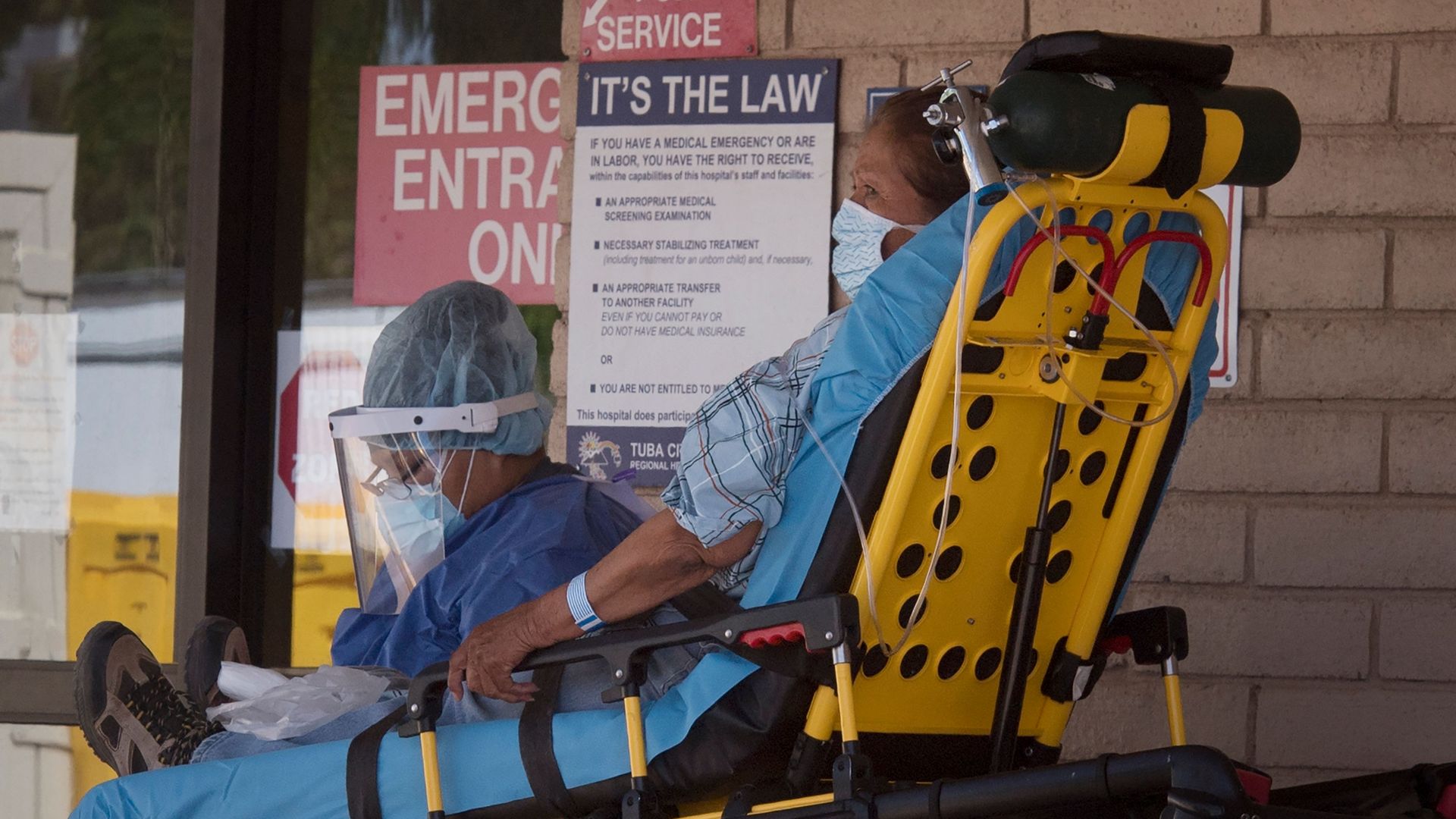
A patient is taken from an ambulance to the emergency room of a hospital in Tuba City on May 24, 2020, during a curfew on the Navajo Nation that aimed to curb the COVID pandemic. Photo: Mark Ralston/AFP via Getty Images
Five years ago Tuesday, former Arizona Gov. Doug Ducey declared a state of emergency in response to a growing number of COVID-19 cases in the state.
Why it matters: It was the beginning of what would be a years-long public health and political battle, the ramifications of which are still felt today.
The big picture: Arizona saw more than 2 million COVID cases and 29,000 deaths by the time Ducey ended the emergency order on March 31, 2022.
- The state had the highest death rate in the country after adjusting for age and comorbidities, per a 2023 analysis in The Lancet.
- Arizona's death rate was about the same as the world's hardest-hit countries — Russia, Bulgaria and Peru — per the report.
Flash forward: Arizona continues to report COVID cases, but the likelihood of hospitalization or death has decreased dramatically since vaccines became widely available in 2021.
Yes, but: COVID-era policies continue to have profound effects on Arizona health care, education, real estate and more.
🎒 Student success: Arizona students fell behind during the pandemic and have failed to catch up, student achievement data has shown.
- All Arizona schools ceased in-person learning for at least a few months in 2020 — though many stayed remote for much longer.
- The recent National Assessment of Educational Progress found student reading scores continued to fall last year, with only about a quarter of Arizona fourth- and eighth-graders proficient in reading.
💉 Vaccine hesitancy: A nationwide surge in skepticism over medical advice — particularly related to vaccine safety — has led more people to opt out of routine vaccines for their children.
- The number of Arizona kindergarten students with vaccine exemptions increased from 5.5% in 2020 to 8.5% last year, per the CDC.
- This is of particular concern as a Texas county with low MMR vaccination rates deals with a measles outbreak.
💻 Remote work: In 2019, about 8% of Phoenix residents worked from home, according to the U.S. Census Bureau. That changed overnight in March 2020, and remote work continues to be popular.
- According to the latest data, nearly 20% of Phoenix workers were still clocking in from home as of 2023.
- What we're watching: Remote work remains caught in political crosshairs, with President Trump ordering federal workers back to the office and encouraging private businesses to do the same.
🏡 Real estate: Remote work allowed people more flexibility to move farther from traditional employment hubs on the coasts. Many chose Arizona as their new home base, driving up housing prices.
- The work-from-home surge also led to surging population growth in Phoenix's "exurbs," like Queen Creek, Maricopa and Casa Grande.
🤑 Inflation: Supply-chain disruptions and government spending during the pandemic led to high levels of inflation nationwide and especially in Phoenix.
- The prices of many goods, including cars and grocery staples, are still higher than before 2020, as manufacturers and producers continue to deal with supply-chain issues.