Arizona has the worst ratio of students to school counselors


Add Axios as your preferred source to
see more of our stories on Google.
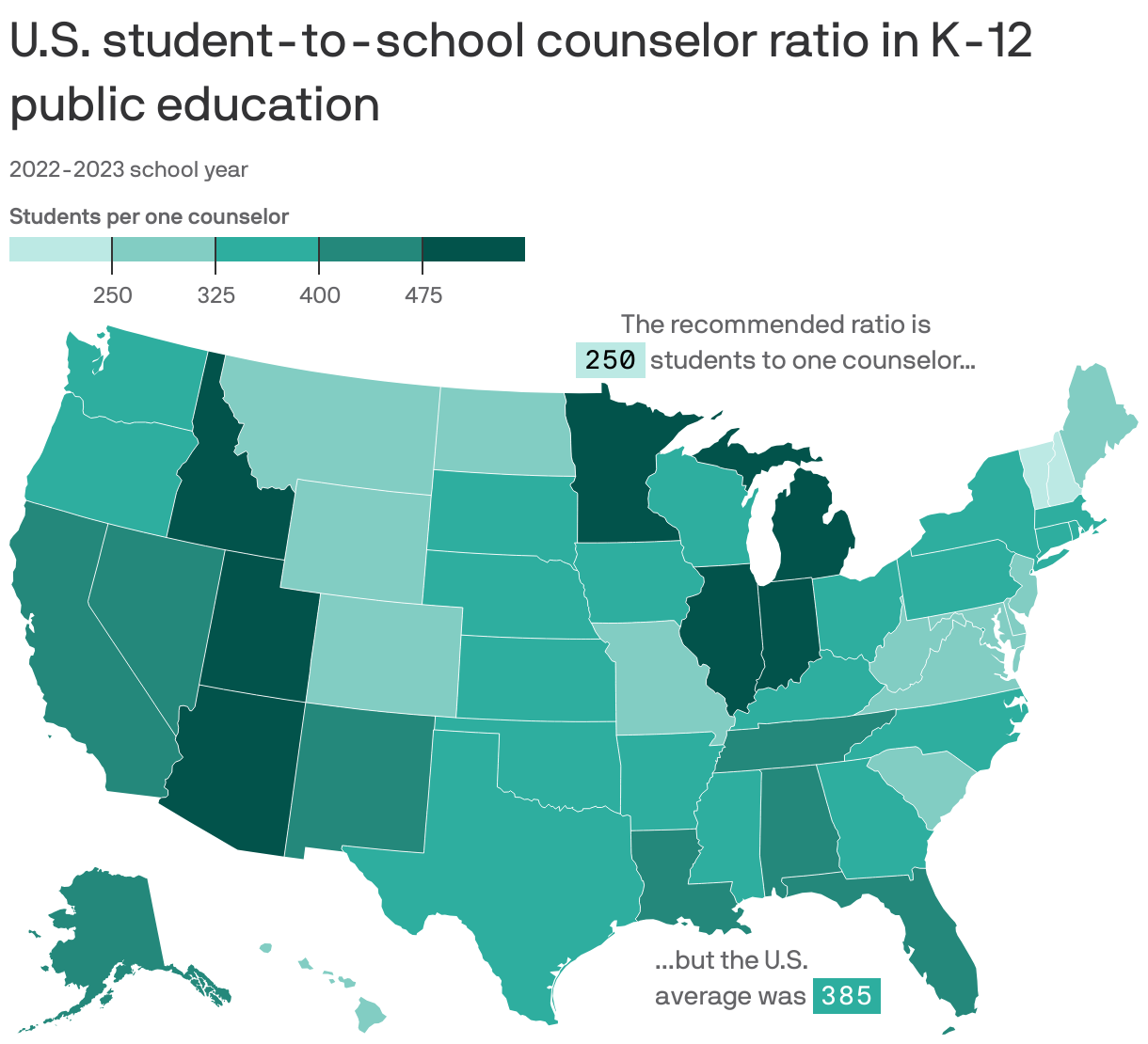
Arizona had the worst student-to-school counselor ratio in the nation last school year, with the average counselor responsible for more than double the number of students recommended by the American School Counselor Association (ASCA).
Why it matters: Experts say a lack of school counselor access disproportionately hurts students of color seeking mental health help or advice about applying to college in a post-affirmative action world.
The big picture: Arizona schools have struggled for years to attract qualified candidates to open counselor positions, but the shortage was exacerbated by the pandemic, Mesa Public Schools director of opportunity and achievement Michael Garcia told ASU News last year.
- Many public school counselors went into private practices, which expanded with telehealth services during the pandemic, he said.
By the numbers: An ASCA analysis of federal data found that Arizona had 667 students to 1 school counselor during the 2022-23 school year.
- Michigan had the second-highest ratio (598:1), followed by Minnesota (544:1), Indiana (519:1) and Illinois (501:1).
- The national average was 385:1 and the ASCA-suggested ratio is 250:1.
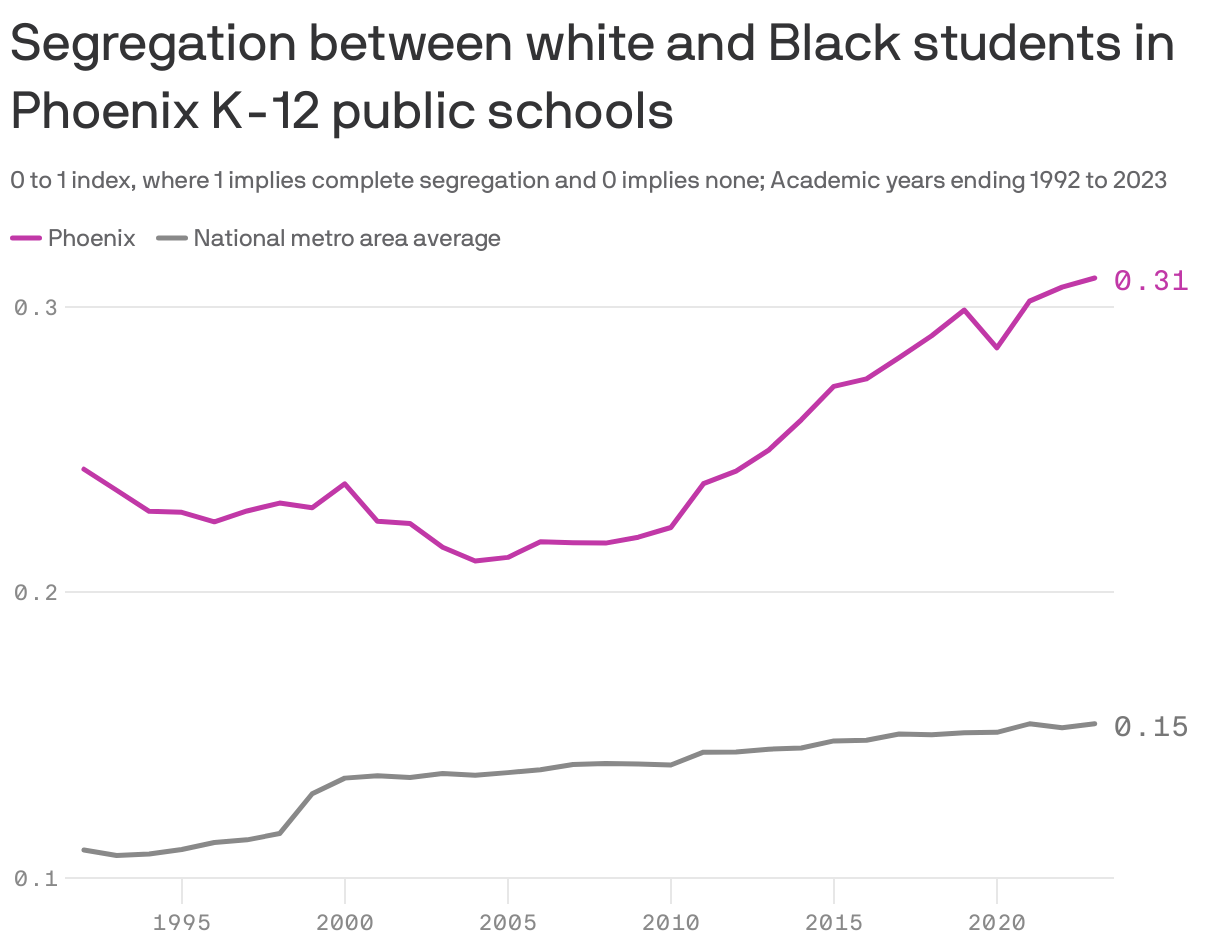
The intrigue: A higher ratio of students to school counselors is especially evident in racially segregated schools, Eric Sparks, ASCA deputy executive director, tells Axios.
- Arizona's school counselor shortage trends with the state's high rate of school segregation — which has been on the rise in metro Phoenix much of the past 15 years, according to the Stanford Education Data Archive.
Between the lines: ASU launched a new master's degree concentration for K–12 counselor training last fall in hopes of encouraging more people to seek the career.
- Previously, ASU students who graduated with a Master of Counseling degree had to apply to another university to earn school counseling certification.
Zoom in: School counselors are certified educators who help students navigate behavioral challenges, boost achievement, plan class schedules, set goals and explore career and college options.
- They serve as liaisons between students and mental health professionals, state child protective service agencies and university recruiters.
- School counselors are typically the first to know a child is facing abuse, struggling with hunger or contemplating suicide.
Stunning stat: Nationally, there are an estimated 8 million students without access to a school counselor, according to The Education Trust.
- Of those students, 1.7 million attend a school with police but no school counselor on campus, demonstrating a focus on policing over mental health or college preparedness.