Some Arizona schools have high segregation rates 70 years after Brown v. Board ruling


Add Axios as your preferred source to
see more of our stories on Google.
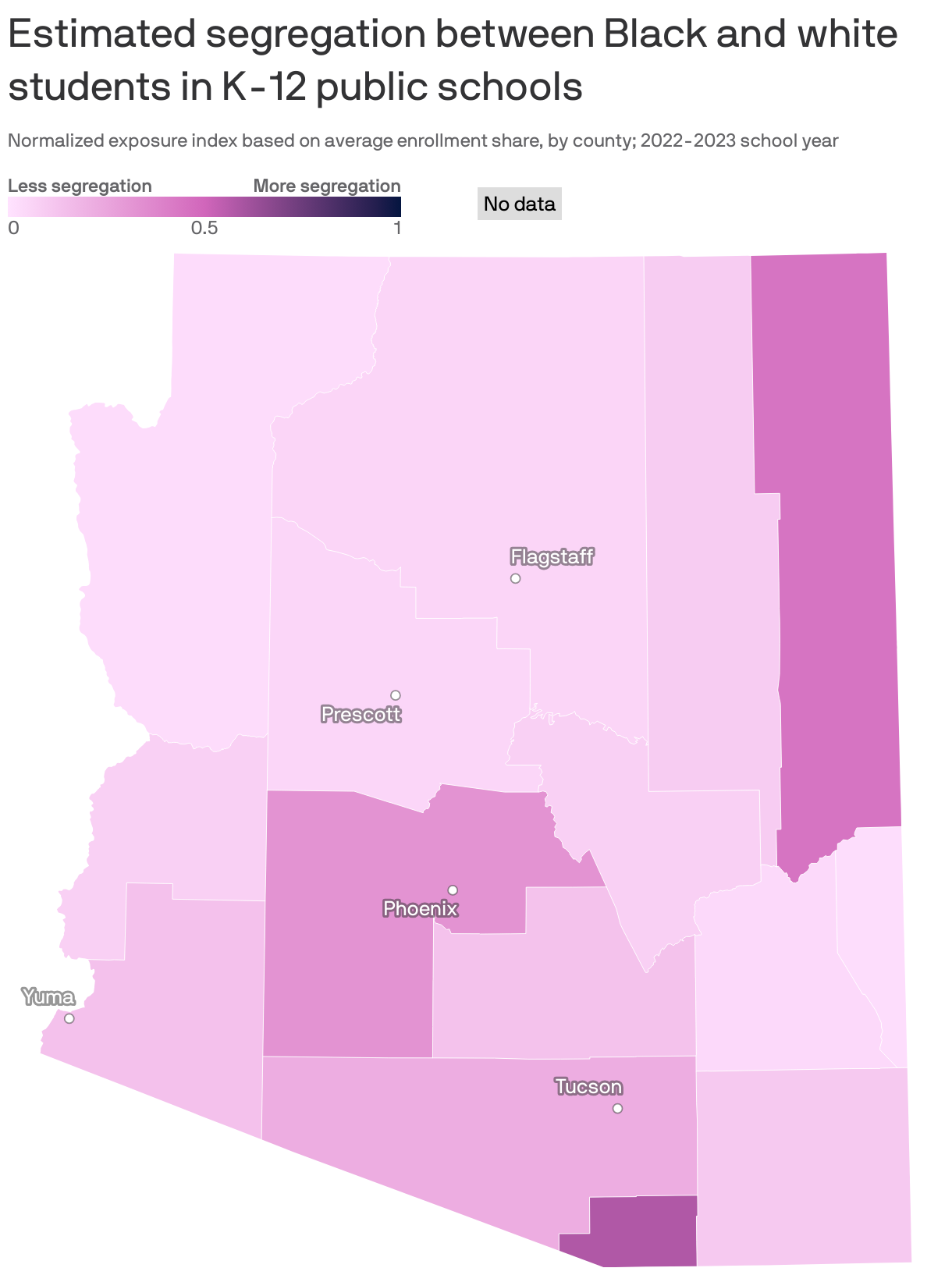
On the 70th anniversary Friday of the landmark Brown v. Board of Education ruling, segregation remains a reality in schools across the state and nation, three new reports show.
Why it matters: American public schools are growing more separate and unequal even though the country is more racially and ethnically diverse than ever.
State of play: Arizona has one of the highest rates of segregation between white and nonwhite students in the western U.S., according to a new database from the Educational Opportunity Project at Stanford University.
- This is driven primarily by Latino segregation, according to an April report from the UCLA Civil Rights Project.
- Nearly 40% of Latino students in Arizona attend a school where less than 10% of their classmates are white, per the report.
The intrigue: White flight to the exurbs has contributed to resegregation, Gary Orfield, co-director of the Civil Rights Project, tells Axios.
Zoom in: A February report from the Civil Rights Project shows that metro Phoenix's urban school districts have more Black and Latino students and fewer white students than suburban districts.
- Between 2010 and 2020, the percentage of Black students in suburban schools fell while urban schools saw a slight increase.
- Both suburban and urban districts saw an increase in the percentage of Latino students during the same time frame — but the percentage of Latino students was still 15 points higher in urban districts during the 2019-2020 school year.
The big picture: The resegregation of America's public schools coincides with the rise of charter schools and school choice options, and with civil rights groups having turned away from desegregation battles.
- Segregated schools disproportionately hurt Black and Latino students since those schools tend to have fewer resources, more teacher shortages, higher student-to-school counselor ratios, and fewer AP class options.
What we're watching: Whether increased school choice options contribute to further segregation.
- Arizona's open enrollment policies and popular private school scholarship programs make it easy for parents to choose the school they want for their children.
- While this is touted as an important tool for expanding student options, critics fear it makes schools even less diverse.