It's not just summer: Phoenix spring temperatures are on the rise



Add Axios as your preferred source to
see more of our stories on Google.
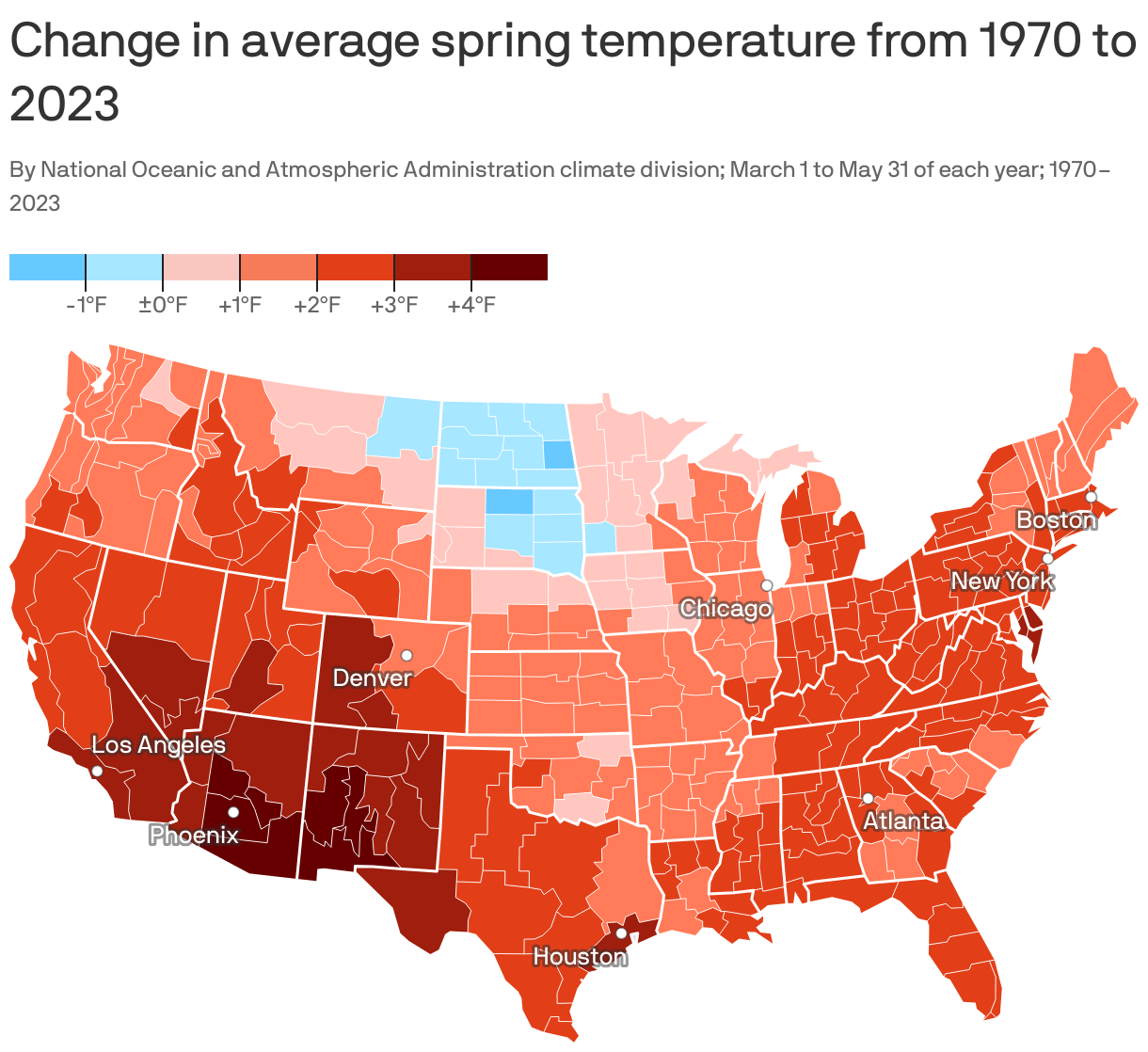
Phoenix's spring seasons are getting warmer, more so than much of the rest of the country's, according to a recent Climate Central analysis.
Why it matters: The trend reflects human-caused warming, the group says.
- Much of the seasonal climate change discussion is focused on summer and winter, when temperatures are typically at their annual high and low extremes.
- But the "between seasons" are affected too.
By the numbers: Springtime in Phoenix warmed by 5.2°F on average between 1970 and 2023, per Climate Central, a climate research and communications nonprofit.
- That's more than double the average warming of 2.2° across nearly 230 U.S. cities.
Stunning stat: Spring has gotten notably warmer in the Southwest, where average temperatures have risen by more than 6° in some places.
Zoom in: The highest average springtime temperature increases were seen in Reno, Nevada (+6.8°F), El Paso, Texas (+6.3°F) and Las Vegas (+6.2°F).
What it did: The group's analysis is based on NOAA data during meteorological spring, which begins March 1 and ends May 31.
What it's saying: Warmer springtime temperatures cause a variety of effects, per Climate Central, including earlier snowmelt (which affects drinking water supplies), longer allergy seasons and changes in agricultural growing seasons.
The big picture: It's not just spring temperatures that are rising. Our notoriously hot summers set some unfortunate new records last year as well.
- Phoenix last year shattered its previous record for consecutive days with high temperatures at 110° or higher, setting a new record at 31 days.
- We also set a new record in 2023 of 19 consecutive days with overnight lows of at least 90°, and a new record for highest low temperature at 97°.
- There were at least 600 heat-related deaths in the Phoenix area last year, the deadliest on record.
What's next: Wildfire season generally runs from April through early July, and things could be worse than normal this year, according to state officials.
- Last year's fire season was relatively mild, but heavy precipitation led to increased vegetation, which could fuel more fires in 2024, state fire management officer John Truett tells Axios.
- Truett said during a press conference Monday that the Tonto National Forest, areas south of the Mogollon Rim and much of southern Arizona could see increased fire activity this year.
Zoom in: Arizona this year has hired a chief heat officer whose position was created as part of Gov. Katie Hobbs' Heat Preparedness Plan.