Arizona leads in income gains but lags behind national median income

Add Axios as your preferred source to
see more of our stories on Google.
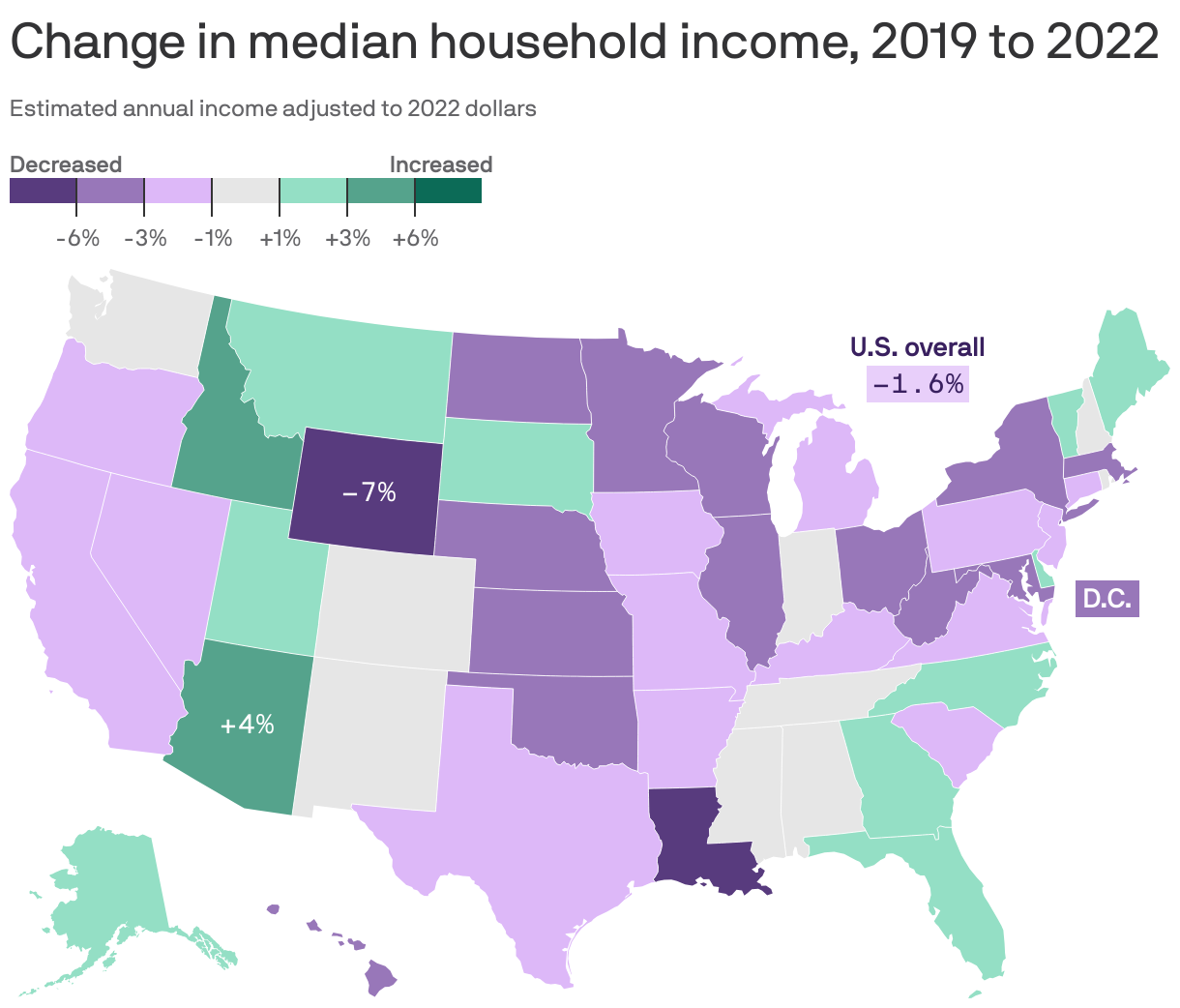
Arizona saw the largest percentage increase in median household income in the nation between 2019 and 2022, according to newly released Census Bureau data.
- And the Valley was among the largest income gainers across major U.S. metros.
Why it matters: Household incomes fell by almost 2% nationally, but Arizona bucked the trend.
What's happening: Greater Phoenix Economic Council president and CEO Chris Camacho credited the Valley's recruitment of high-wage jobs in the semiconductor, software and bioscience sectors, which are luring an educated workforce here.
- "When individuals of talent are mobile and have choices, they're flocking to places of opportunity and places they want to live," he tells Axios Phoenix.
By the numbers: Median household income rose by about 4% statewide between 2019 and 2022, and increased almost 6% in metro Phoenix.
- The 2022 median income was $74,568 statewide and $82,884 in the Valley.
Reality check: While our incomes are growing, our statewide median still lags slightly behind the national average of $74,755.
- Meanwhile, many other big metros — including Denver, Austin and Minneapolis — boast significantly higher median incomes.
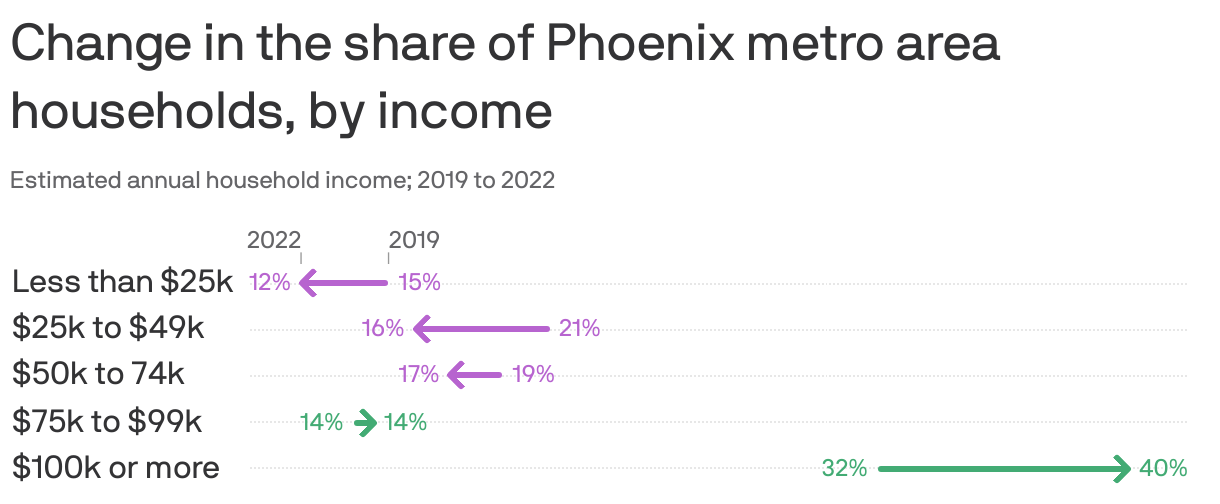
Zoom in: While metro Phoenix saw an 8 percentage point increase in the number of households making more than $100,000, about 30% still make less than $49,000 and almost half earn under $74,000.
Threat level: In Phoenix, you need to make $116,300 annually to afford the median home, $57,300 for a two-bedroom apartment and $47,400 for a one-bedroom apartment, according to a recent analysis by Valley real estate firm Elliott D. Pollack & Company.
Between the lines: Kelly McGowan, interim executive director of anti-poverty organization Wildfire, tells Axios Phoenix that income gains over the past few years have been trumped by rising home prices and inflation.
- She pointed to rising eviction filings and an increase in child poverty.
What they're saying: "There's a complexity to this data that's not reflective of what households, and particularly low-income households, are experiencing on a day-to-day basis," McGowan says.