Philly's biggest problems ease — but growth stalls

Add Axios as your preferred source to
see more of our stories on Google.
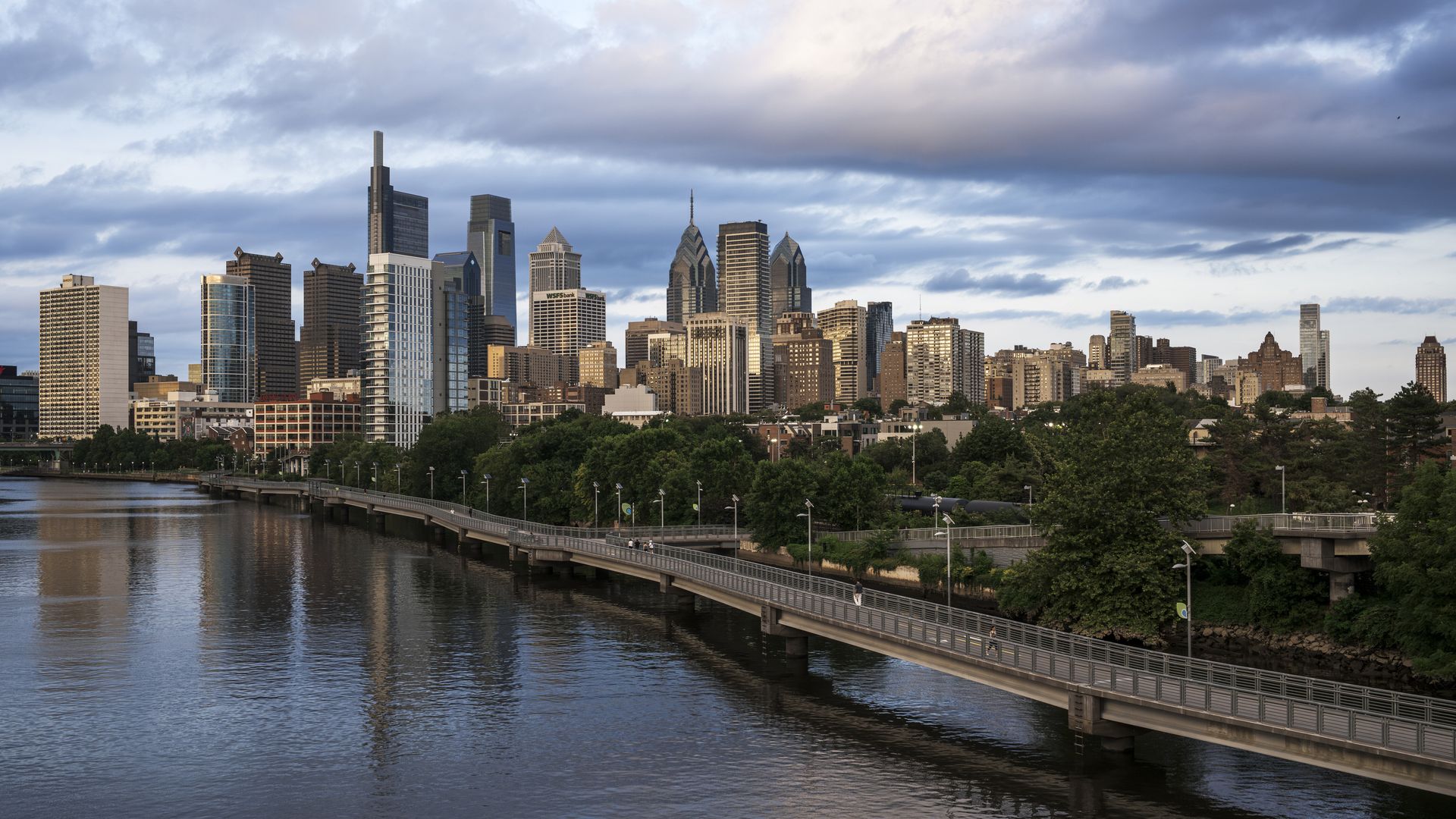
Photo: Nicolò Campo/LightRocket via Getty Images
Homicides, poverty and overdoses fell in Philadelphia last year, while population growth and college attainment stalled, per a new Pew report.
Why it matters: The sharp drop in homicides suggests the pandemic spike was "more of an exception than the new normal," Pew's authors write — but stalled progress in other key areas raises bigger questions about the city's long-term economic health.
The big picture: Last year, Philadelphia recorded its fewest homicides (222) since 1966 — a turnaround from the more than 500 homicides at the height of the pandemic. And fewer than 1,000 people were shot for the first time in two decades.
- The city also shed its title as America's poorest big city, replaced by Houston, with the poverty rate falling below 20% for the first time since 1979.
- Several groups saw gains, including Hispanic residents, whose poverty rate dropped 15 percentage points since 2014.
- For the first time since 2016, Philly is expected to have fewer than 1,000 overdose deaths. (The city's 2025 tally is being finalized this fall.)
Yes, but: Philly still had the sixth highest homicide rate (14.1 per 100,000 residents) in 2025 among cities of similar size.
- Plus, more than 300,000 residents have incomes of $33,000 or less for a family of four.
- And the city's unemployment rate (5.1%) last year was the highest it's been since 2021.
What they're saying: "There are some uneasy, troubling trends ahead for the city, specifically in areas that have been strengths for Philadelphia," Pew project director Katie Martin, one of the report's authors, tells Axios.
Zoom in: After rebounding from a low in 2006, Philadelphia's population peaked at about 1.6 million in 2020 — but has declined since, adding just 1,500 residents last year.
- Plus, the share of Philadelphians with a bachelor's degree has plateaued at 36%, up less than 2 percentage points since 2021. More than half of residents ages 25 to 34 have a degree.
By the numbers: Philly's median household income remained flat at $60,521 in 2024 — below the national average of about $81,000.
- Income disparities remain stark across Philadelphia. The widest gap: Center City–Society Hill ($121,047) vs. parts of North and West Philly ($32,823).