Hot take: Cursive comeback could be a civics lesson

Add Axios as your preferred source to
see more of our stories on Google.
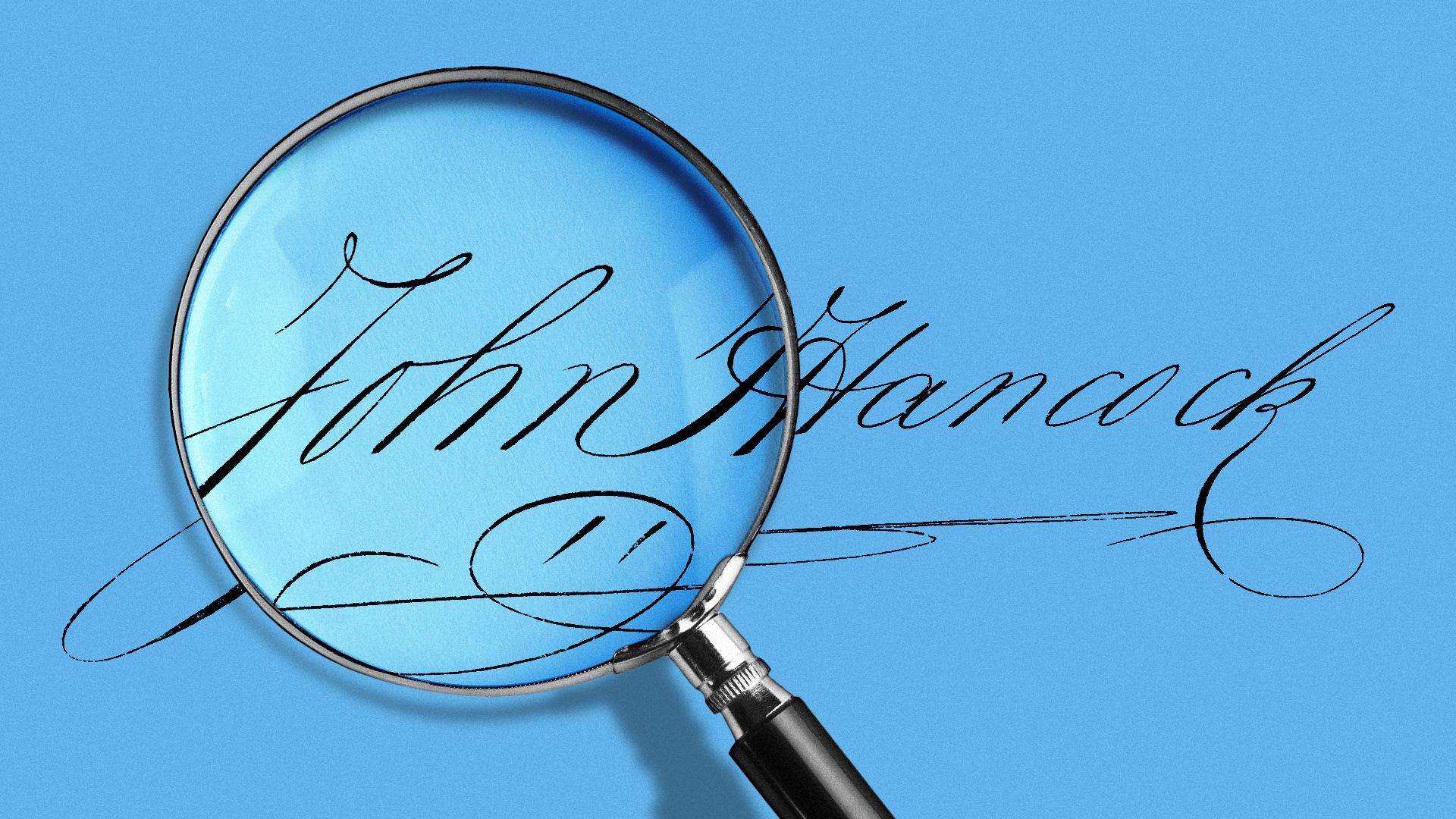
Illustration: Lindsey Bailey/Axios
Pennsylvania educators may have to once again teach cursive.
Why it matters: State House lawmakers made several pro-cursive arguments before passing a bill last week to mandate the curriculum in elementary schools, citing studies that say it helps improve memory and hand-eye coordination.
- The bill's co-sponsor stressed the need for children to be able to read "seminal documents that shaped our democracy."
The big picture: While some argue it's outdated, many agree it's worth teaching a generation of keyboard warriors to write in the swooping loops of past prose.
- The bill passed overwhelmingly in the House, and similar measures have been adopted in two dozen states.
Hot take: If we're going to mandate young students replicate this old-school form, let's make it an important civics lesson while we're at it.
- America's "seminal documents" — like the Declaration of Independence, the Constitution, the Bill of Rights, etc. — have already been spelled out in block-letter print for decades, and yet few people are reading them.
- Many Americans would fail a basic civics exam.
Here's an idea: Have students actually read these documents and produce essays — in cursive, of course — on why these records are important to maintain our freedoms.
The bottom line: The form of the letters they produce isn't important.
- It's how they arrange those letters and words later in life in defense of our democracy.
What's ahead: The bill now heads to the Senate for consideration.
Go deeper: