International migration is driving Philly's population growth


Add Axios as your preferred source to
see more of our stories on Google.

The Philly metro gained more than 49,500 residents last year, fueled mostly by immigrants, per new U.S. Census data.
Why it matters: International migration has been the main driver in keeping the region growing since 2020.
State of play: The Philadelphia metro saw a 1.4% population increase from 2020 to 2024, per the U.S. Census Bureau estimates.
- More than 6.3 million people live in the metro area.
Between the lines: International migration is offsetting about 65,000 residents who've left for other cities between 2020 and 2024 — bringing in nearly double that amount to the region, the data shows.
Zoom in: Philadelphia has been grappling with how to retain residents, some of whom left for the suburbs during the COVID-19 pandemic.
- Immigration groups have pressed the Parker administration to reaffirm Philly's status as a sanctuary city amid the Trump administration's ongoing immigration crackdowns.
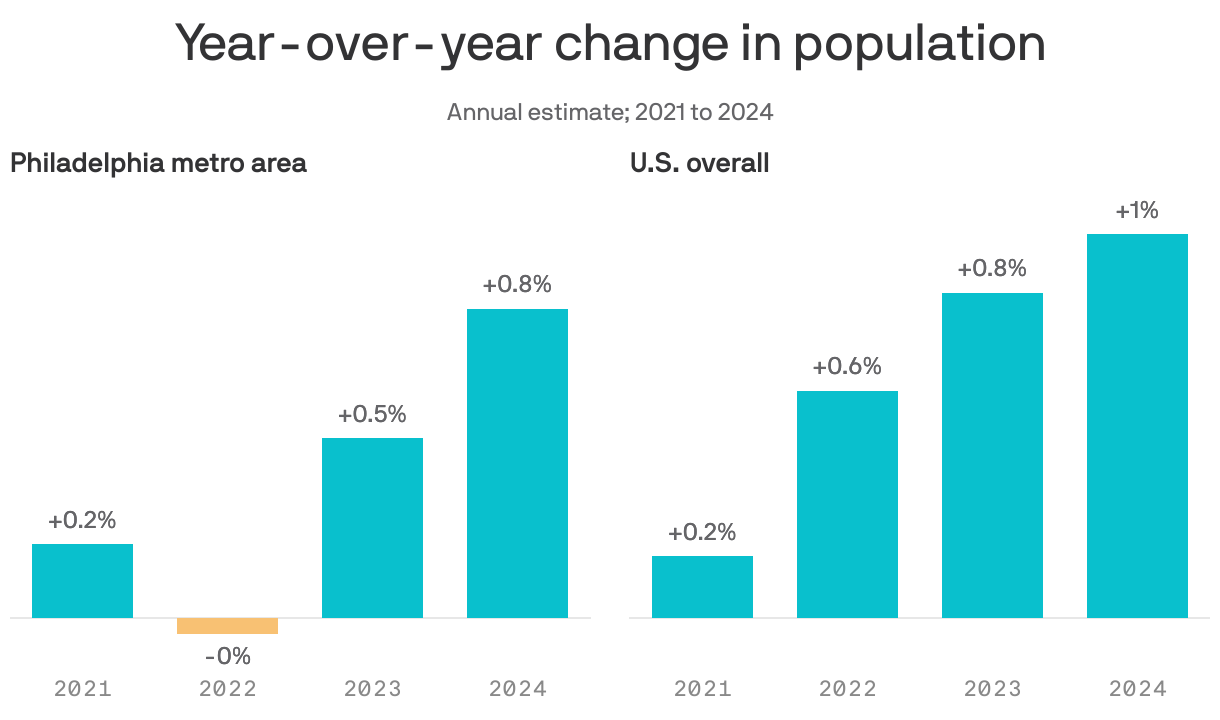
The big picture: The number of people living in U.S. metro areas rose by almost 3.2 million from 2023 to 2024 — a gain of about 1.1% — the Census Bureau said.
- By comparison, the total U.S. population rose by 1% during that time.
What they're saying: "All of the nation's 387 metro areas had positive net international migration between 2023 and 2024, and it accounted for nearly 2.7 million of the total population gain in metro areas," the bureau said in a statement accompanying the new data.
How it works: The bureau bases these estimates on current data for births, deaths and migration, all of which affect overall population.
What's next: Demographers and other researchers will be keeping a close eye on how Trump administration policies might affect immigration levels.