Trump could threaten police consent decrees but Philly's is shielded


Add Axios as your preferred source to
see more of our stories on Google.
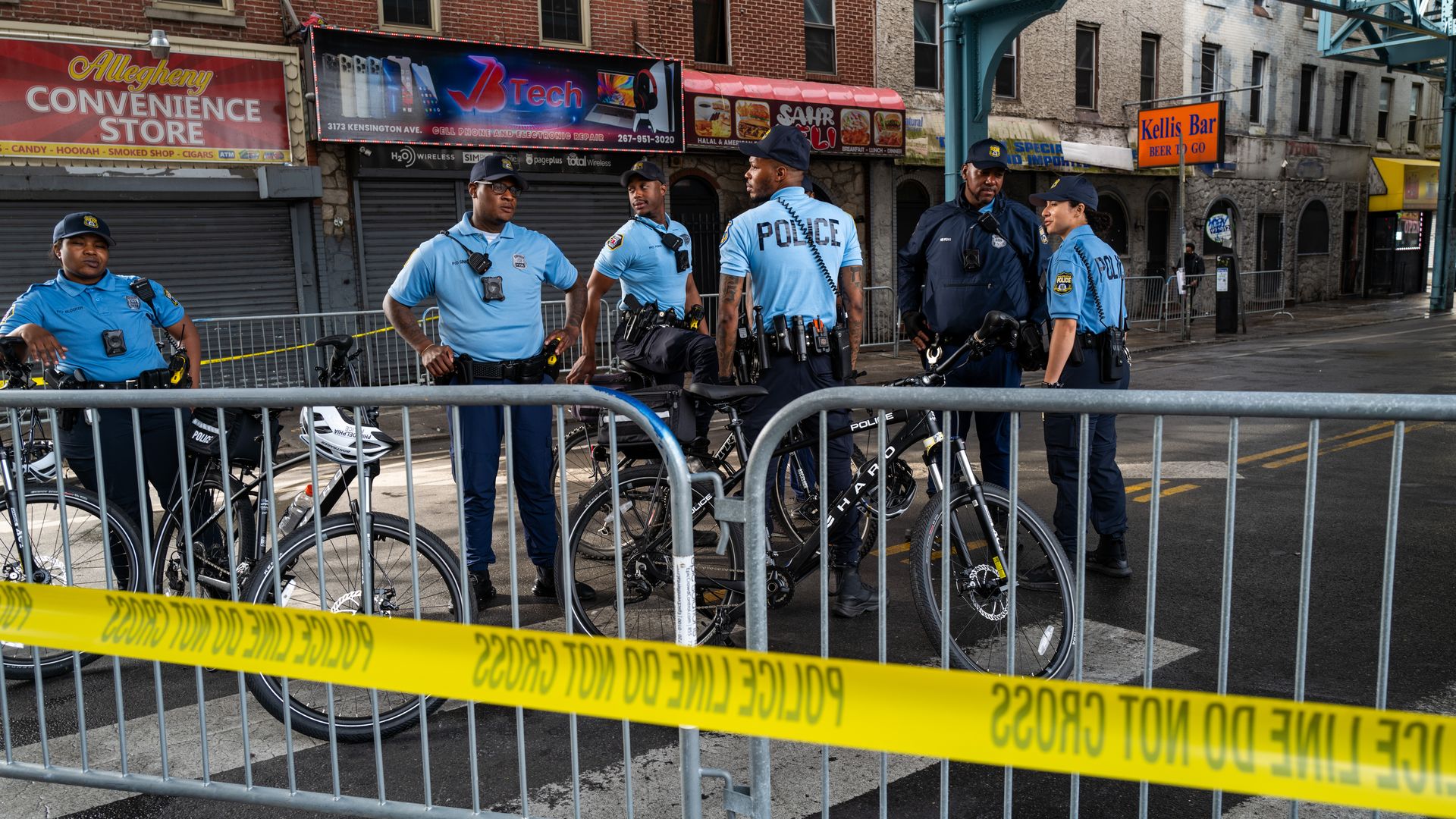
Philadelphia police during the the clearing of a homeless encampment in Kensington last year. Photo: Spencer Platt/Getty Images
Federal consent decrees that hold police departments accountable for alleged civil rights abuses are in jeopardy under President-elect Trump — but one here in Philly is out of his administration's reach.
The big picture: Federal probes into nearly a dozen city police departments by President Biden's Justice Department are unlikely to reach reform agreements before Trump is sworn in next week for his second term.
- The investigations came in response to allegations of systemic, unconstitutional misconduct by police departments, such as using excessive force and conducting illegal traffic stops.
- Such probes often lead to court-ordered consent decree agreements, which require police to impose various reforms.
- Trump suggested during the presidential campaign that he equates consent decrees to "defunding the police," or weakening law enforcement.
Flashback: During Trump's first term, his administration refused to enter into any consent decrees to reform police departments, even after the murder of George Floyd at the hands of Minneapolis police in 2020 put pressure on law enforcement agencies.
- Trump's administration unsuccessfully sought to withdraw from consent decrees negotiated during the Obama administration, but not yet finalized, in Chicago and Baltimore.
Zoom in: Philadelphia's Police Department has been under a consent decree for more than a decade to address allegations of illegal stop-and-frisk practices targeting people of color.
- It's part of the settlement of a class-action lawsuit, in which several Black and Latino men alleged they were racially profiled by Philly officers, says Mary Catherine Roper, a civil rights attorney and former ACLU-PA deputy legal director who helped litigate the case.
The intrigue: Since the consent decree was put in place, stop-and-frisks have significantly decreased in Philadelphia, per the monitor's latest report.
How it works: Under Philly's agreement, an independent monitor was set up to track the department's progress on its reforms. The case is overseen by a federal judge.
- It's unclear how long the decree could remain in place, and it largely depends on the city maintaining sustained progress to satisfy the monitor and judge. A consent decree with the Oakland Police Department has been in place for more than two decades.
- But because the Philly reforms aren't DOJ-led, the Trump administration "cannot make us stop," Roper tells Axios.
Reality check: Some city leaders and public safety experts tell Axios that federal oversight of police departments has had mixed results.
- In some cases, they've driven up costs while doing little to curb violent crime, they say.
By the numbers: Philadelphia has spent more than $1.2 million on the case since 2010 — a figure that includes plaintiff settlements and fees for attorneys and experts, city law department spokesperson Ava Schwemler tells Axios.
What they're saying: Roper says Philly's agreement is especially important as the Parker administration seeks to crack down on crime across the city, including Kensington's notorious open-air drug market.
Go deeper: Biden administration's probes of police agencies in jeopardy