Pennsylvania's abortion rate is higher than national average

Add Axios as your preferred source to
see more of our stories on Google.


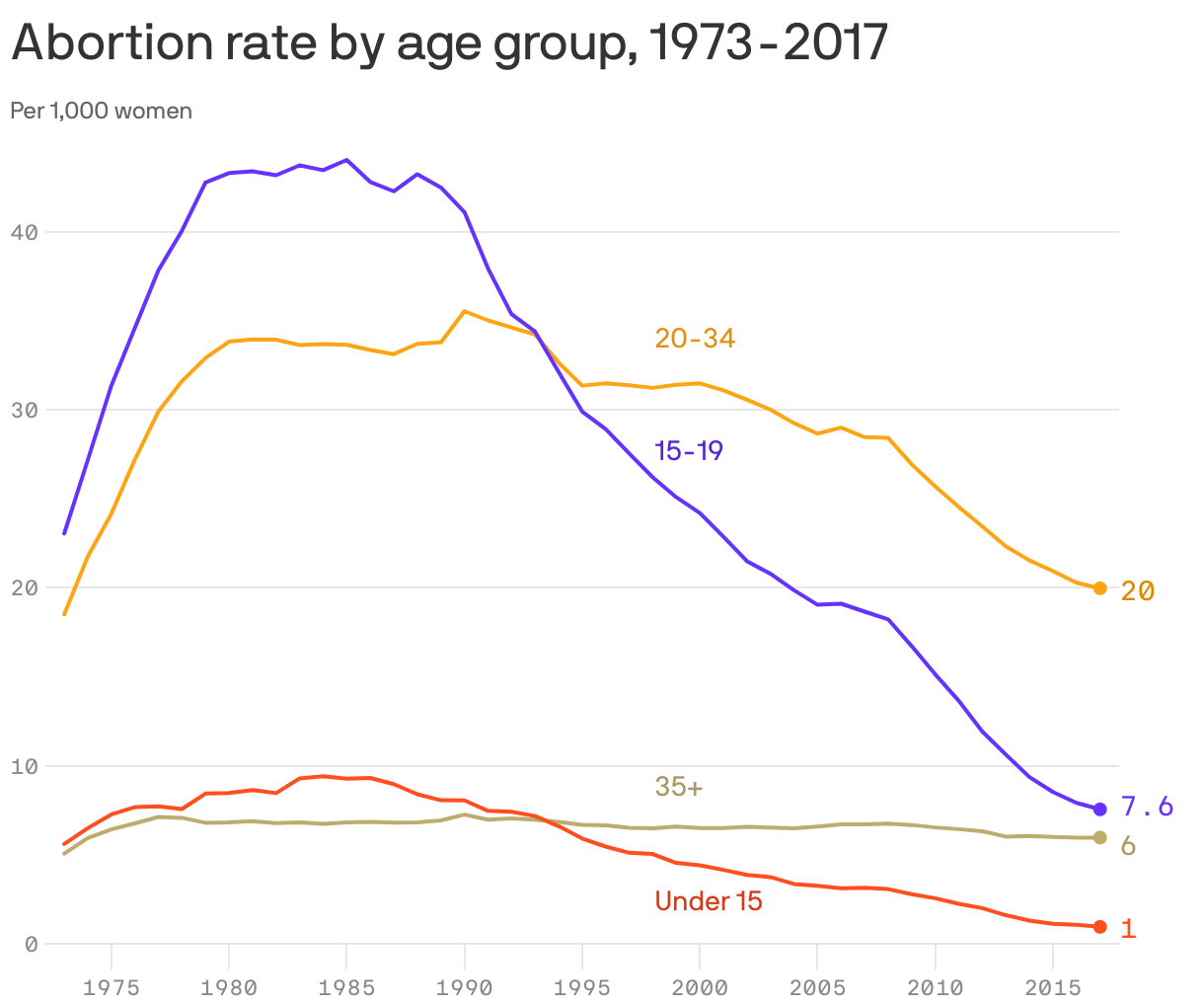
Pennsylvania's abortion rate is slightly higher than the national average, which has been on the decline for years.
State of play: Pennsylvania — which permits abortions up to about 24 weeks of pregnancy — has seen small dips in its rate over the last several years, according to the Guttmacher Institute.
- The state's abortion rate is highest among women in their 20s, which mirrors national trends.
- Nearly half of all abortions in the state in 2020 involved white patients (14,813), with Black patients accounting for 14,177 and Hispanic patients 3,479.
- Roughly 85% of Pennsylvania counties don't have health clinics that perform abortions, as of 2017, per the Guttmacher Institute.
The big picture: Around 18% of all pregnancies in the U.S. end in abortion, according to the CDC.
- More than three-quarters of abortions in 2019 were performed by nine weeks of a pregnancy, with higher rates among Black and Hispanic women than white women, Axios' Caitlin Owens writes.
Between the lines: Factors impacting the abortion rate include access to health care services and contraception, the availability of abortion providers and state regulations, according to the CDC.
- The state of the economy and resulting impact on family planning decisions also play a role.
Yes, but: The overall birth rate is also declining, particularly among teenagers, according to Guttmacher.
- The teen pregnancy rate in Pennsylvania dropped to 26 per 1,000 people aged 15-19 in 2017, compared to a rate of 87 per 1,000 in 1988.