Philadelphia at bottom of Pennsylvania county health rankings

Add Axios as your preferred source to
see more of our stories on Google.
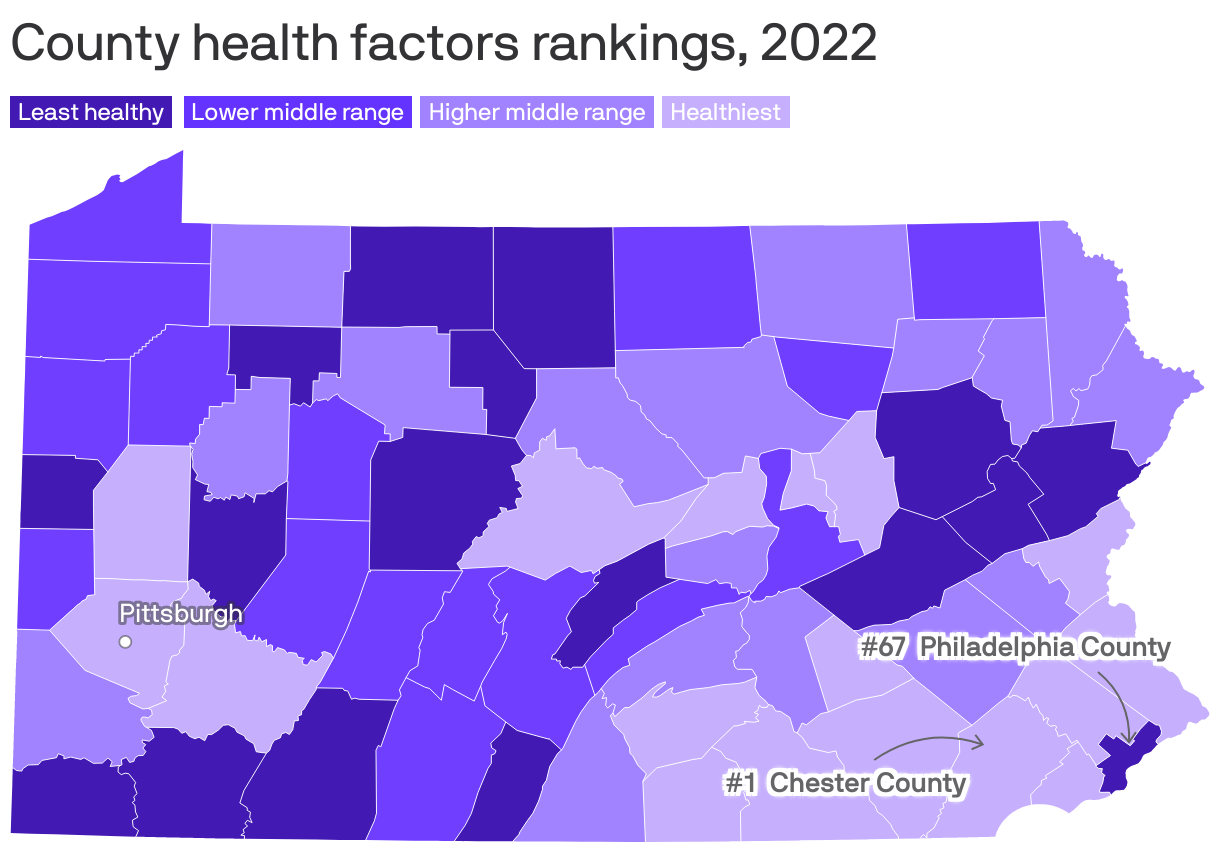
Pennsylvania's healthiest counties are also among the least economically distressed.
- That's the main takeaway from a new county health rankings report released last week by the University of Wisconsin Population Health Institute.
The big picture: Across the country, people with lower incomes and people of color have more limited access to affordable care and opportunities that lead to better health.
How it works: The report, using data collected between 2014 and 2021, evaluates counties on health outcomes — length and quality of life — and health factors.
- Factors include everything from access to health care, tobacco use, diet and exercise to education, employment, income, air and water quality, transit and housing.
Where we stand: Philadelphia ranked the lowest of Pennsylvania's 67 counties for both health outcomes and factors.
- More than a third of Philadelphians are obese, per the report.
- 27% of Philadelphia children live in poverty.
- Families, on average, spend more than a third of their incomes on child care.
Meanwhile, neighboring Chester County ranks as the healthiest county for both health outcomes and factors in the commonwealth.
- Chester County has a median household income of $104,161, significantly higher than the state's average of $63,627 and more than double Philadelphia's average of $49,127, according to census data.
- More residents in Chester are insured, receive flu shots, have access to healthy food and get enough sleep, the data shows.
Of note: Neighboring suburban counties Montgomery and Bucks had a good showing.
- Montgomery came in fourth in health outcomes and second in factors, while Bucks ranked seventh in outcomes and sixth in factors.
Between the lines: On average, Pennsylvania families with two children spend more than a quarter of their incomes on child care.
- When an expense eats up a big chunk of a paycheck, it makes it harder for families to afford emergencies or other longterm expenses, like retirement, the report notes.
The bottom line: The report notes that higher wages would go a long way in improving health care access and result in better health outcomes.
- "Living wages cover basic needs and are essential to live a healthy life," the researchers wrote.