What to know about "Good Trouble Lives On" protests in Arkansas


Add Axios as your preferred source to
see more of our stories on Google.
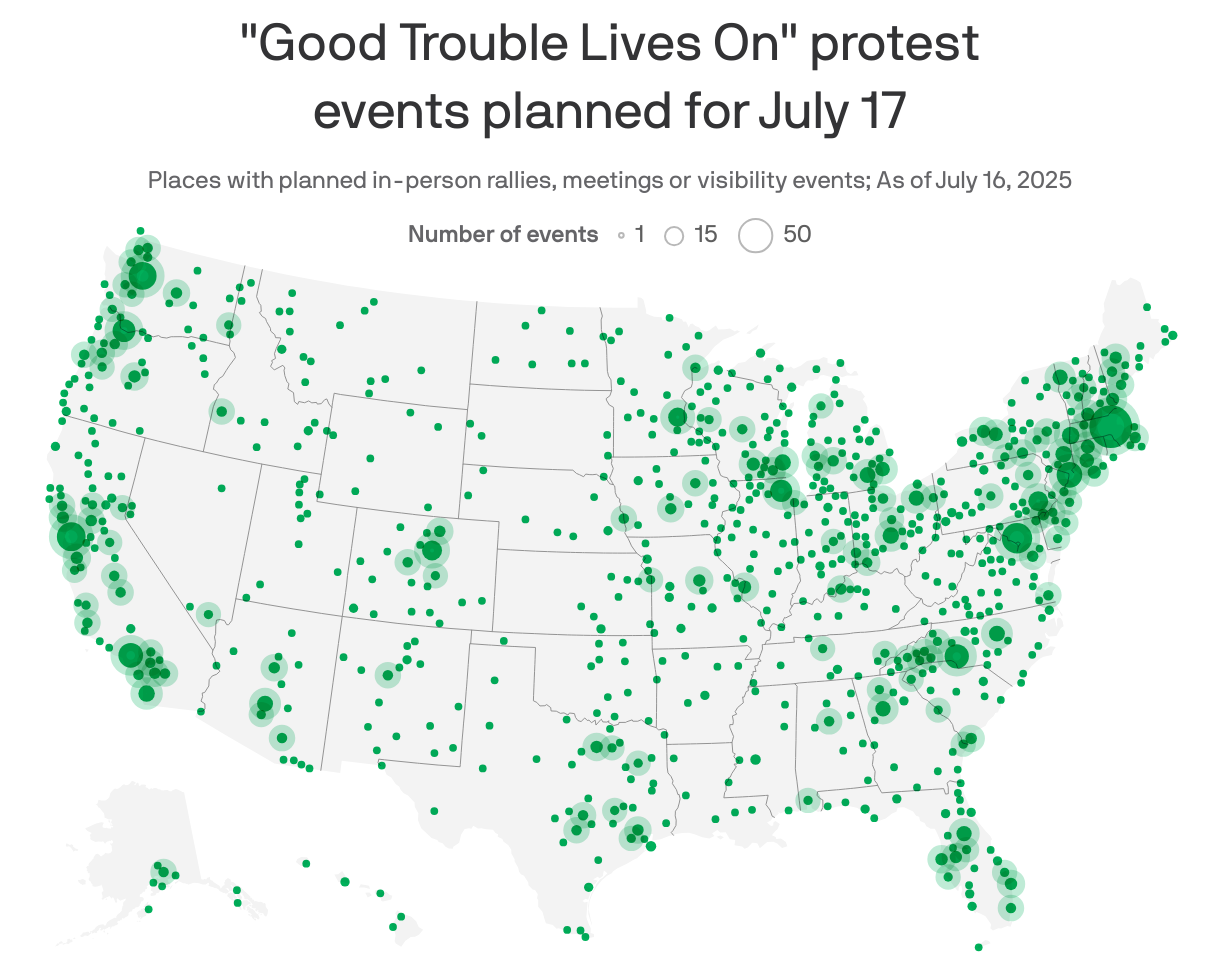
Tens of thousands of people are expected to protest the Trump administration across the U.S. again today, the fifth anniversary of the death of civil rights leader and former Congressman John Lewis.
Why it matters: Lewis was one of the most vocal critics of President Trump during his first administration. He skipped Trump's 2017 inauguration — only the second Lewis missed during his three-decade tenure in Congress including former President George W. Bush's inauguration in 2001.
Zoom in: A protest is planned for 6pm at the Washington County Courthouse in Fayetteville, according to the organizer's website.
- Other spots in Arkansas include Fort Smith, Jonesboro, Little Rock, Hot Springs, Harrison and Batesville.
By the numbers: 56,000 people RSVP'd for more than 1,500 events across the country as of Friday, organizers said.
What they're saying: "Good Trouble Lives On is a national day of action to respond to the attacks on our civil and human rights by the Trump administration," the protest website said.
The other side: "Nearly 80 million Americans gave President Trump a historic mandate to Make America Great Again and he is delivering on that promise in record time," White House spokesperson Liz Huston said in a statement.
Context: Lewis, the son of sharecroppers, grew up in rural Alabama. The civil rights leader was arrested more than 40 times and injured repeatedly but remained an advocate for nonviolent protest, per the Library of Congress.
State of play: Anti-Trump protests since January have retained their momentum, including Tesla Takedown in March, Hands Off! and 50501 in April, May Day, No Kings in June, and Free America on Independence Day.
- Indivisible, a leading protest organization group, launched a project ahead of the protest to train a million people in non-cooperation, community organizing and campaign design.
Zoom out: In March 1965, Lewis led more than 600 peaceful protesters across the Edmund Pettus Bridge in Selma, Alabama. What was meant to be a push for voting rights became known as "Bloody Sunday" after state troopers attacked the marchers.