Despite landfill, Northwest Arkansas air pollution is improving


Add Axios as your preferred source to
see more of our stories on Google.
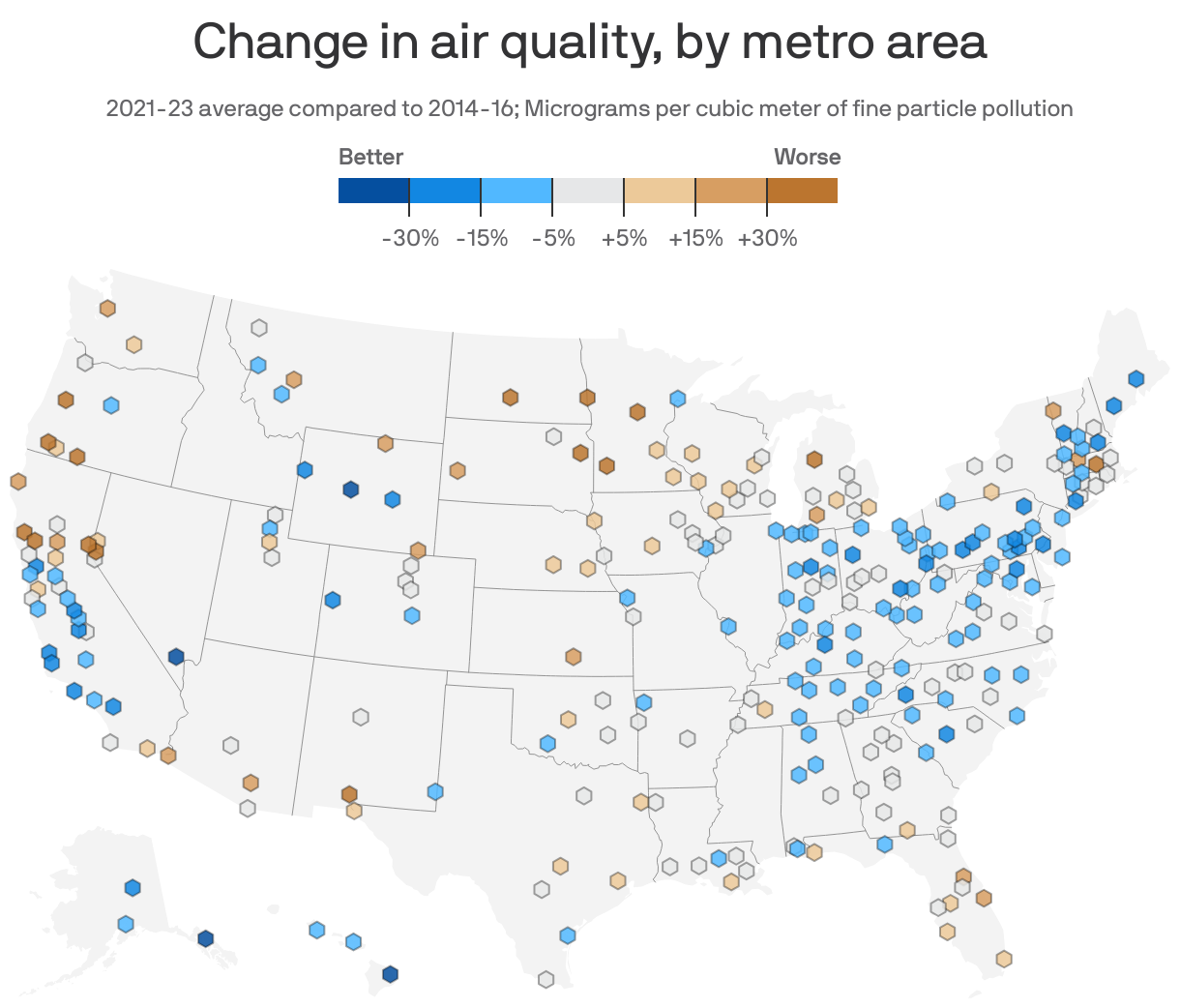
Air quality in Northwest Arkansas is improving overall, according to year-over-year data.
Why it matters: Long-term exposure to poor air quality is harmful to your health.
By the numbers: The average percentage of fine particle pollution in NWA decreased more than 6% from 2021-23, compared to 2014-16.
The big picture: Tracking fine particulate matter (PM2.5) is a helpful indicator of air pollution and a major factor in air quality index scores, but it doesn't account for all variables. So air pollution can be worse than it appears on your weather app.
Zoom in: SWEPCO's Flint Creek power plant in Gentry is a significant source of air pollution — releasing nearly 2.3 million metric tons of carbon dioxide emissions in 2023, per the U.S. Environmental Protection Agency.
- The Harry D. Mattison power plant and the Eco-Vista Landfill, both in Tontitown, both released about 120,000 metric tons, are Nos. 2 and 3 in the area.
State of play: Due to complaints from residents about smells, three air-quality tests were conducted at the Eco-Vista Landfill last year. It's the only landfill in the region.
What they're saying: "My citizens are suffering, and I don't know what to do about it, and I cannot get help [from Arkansas Department of Environmental Quality]," Tontitown Mayor Angela Russell said in testimony to the state House committee on Governmental Affairs last week.
- Her testimony was to support HB1058, seeking to prohibit state employees from giving advance notice of planned inspections.
- Russell and state Rep. Steve Unger (R-Tontitown) allege that someone at ADEQ has provided notice to the landfill so it could prepare and clean up before it's inspected.
Zoom out: A growing body of research shows that polluted air is connected to poor reproductive outcomes, increased dementia risk, and more asthma attacks and other respiratory health effects.
The bottom line: To stay safe, air quality experts recommend checking your local AQI, and also trusting your nose. If you smell smoke — even if the AQI is "green" — limit your time outside.