Report: University of Arkansas contributes $3B to state economy

Add Axios as your preferred source to
see more of our stories on Google.
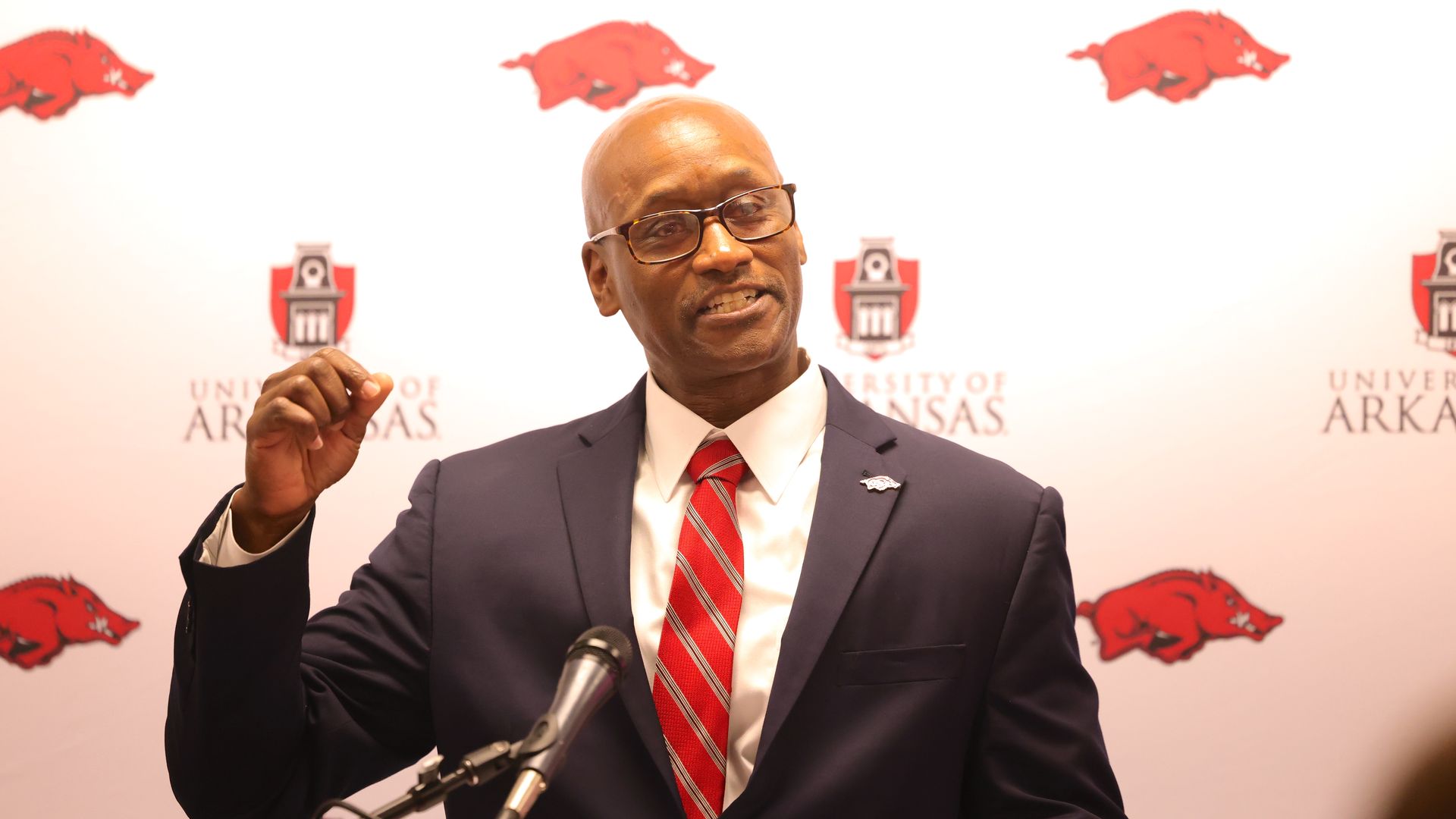
University of Arkansas Chancellor Charles Robinson. Photo: Worth Sparkman/Axios
Hundreds of business students donned their top-drawer wardrobe Tuesday for a career fair at Bud Walton Arena at the University of Arkansas.
- Two floors down, UA Chancellor Charles Robinson touted to news media the university's economic impact on the state.
Why it matters: The Fayetteville campus is responsible for $3 billion in direct annual economic impact to Arkansas, per top-line findings of a study conducted by UA's Center for Business and Economic Research.
- A similar study from 2018 landed on about $2.2 billion, Robinson said. A report from 2009, which wasn't as methodical, came to about $725 million.
Context: By comparison, outdoor recreation — including a broad range of activities — accounted for about $4 billion in 2022 and the rice industry is valued at about $1.4 billion annually.
Reality check: The $3 billion number doesn't include the contributions of working Arkansas residents who were educated at the university, Robinson said, citing doctors, lawyers, nurses and teachers.
- More than 87,000 UA alumni live in Arkansas, earning $3.4 billion in wages and paying $192.2 million in taxes.
By the numbers: Every dollar in state funding ($220.3 million during fiscal 2023) for the university returned $13.69 in economic benefit.
- University operations and associated economic activities contributed more than $126.2 million in state and local taxes during 2023.
- Student spending contributed an estimated $569.4 million to the economy.
- The average starting salary of a 2023 UA graduate was more than $60,000.
What they're saying: "With regards to research, we moved from $184 million in research expenditures to an all time record high of $221.5," Robinson said.
- "We're very pleased with where we're moving in our trajectory with regards to research."
What we're watching: The presentation included only key findings from the CBER. The full report is expected in a couple of weeks but likely won't contain major changes.