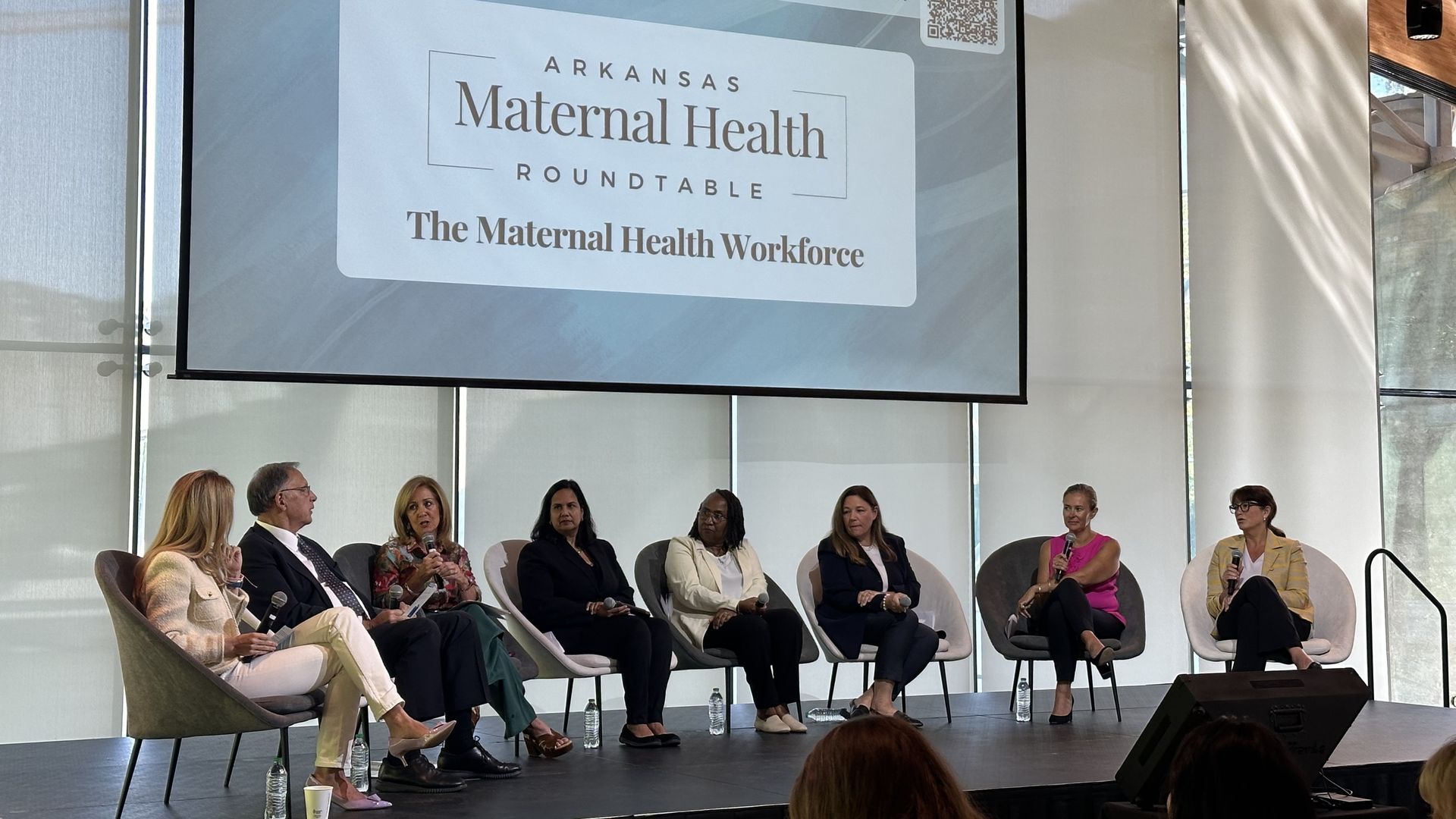
A panel speaks about maternal health at Crystal Bridges Museum of American Art. The group included (from left) moderator Olivia Walton; U.S. Sen. John Boozman; Arkansas Secretary of Health Renee Mallory; Sharmila Makhija, dean and CEO at the Alice L. Walton School of Medicine; Zenobia Harris, executive director at Arkansas Birthing Project; Lisa Woods, vice president of physical and emotional wellbeing at Walmart; nurse/midwife Cara Osborne; and Pearl McElfish, director of the UAMS Institute for Community Health Innovation. Photo: Alex Golden/Axios
Improving maternal health in Arkansas will involve changes in mindset, policy and how health care professionals work together, panelists said Wednesday during a roundtable hosted by U.S. Sen. John Boozman (R-Arkansas) in Bentonville.
Why it matters: Arkansas has the nation's highest rate of maternal mortality — deaths related to pregnancy, birth and postpartum complications. And Black women in Arkansas are about twice as likely to die of such difficulties than white women, according to the Arkansas Department of Health.
State of play: Arkansas is a rural state that's not going to have hospitals offering labor and delivery services in every county, roundtable moderator Olivia Walton pointed out.
The Natural State has also seen chronic diseases rise and health care workers leave some of its most remote areas, both resulting in poorer maternal health, said Renee Mallory, the state's health director.
What they're saying: Several panelists mentioned that offering more doula/midwife services can improve outcomes, and that more education and collaboration is needed surrounding those options.
Health care organizations can close gaps in access by offering more telehealth and mobile services, Pearl McElfish said.
Zoom out: Boozman said reimbursement rates are "a huge problem" nationally in medicine, and Medicaid pays the least, leading to fewer providers accepting Medicaid.
About half of births in Arkansas are paid by Medicaid, Walton said.
What's next: A report and recommendations are expected next month by a committee tasked by Gov. Sarah Huckabee Sanders to work with lawmakers, health care providers and advocacy groups to develop a statewide maternal health plan.
What they're not saying: Panelists did not discuss Arkansas' abortion ban, but experts including doctors expect such bans to exacerbate the existing maternal mortality problem. A University of Colorado study suggests the U.S. maternal death rate could increase by 24% if a nationwide abortion ban was enacted.