Maternal deaths have spiked in Arkansas in the last 20 years

Add Axios as your preferred source to
see more of our stories on Google.
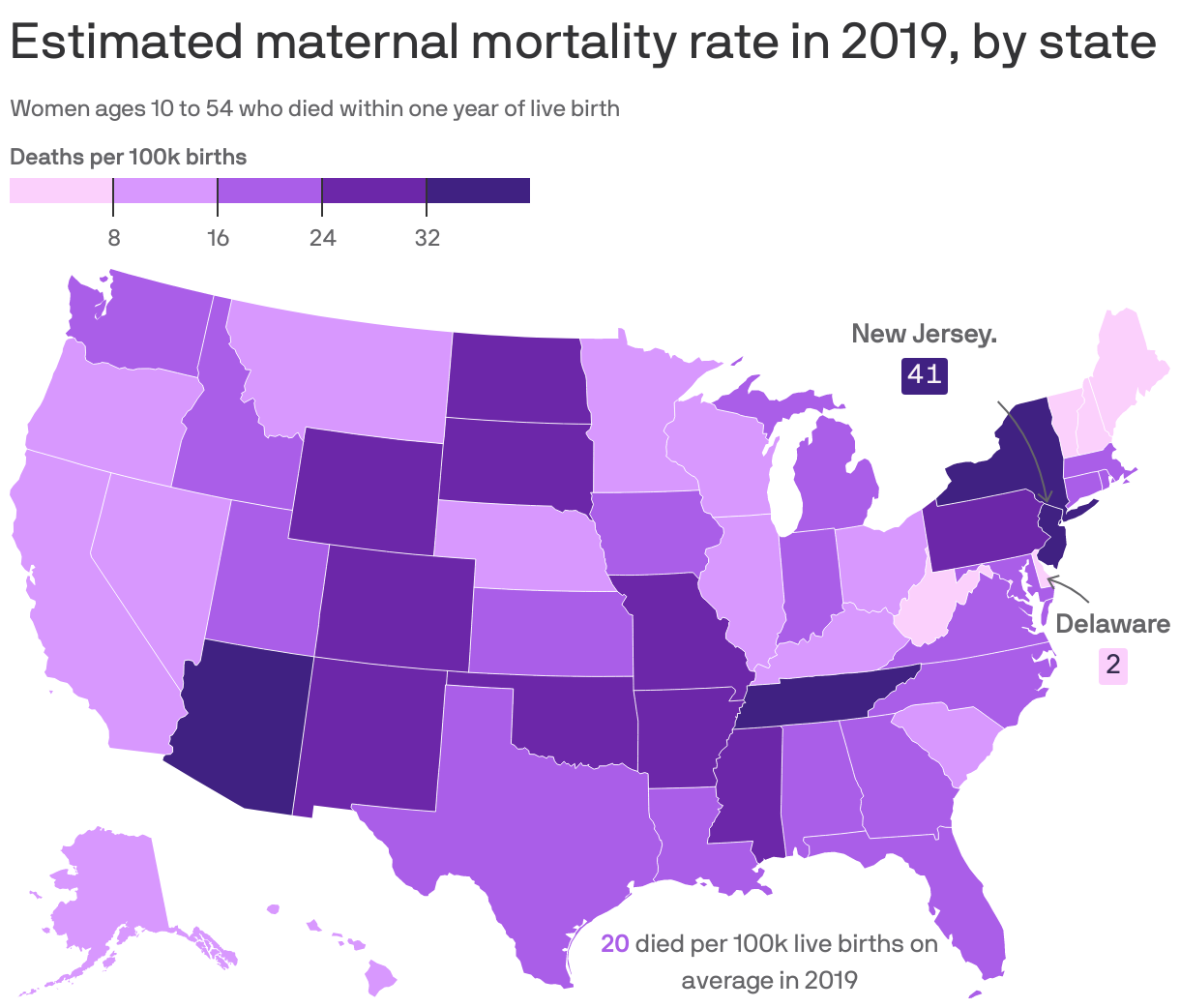
Maternal mortality rates in Arkansas increased between 1999 and 2019, according to a JAMA study that provides the first state-level breakdowns by ethnic group.
By the numbers: The overall number of deaths per 100,000 live births in Arkansas increased from 12.2 to nearly 29 during the 20-year study period.
- Broken down by group, such deaths in the state rose from 1.4 to 3.7 among American Indians and Alaska Natives; 42 to nearly 89 among Black individuals; 20 to 39 among Asians, Native Hawaiians and other Pacific Islanders (AAPI); and 14.6 to 45 among white people, researchers found.
The big picture: Maternal mortality rates across the U.S. more than doubled between 1999 and 2019, with states in the Midwest, Great Plains and South accounting for significant increases.
- Overall, there were an estimated 1,210 U.S. maternal deaths in 2019, compared to 505 in 1999.
Driving the news: American Indians and Alaska Natives had the biggest increases, particularly in states in the middle of the country where such inequities "had not been previously highlighted," researchers wrote.
- "Often, states in the South are called out as having the worst maternal mortality rates in the nation, whereas California and Massachusetts have the best. But that doesn't tell the whole story," said Allison Bryant, co-first study author.
Details: Maternal mortality is defined as a death that takes place during birth or up to a year later.
- The study looked at pregnant individuals ages 10 to 54.
- Common causes of maternal death include mental health conditions (including death by suicide and overdose related to substance-use disorder), hemorrhages, blood clots, high blood pressure, and cardiac and coronary conditions.
Go deeper: Maternal deaths widespread beyond the South