Bob Dylan's legacy strums in the heartland home of folk music

Add Axios as your preferred source to
see more of our stories on Google.
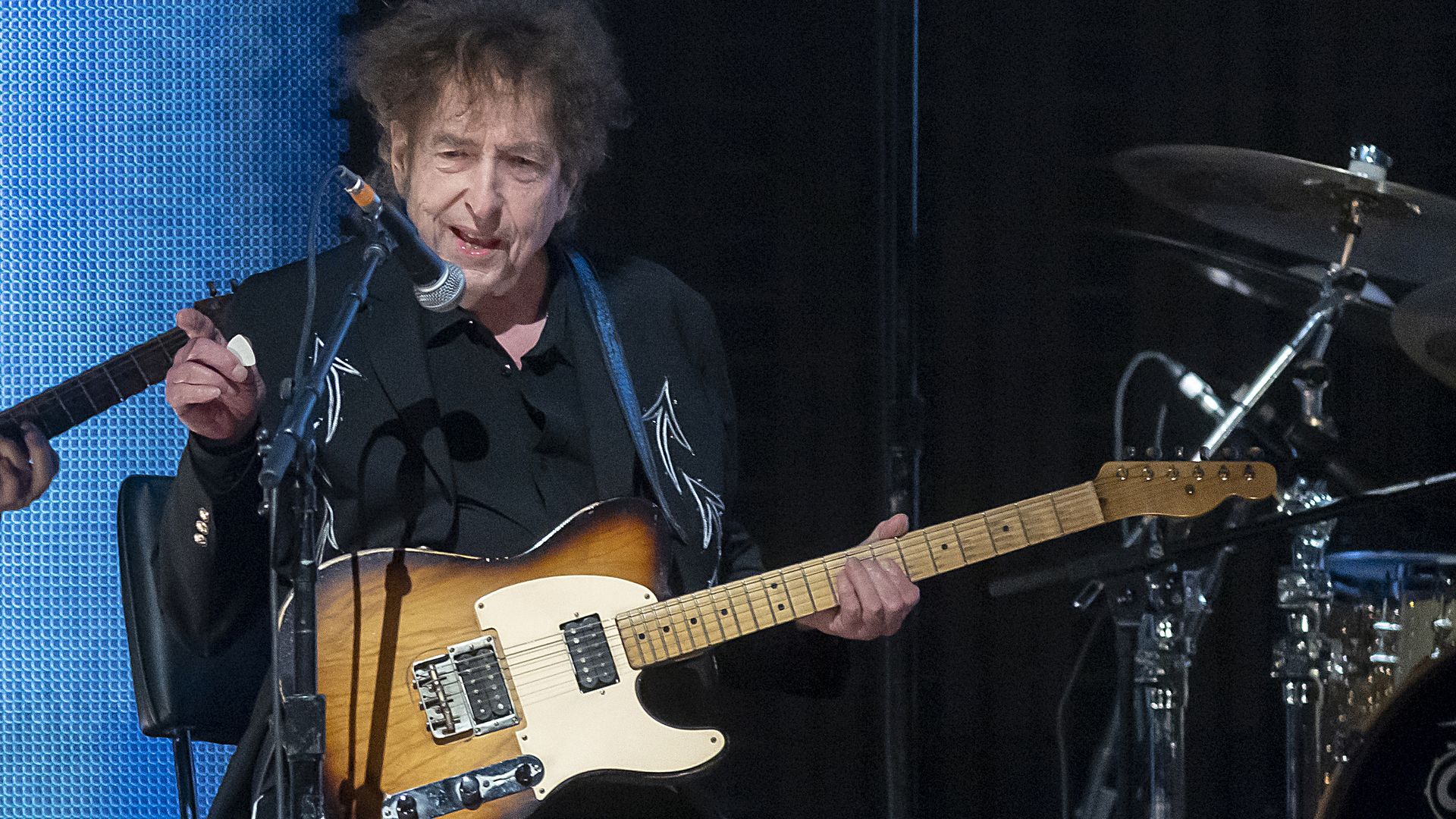
Bob Dylan performs as a surprise guest during Farm Aid in Noblesville, Indiana, on Sept. 23. Photo: Gary Miller/Getty Images
Anyone expecting to fully unwrap the enigma of Bob Dylan the man likely won't be satisfied by touring a museum bearing his name in Tulsa, Oklahoma.
- But Dylanologists, as well as casual fans, can examine his sometimes tedious creative process against a historical backdrop.
Driving the news: Dylan, 82, on Sunday kicked off the next leg of his three-year "Rough and Rowdy Ways" world tour in Kansas City, Missouri. He performs there again tonight before heading to Northern and astern states through November.
- Minnesotans have noted the tour doesn't include any gigs there, where Dylan was born.
Why it matters: About a two-hour drive from Crystal Bridges Museum, the Bob Dylan Center is evidence that NWA and Tulsa together create a super region — not merely of industry and investment, but also art and culture.
State of play: The Tulsa collection totals about 100,000 items, Steven Jenkins, director of the center, tells Axios. That includes papers, photos, notes, master recordings and miscellaneous items. Not all are on display, but the permanent exhibit includes some notable items, including:
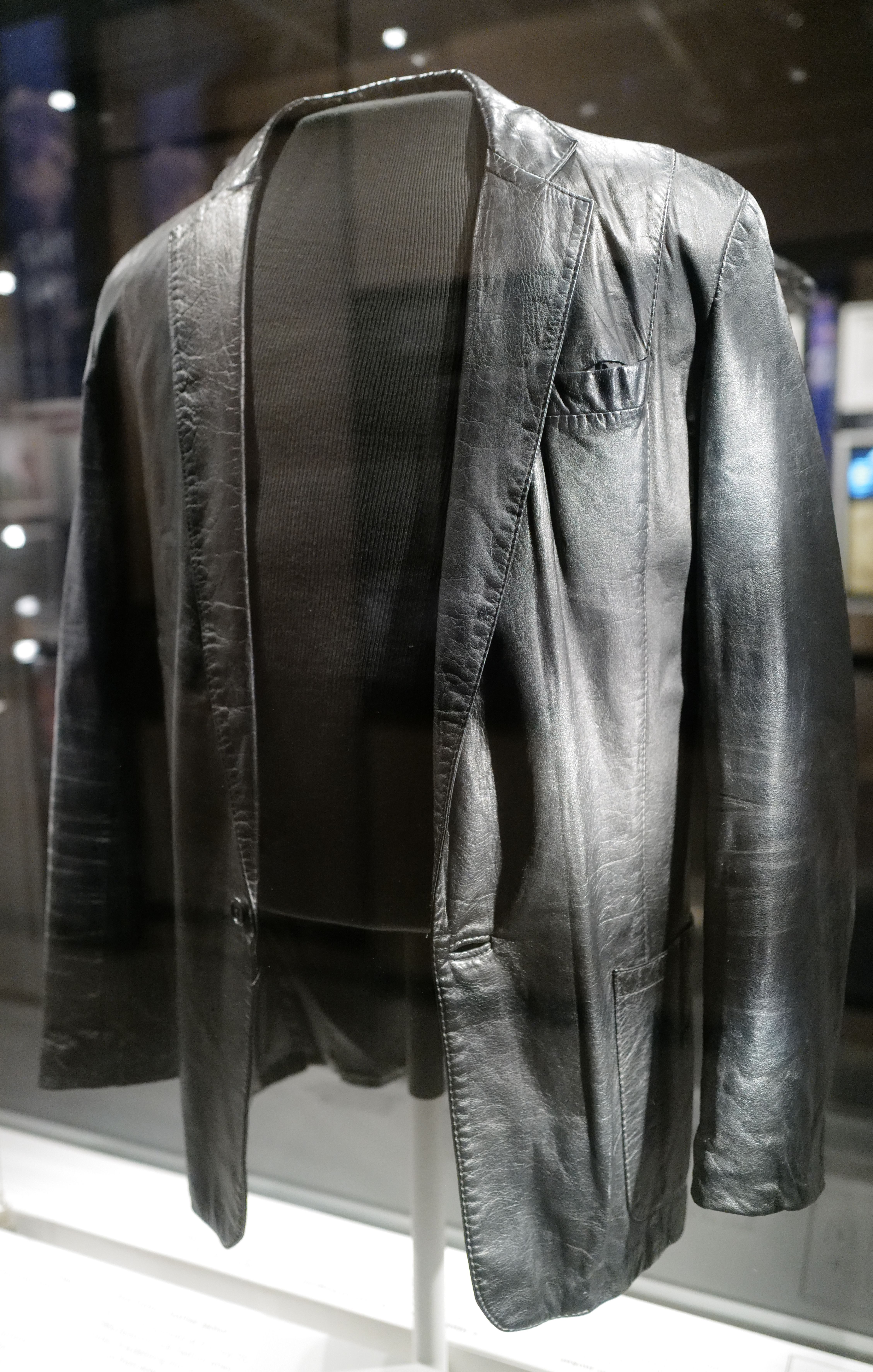
- The leather jacket Dylan wore at the Newport Folk Festival in 1965, when he "went electric."
- A handwritten letter from Arkansas native Johnny Cash in apparent response to an earlier letter from Dylan.
- A telegraph from Peter Fonda and Dennis Hopper thanking Dylan for permission to use "It's Alright, Ma" in their movie "Easy Rider."
- 10 of the 17 known drafts of "Jokerman" — viewable on a digital monitor.
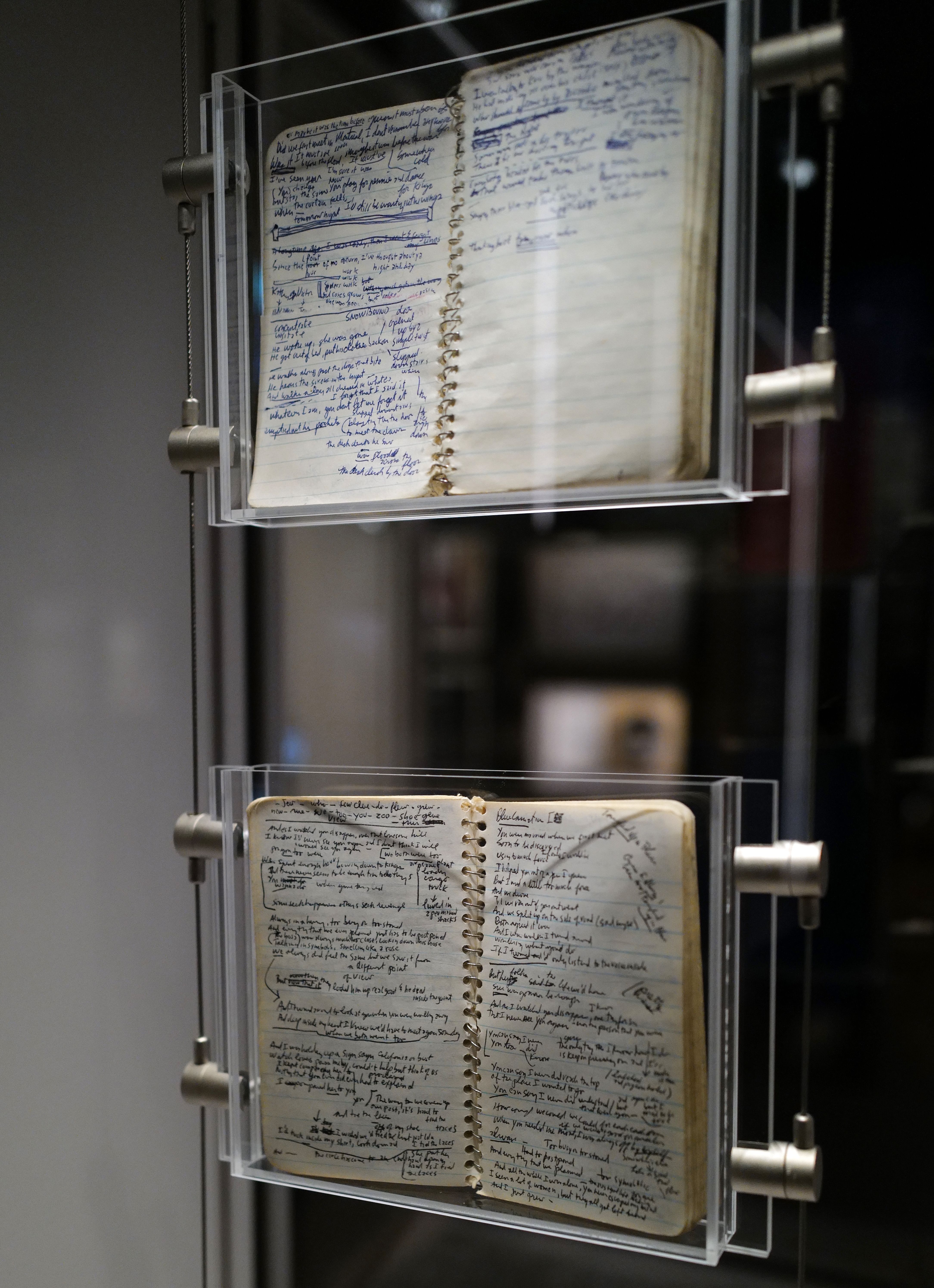
- Two of the three notebooks Dylan used to draft and redraft lyrics to the album "Blood on the Tracks." The red notebook that famously went missing for years was previously on loan from the Morgan Library & Museum in New York City.
Dylan, who hasn't toured the center, sculpted a 16-foot metal gate near the entrance.
Backstory: The musician has no direct connection to Oklahoma, leading many to wonder why the center ended up in Tulsa.
- Dylan in 2016 made it known that his archives would be for sale.
- The George Kaiser Family Foundation and University of Tulsa purchased his personal archives in 2016. The foundation later purchased the university's share.
- Oklahoma native Woody Guthrie's archives were purchased by the foundation in 2011 for a reported $3 million.
- Guthrie, who heavily influenced Dylan, grew up in Okemah, about an hour's drive from Tulsa.
- The Woody Guthrie Center is in the same building.
What they're saying: "The fact that we were the same group that had started … the Woody Guthrie Center … seemed to really give us a leg up from anywhere else that he might have been considering," Jenkins said.
- "Dylan did say that the fact that we're on Native American land really resonated for him," he said.
Jenkins noted the town's rich musical history, the Tulsa Sound of the 1970s and area musicians Leon Russell and J.J. Cale.
Of note: Jenkins couldn't say how much the foundation paid for the archives, but The New York Times reported a spread of $15-$20 million at the time.
The bottom line: Some viewers may wish for salacious threads about Dylan's personal life; however, the center is focused more on his artistry and the tireless work with which he's crafted each word and musical note for more than 60 years.
What's next: "Becoming Bob Dylan," an exhibit of black-and-white photographs taken by photojournalist Ted Russell in the early 1960s ends Oct. 15.
- The next temporary exhibit will launch Oct. 20, a display of materials highlighted in the forthcoming 600-page book "Bob Dylan: Mixing Up the Medicine," a deep dive into the archives.
Check it out: 116 E Reconciliation Way, Tulsa; open 10am-6pm Wednesday-Sunday.