Arkansas' wetter winter weather



Add Axios as your preferred source to
see more of our stories on Google.
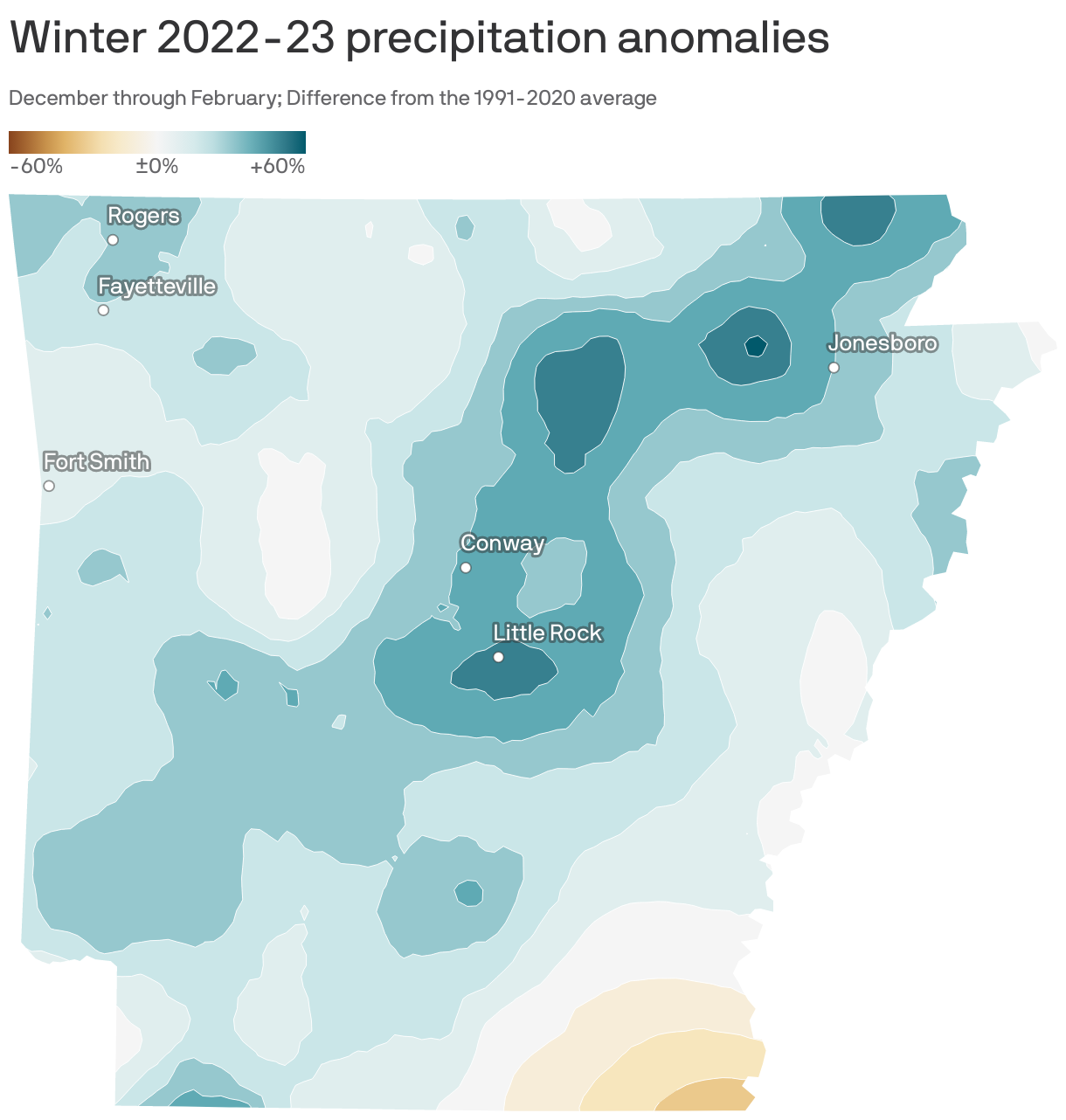
Northwest Arkansas got 9.9 inches of precipitation this past winter — up 2.2 inches from average, Axios' Alex Fitzpatrick and Erin Davis report, citing data from the National Oceanic and Atmospheric Administration.
Why it matters: Wintertime precipitation can bring hazardous conditions that hamper travel and knock out power — but it can also alleviate drought, especially in mountainous areas that rely on melting snowpack each spring to replenish groundwater supplies.
The big picture: Nationally, a band of heavier-than-usual precipitation stretched from California to Minnesota.
- Much of California and the Midwest had some of the wettest winter weather on record this past winter.
- The opposite was true in the Pacific Northwest and in parts of Texas and Florida, which were significantly drier than average.
Of note: For this analysis, "winter" is defined as Dec. 1, 2022–Feb. 28.
The bottom line: Climate change is raising the odds and severity of precipitation extremes — both heavy rain and snow, as well as prolonged and severe dry spells.
- However, it doesn’t mean that every season, or year, will set a record.