How Pope Leo's Creole roots in New Orleans tell "an American story"

Add Axios as your preferred source to
see more of our stories on Google.
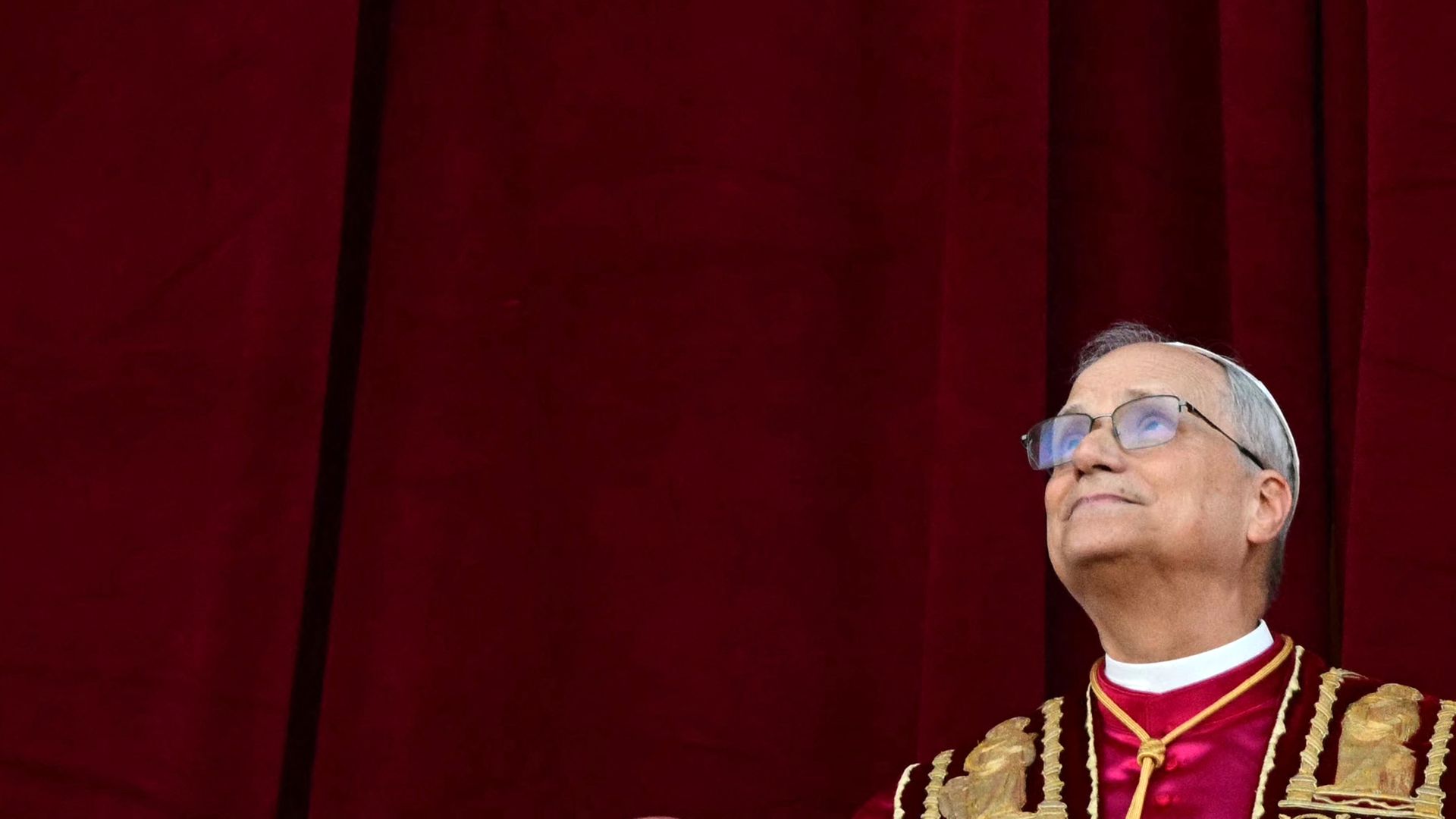
Newly-elected Pope Leo XIV has Creole ancestry in New Orleans, which makes his family part of a uniquely American story of Jim Crow Era migration. Photo: Tiziana FABI/AFP via Getty Images
Pope Leo XIV may have been born in Chicago, but he has Creole roots in New Orleans.
Why it matters: The new pope, formerly known as Cardinal Robert Francis Prevost, has a family history that tells a uniquely American story.
Catch up quick: Once Prevost was elevated to Pope Leo XIV on Thursday, Historic New Orleans Collection genealogist Jari Honora got curious and immediately researched his family background.
- Based on the name Prevost, Honora tells Axios New Orleans, "I honestly was not looking for an immediate Louisiana connection. ... But on his mother's side, they are definitely from New Orleans."
- Honora's research shows that Pope Leo's maternal grandparents were Joseph Martinez and Louise Baquié, who lived in the 7th Ward. They married at Our Lady of Sacred Heart Church in 1887 before moving to Chicago between 1910 and 1912.
That move makes Pope Leo's family part of the early, Jim Crow-era Black diaspora from the American South known as the Great Migration.
- During a stretch of time between about 1915 and 1970, about 6 million Black southerners left the Deep South, according to historian Isabel Wilkerson in her book "The Warmth of Other Suns."
- "The Great Migration would become a turning point in history," she wrote. "It would transform urban America and recast the social and political order of every city it touched." Chicago was a common landing place, according to Wilkerson, with its Black population expanding from about 44,000 to more than 1 million people.
- In other words, as Honora says, Pope Leo's story "is absolutely an American story."
The intrigue: For some migrants, leaving the South also meant a chance to change how they presented, which Prevost's family did, Honora says.
- "Fairly consistently, they are listed in census and other records in New Orleans as Black and 'mulatto,'" he says. "But once they migrate to Chicago, those identifiers are all switched to white."
- In New Orleans, there's a Creole term — "passé blanc" — for people of color who can "pass" for white.
- "That's just not surprising for families that are in the process of passing. I don't fault them at all," Honora says. "I see it as a decision to safeguard their livelihoods, and an economic decision both to leave New Orleans and go to larger cities in the North, as well as to shift racial identities."
What he's saying: John Prevost, the pope's brother, tells the New York Times that his family did not discuss their Creole ancestry. "It was never an issue," he said.
Fun fact: New Orleans Archdiocese records indicate that Pope Leo's maternal great-grandmother Eugenie Grambois was baptized at the St. Louis Cathedral on Jan. 8, 1840.
- She later married Ferdinand D. Baquié on Sept. 19, 1864 at St. Mary's Church on Chartres Street, church records indicate.
What it means to be "Creole"
Flashback: New Orleans has been culturally diverse since its founding as a French city, and its complicated history includes periods as being both the home to one of the largest populations of free people of color and as the site of one of the largest markets for enslaved people.
- New Orleans' Creole population was born of that history.
- "Most people link 'Creole' to being mixed race, or they link it to something related to race as a whole, and it is not," Honora clarifies. "It's shared by people who are white, who are Black, indigenous or any combination thereof."
- To be Creole, says Honora, who counts himself as such, is to be "solidly rooted in Latin-based, Roman Catholic cultural practices in the New World, and particularly Louisiana."
Yes, but: To be a "Creole of color," as Pope Leo's heritage indicates, Honora says, "means they are descended from people with known African ancestry."