Meet Pope Leo XIV, the first American to serve as Bishop of Rome


Add Axios as your preferred source to
see more of our stories on Google.
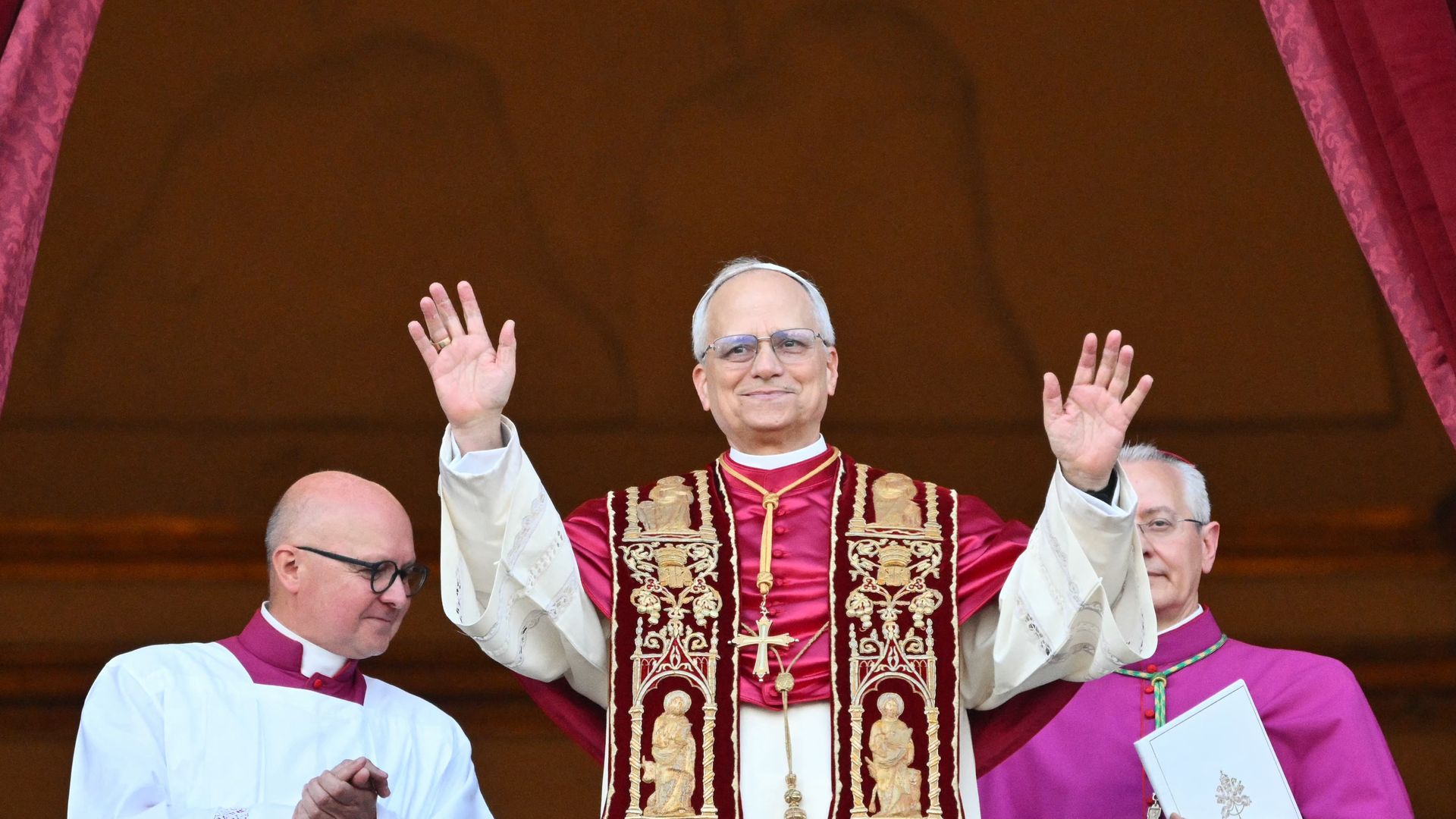
Newly elected Pope Leo XIV, Robert Francis Prevost arrives on the main central loggia balcony of the St Peter's Basilica for the first time, after the cardinals ended the conclave on Thursday. Photo: Alberto Pizzoli/AFP via Getty Images
Cardinal Robert Francis Prevost, 69, was elected as the 267th leader of the Catholic Church on Thursday, the second day of voting in the internationally watched papal conclave.
- He will be known to the world as Pope Leo XIV.
Why it matters: Leo is the first American pope and now heads a church with some 1.4 billion members worldwide. But his power will transcend the faith community as Leo assumes a role with vast diplomatic and social influence.
Driving the news: After the white smoke billowed from the Sistine Chapel to signal that a conclave winner had emerged Thursday evening, Cardinal Dominique Mamberti made the famous "Habemus Papam" ("We have a pope") announcement and introduced Leo to the world.
- Prevost was born in Chicago and was a priest at parishes in the city before serving in Peru and working alongside his predecessor, Pope Francis, in Rome. He's also the Catholic Church's first Augustinian pope.
- During his two decades in Peru, the New York Times reports, he became a bishop and a naturalized citizen. Francis appointed him as a cardinal in 2023.
- A mentee of his described him to the Times as a "dignified middle of the road."
- He's served as the president of the Pontifical Commission for Latin America and Prefect of the Dicastery for Bishops.
The intrigue: Leo's views on some key topics remain unclear.
- An account by his name has retweeted and shared critical posts about the Trump administration, including one that read, "Vance is wrong: Jesus doesn't ask us to rank our love for others."
- In 2024, he said it was time to move "from words to action" on the deterioration of the environment, the official Vatican News site reported, adding that "dominion over nature" should not be "tyrannical."
- Leo told the Vatican News last year that "the bishop is not supposed to be a little prince sitting in his kingdom" and that a church leader is "called authentically to be humble, to be close to the people he serves, to walk with them, to suffer with them."
- In a 2023 interview, he said he still considers himself "a missionary."
Zoom in: The new pope said he does not believe in "clericalizing women" in the Catholic Church and strongly opposes abortion.
- He described in 2012 Western media "sympathy for beliefs and practices that are at odds with the Gospel," citing the "homosexual lifestyle" and "alternative families comprised of same-sex partners and their adopted children," per the Irish Times.
What they're saying: Michael Canaris, a scholar at Loyola University Chicago, said the new pope's connection to Peru forms a bridge from his predecessor Pope Francis.
- "Most heartening to me is his choice of name, which obviously contains an allusion to Leo XIII, and his famous text Rerum Novarum. This supported labor rights and unions in the church at the dawn of the contemporary world," Canaris told Axios' Carrie Shepherd.
State of play: Prevost received the required two-thirds majority of cardinal electors to become the next pope.
- He was chosen during either the fourth or fifth round of voting after one vote on Wednesday and two votes on Thursday morning yielded no consensus among the cardinals.
Between the lines: In papal betting markets that sought to predict the outcome of the often unpredictable, and highly secretive, conclave, he was not a top contender.
- Scholars previously believed it was unlikely the new pope would hail from America.
Context: The more than 130 cardinals participating in the conclave, which began Wednesday, took an oath of absolute secrecy before voting began in the Sistine Chapel.
Catch up quick: Francis' death last month set the conclave in motion, bringing Cardinals from around the world to the Vatican to usher in a new era of Catholic leadership.
- During his chapter of the church, Francis championed historically progressive stances, such as spreading climate change awareness and advocating for immigrants' rights and inclusivity toward LGBTQ+ people.
More from Axios:
- Why Asia, Africa loom large in deciding next pope
- Pope Francis' popemobile to serve as health clinic for Gaza children
- "Conclave" viewership spikes after Pope Francis' death
Carrie Shepherd contributed reporting.
Editor's note: This is a breaking news story and will be updated.
