Louisiana executes 1st death row inmate in 15 years

Add Axios as your preferred source to
see more of our stories on Google.
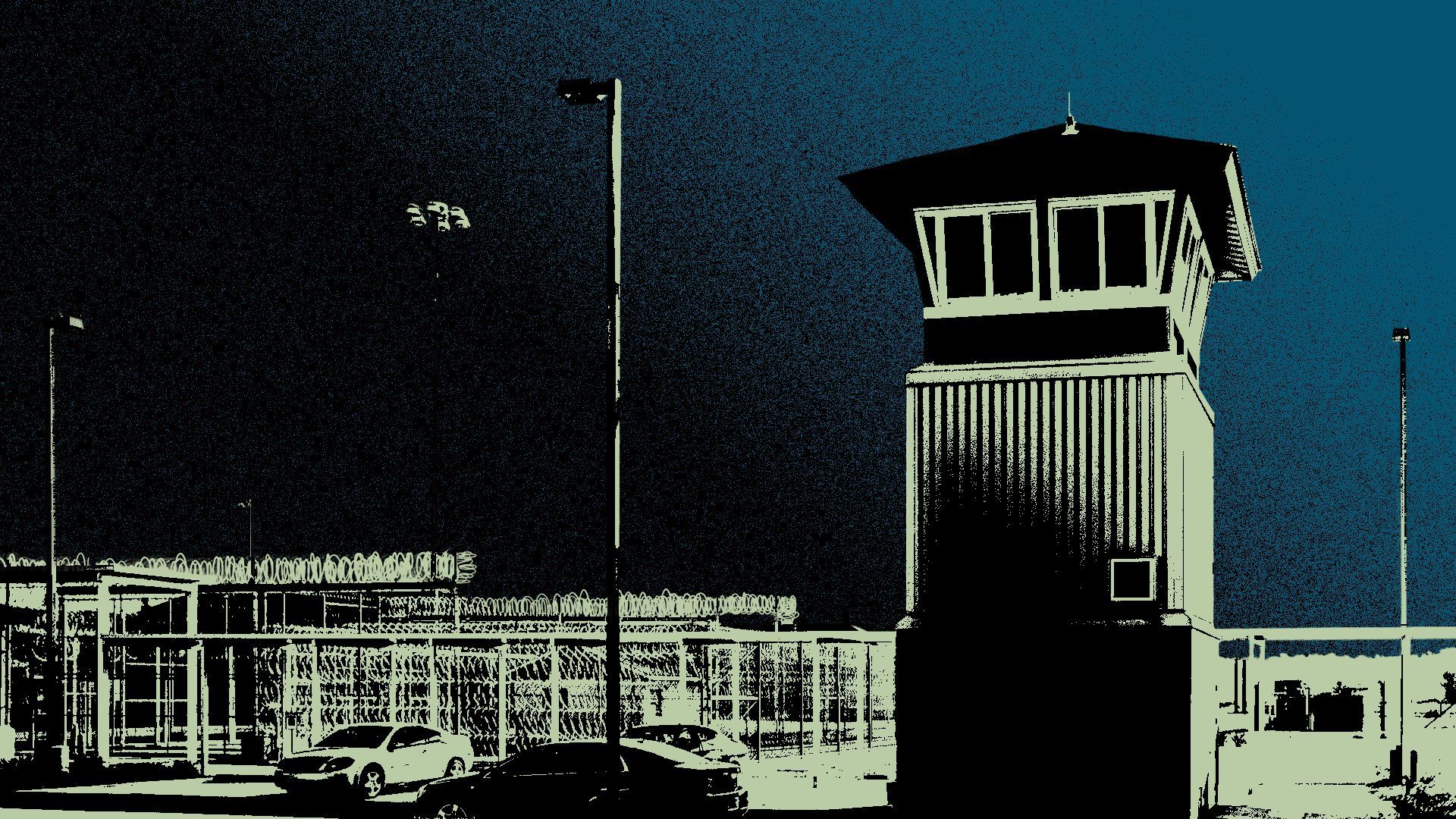
Photo illustration: Brendan Lynch/Axios; Photo: Giles Clarke/Getty Images
Jessie Hoffman Jr. became the first person in 15 years to be executed by the state of Louisiana on Tuesday evening.
The big picture: Hoffman was Louisiana's first death row inmate to face capital punishment by nitrogen hypoxia, representing an expansion of the method after Alabama began using it in 2024.
- Louisiana legalized the method, along with electrocution, during a criminal justice-focused legislative special session last year. Its nitrogen gas protocol mirrors Alabama's.
- Mississippi and Oklahoma lawmakers have also authorized its use, and Arkansas is among others considering adopting the practice.
- That expansion has happened despite some witness accounts of Alabama's executions that have described the method as particularly painful or frightening.
The latest: Despite last-minute legal challenges by Hoffman's legal team, the state was able to go ahead with his execution at the Louisiana State Penitentiary at Angola.
- Prison officials turned on the nitrogen gas used in Hoffman's execution at 6:21pm, according to Seth Smith, the chief of Angola's prison operations, who spoke in a press conference Tuesday night.
- Within 2 minutes, Smith said, Hoffman did convulse. "He did move, he did shake," Smith said.
- The process took 14 minutes, Smith said. Hoffman was pronounced dead at about 6:50pm, according to Gary Westcott, the secretary of the Louisiana Department of Public Safety and Corrections.
Catch up quick: Hoffman was found guilty of Mary "Molly" Elliott's 1997 kidnapping, rape and first-degree murder.
- When Louisiana lawmakers moved to restart executions, Hoffman was among the first two people to receive death warrants. The other died of natural causes before his execution date arrived.
Some of Elliott's loved ones have said Hoffman's death would not bring the closure they once may have sought, according to documents reported on by The Times-Picayune.
- "The reality is this: after this much time passing, I've become indifferent to the death penalty vs. life in prison without possibility of parole," Elliott's husband, Andy, wrote in a statement obtained by the paper.
- "However, I'm not indifferent to the uncertainty that has accompanied these many years. If putting him to death is the easiest way to end the uncertainty, then on balance I favor that solution. But, his death will not provide closure."
The other side: Attorney General Liz Murrill said on Tuesday that during her recent experiences with members of Elliott's "immediate family," they were "grateful to have finality."
- "What was frustrating for them is that it took 30 years," she said.
Hoffman's final legal challenges included outreach to the U.S. Supreme Court.
- His lawyers said his case brought up two key questions: whether psychological suffering is a consideration in challenges to the Eighth Amendment, which prohibits cruel and unusual punishment, and whether the mask used to apply the nitrogen gas infringed upon his religious practices as a Buddhist.
- Hoffman's team contended that to practice his faith, he needed to be able to perform meditative breathing. His lawyers argued that the mask prohibited that.
What we're watching: Murrill said her team is in the process of reviewing the cases of Louisiana's 55 remaining death row inmates.
- "I couldn't answer" how quickly the next state execution may take place, she said, but "everybody deserves the justice the state promised to them in these cases."