Why Louisiana seafood is hard to find in New Orleans

Add Axios as your preferred source to
see more of our stories on Google.
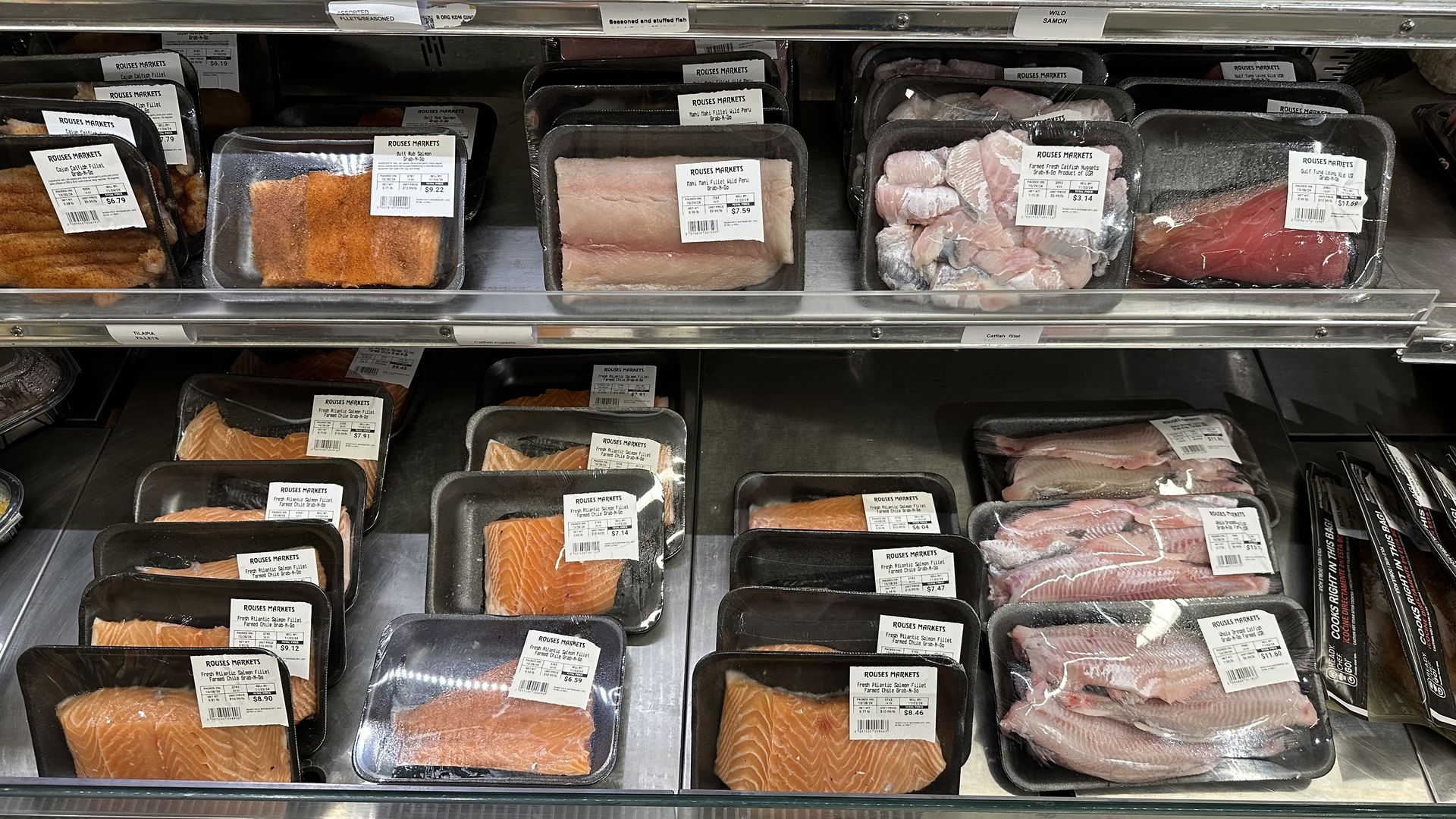
A Rouses Market seafood display, which includes imported and Mississippi-farmed catfish. Experts say Rouses is an exception among local grocers because of how much Gulf shrimp it buys every season. Photo: Chelsea Brasted/Axios
Head to one of New Orleans' most popular grocery stores, and you may have trouble finding evidence that Louisiana is the nation's No. 2 seafood producer.
Why it matters: Louisiana lawmakers and industry activists are working to increase local demand for local seafood, but it can still be maddeningly hard to find when all you want to do is get dinner on the table.
The big picture: Most people in the New Orleans area do their grocery shopping at a handful of stores, including Walmart, Sam's Club, Rouses Market and Winn-Dixie, data shows.
- Stores like Walmart and Winn-Dixie, which have hundreds of locations across the U.S., are sourcing their products by the millions of pounds, says Julie Falgout, the seafood industry liaison for the Louisiana Sea Grant.
- That can create a disconnect between most local shoppers and Louisiana's seafood industry, which is largely comprised of small businesses.
How it works: "It's usually somebody behind a computer making deals, getting the best price for the size [of a specific product] they want," she tells Axios New Orleans, and it's especially challenging to match wild caught seafood to specific size requirements.
- Then, once a store cuts a deal for the product they want, it ends up in warehouses that serve an entire region, Falgout says.
- "You don't have that many stores down here anymore that buy directly from local fishermen or local docks or processors."
Yes, but: Rouses is one, Falgout says.
- The Louisiana-born market is known in the industry for buying up fresh Gulf shrimp when it's in season.
- "If it's fished here, [we buy] here first," says Rouses Market seafood director Denise Englade. But it's not easy: The company identifies local fishermen, then introduces them to distributors who get products from docks to warehouses before they're shipped to one of Rouses' 66 stores.
- Plus, with wild-caught products, she says, "we have to be flexible. We can't have everything every day."
Overall, Falgout says, "it's gotten more difficult over time because it's all about sourcing, convenience and price."
State of play: U.S. consumers are hungry for seafood.
- In fact, says ULL researcher Geoffrey Stewart, American fishers only catch about 10% of what American diners are eating. The rest is getting imported.
- That's creating an expensive headache for Louisiana's seafood industry, which is the nation's No. 2 producer of seafood by volume, but only the No. 4 producer by value, data shows.
- Translation? Louisiana seafood isn't priced in a way to compete with the "luxury" status of products like Maine lobster or Alaskan salmon, says Stewart, who studies the state's seafood supply chain, and most locals don't even know what they're eating is imported.
Zoom in: The industry wants to change that, Stewart says, and Louisiana lawmakers have passed legislation to try to help by requiring restaurants to label where they're getting their product.
- "When [chefs] leverage where the product comes from, people are willing to pay for it," Stewart says.
- It's helpful when consumers "recognize the value and they can actually connect back to the water, where it came from, the point of origin, which is truly the culture we're trying to preserve," he says. "Preservation of culture isn't just something we document . ... Preservation is also participation in the culture."
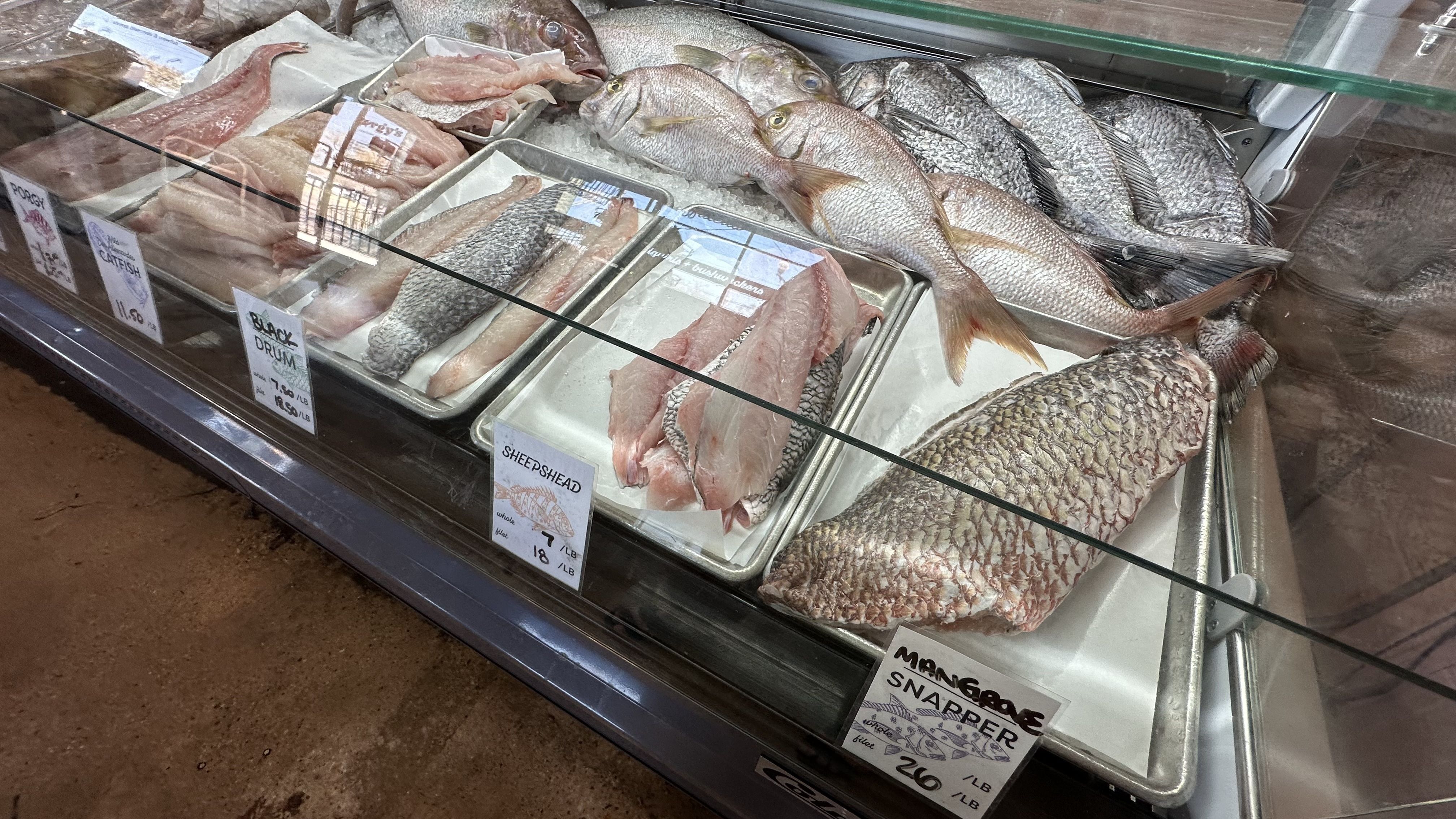
One place that's trying to do it right is Porgy's Seafood Market in New Orleans.
- "We'd been talking for years about how hard it was to find a place to buy fresh, wild-caught local seafood in the city," says co-owner Marcus Jacobs. "We want everybody to have access to the same stuff restaurants have access to, and for whatever reasons, there are a lot of obstacles to get wild-caught Gulf seafood."
- The Mid-City spot is half restaurant and half market, with a display case stuffed with fresh, in-season filets straight off the boat and a tight menu focused on highlighting the same bounty.
The bottom line: "It's on consumers to ask questions and demand local stuff," Jacobs says. "Vote with your dollars."