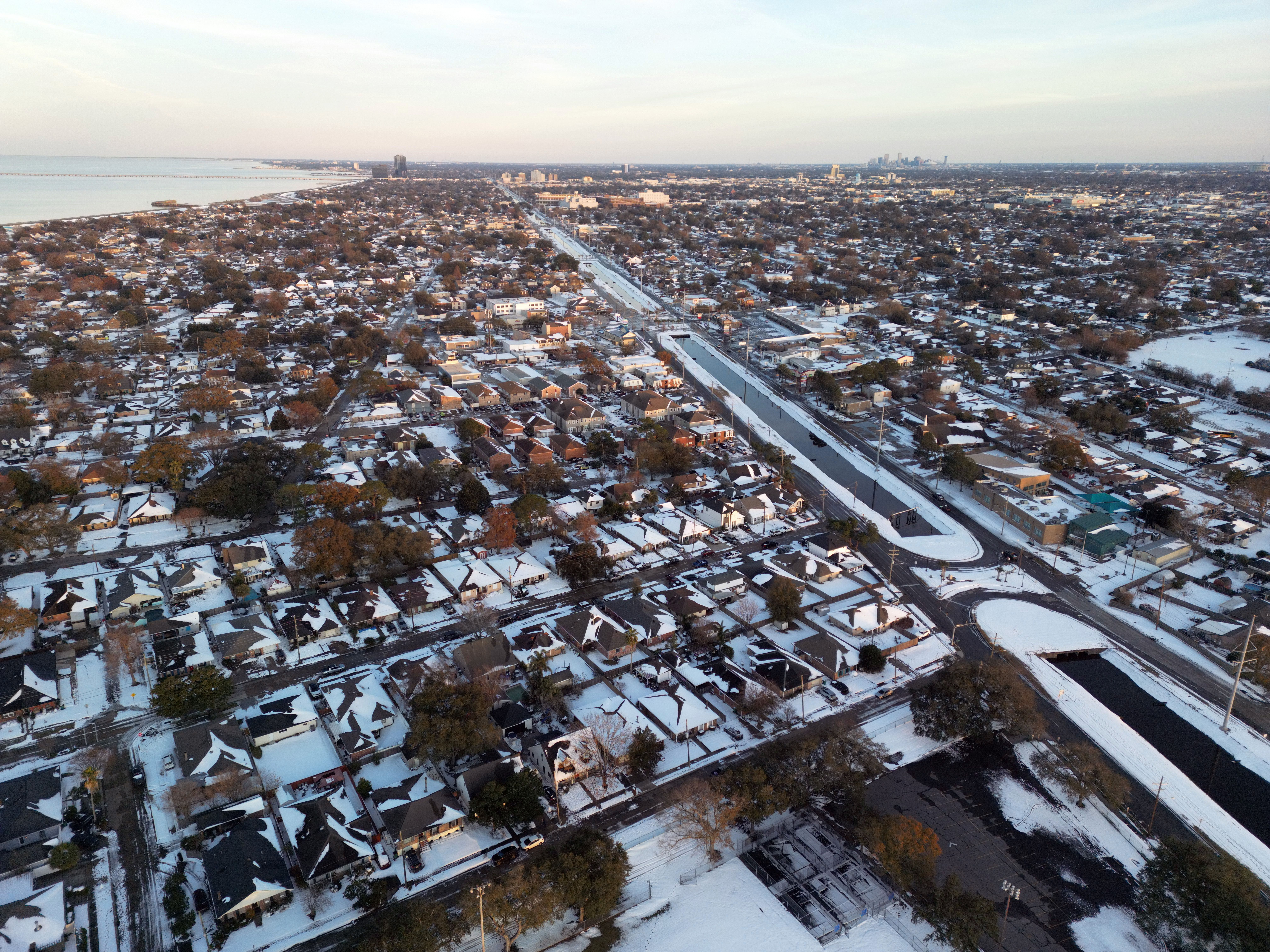
Rare snowstorm hits Louisiana, raising climate change concerns


Add Axios as your preferred source to
see more of our stories on Google.
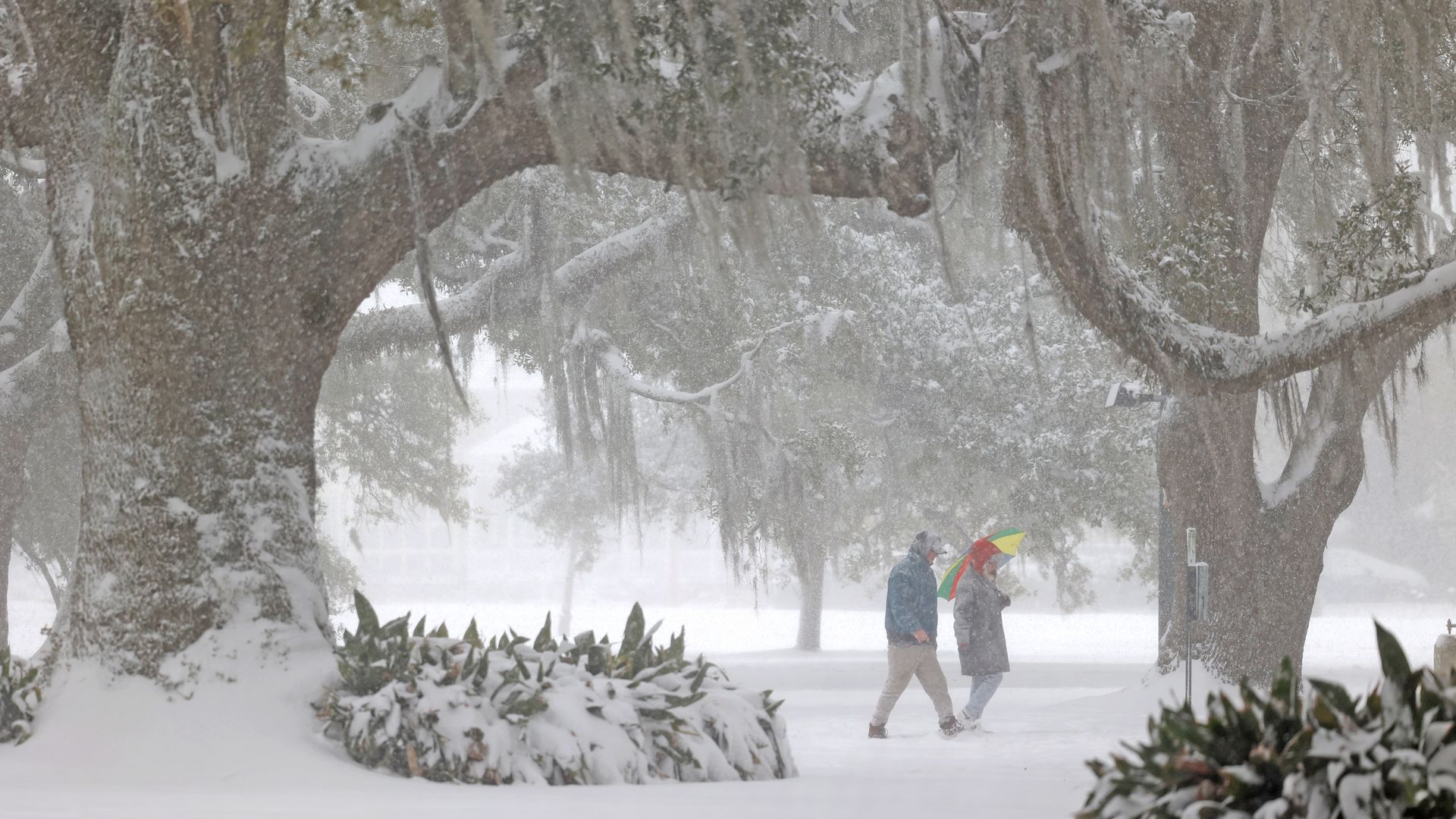
Will McMains and Annie Griffin walk under the oak trees in City Park on Tuesday. Photo: Michael DeMocker/Getty Images
New Orleans went from almost 70 degrees to a record snowstorm within four days. In a few months, hurricane season will start, bringing a new trend of rapidly intensifying storms.
Why it matters: The weather whiplash, with a record-shattering extreme event, has scientists weighing in on the effects of climate change.
The big picture: The deadly winter storm dropped 10 inches across New Orleans metro, more snow than the region has seen in a century.
- Snow and low temperature records were shattered across the state.
- The National Weather Service issued its first-ever blizzard warning in Louisiana.
- Four people died in the state, and at least 10 died in the storm elsewhere in the South. The region was shut down for days due to icy roads.
Zoom in: The once-in-a-century snowstorm was tied to a polar vortex-related Arctic blast that affected most of the Lower 48 states.
- The polar vortex is a large area of low pressure in the upper atmosphere that traps some of the coldest air near the North Pole and always exists around the Arctic during the winter.
- During the cold snap, the polar vortex was "stretched" and expanded south, said Judah Cohen, a meteorologist at Atmospheric & Environmental Research. Go deeper.
The cold spilled so far south that the snow falling in New Orleans was light and fluffy and prone to drifting. In short, an alien phenomenon in the Deep South.
- Typically during Arctic outbreaks, the Gulf Coast stays dry or receives a wintry mix. But this time, a storm formed along a frontal zone and tapped into unusually warm Gulf of Mexico waters.
- The comparatively warm and humid air was vaulted northward, where it overran the cold, dry and dense air, producing snow.
In other words, the same factor — unusually hot seas that helped lead to rapidly intensifying Gulf hurricanes last year — also helped produce record snows from Texas to the Carolinas.
- The heavy snow was also in keeping with trends toward more frequent and intense precipitation events, which can come in the form of rain or snow. This is a well-established climate science finding.
The intrigue: Over longer timescales, studies suggest polar vortex shifts may be more likely due to human-caused climate change, but this is an area of active research.
- Extreme cold is also expected to become less severe in a climate that is warming over time due to the burning of fossil fuels.
- Barry Keim, who was the state climatologist for more than 20 years, told WWNO's Halle Parker that his research also supports a warming trend with fewer freezes in Louisiana, but there's always a "little wrinkle," like this snowstorm.