New Orleans metro to get its 1st lead pipe inventory

Add Axios as your preferred source to
see more of our stories on Google.
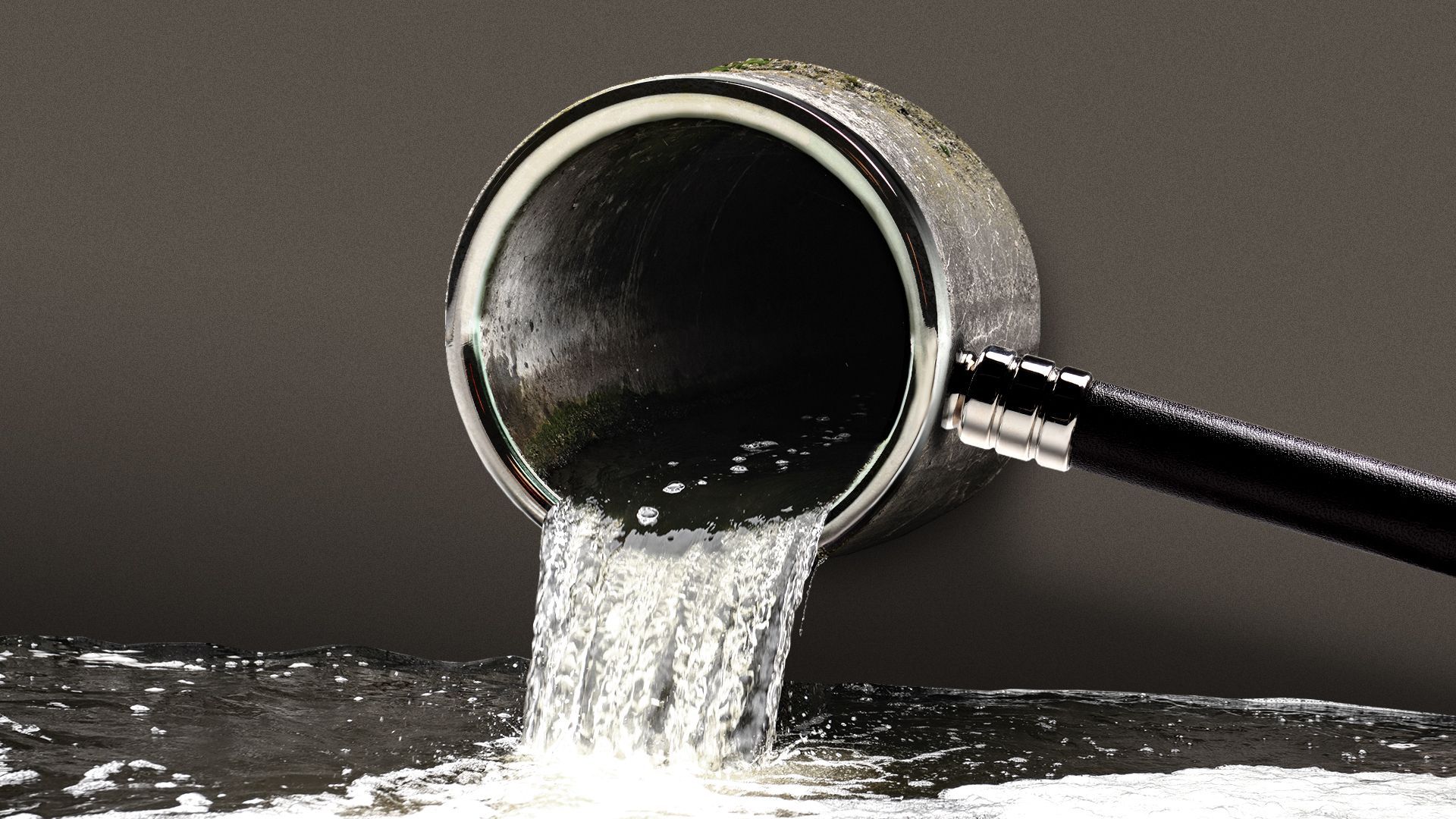
Illustration: Annelise Capossela/Axios
Louisiana will get its first comprehensive look next week at the locations of lead drinking water pipes across the state.
Why it matters: Once we know where the toxic pipes are, we can remove them.
The big picture: The EPA estimates that up to 9 million homes across the country are served by lead pipes, many of which are in lower-income communities and communities of color.
- Louisiana utilities have until Wednesday to turn over a detailed inventory of lead pipes to the state Department of Health.
- New Orleans and Jefferson Parish representatives tell Axios their utilities are on track to meet the deadline.
Zoom in: The Sewerage and Water Board plans to take it a step further and publish a searchable online map by Wednesday.
- The goal is to give residents data about whether their water line and service line contain lead. It will be published here.
- "The essential first step in 'getting the lead out' is to locate the lead, and in a city as old as New Orleans, that task is complicated," said Eric Schwartz, co-founder of BlueConduit, in a statement made when the project was announced last year.
- BlueConduit is the water analytics company that's creating the map, thanks to a Google.org grant.
Zoom out: The Biden administration unveiled a new EPA rule earlier this week requiring drinking water utilities nationwide to replace all lead pipes within a decade, with a few exceptions.
Between the lines: Drinking water doesn't have detectable levels of lead when it leaves the treatment plant, S&WB says.
- However, water can be contaminated on its journey through lead pipes and plumbing fixtures.
- Lead pipes were common until 1986, and many lead service lines remain in New Orleans. S&WB says it adds lime to the water to minimize lead pipe corrosion.
- You can get a free lead testing kit from S&WB.
Threat level: Childhood lead poisoning has been a high-profile issue in New Orleans since the 1980s, when many public housing projects were found to have lead hazards, LDH spokesman Kevin Litten tells Axios.
- State legislation requires all children younger than 6 to be tested for lead, he said. Children are usually screened via a blood test around 12 months or 24 months of age.
- Lead poisoning can cause early birth, stunted growth, learning delays and behavioral problems. There's no known antidote for lead poisoning, the CDC says.
Flashback: Last year's saltwater intrusion threat in New Orleans metro made lead contamination a very real risk for residents.
- Salt can corrode pipes and possibly contaminate water by dissolving heavy metals, like lead.
- Thankfully, the saltwater intrusion was thwarted before reaching the city.
State of play: You can be exposed to lead by breathing in, eating and drinking lead dust particles, according the New Orleans Health Department.
- Lead-based paint and lead-contaminated dust are some of the most widespread and hazardous sources of lead exposure for young children in the state, Litten said.
- Contaminated applesauce pouches have been a problem this year, as well.
- Anyone can get lead poisoning, but those most at risk are pregnant people and young children, according to the health department.
What's next: The long-term goal is to replace lead pipes, but it is going to take years.
- The feds this week allocated $2.6 billion to end this "generational public health problem."