As New Orleans watches Helene aftermath, lessons and memories of Katrina reappear

Add Axios as your preferred source to
see more of our stories on Google.
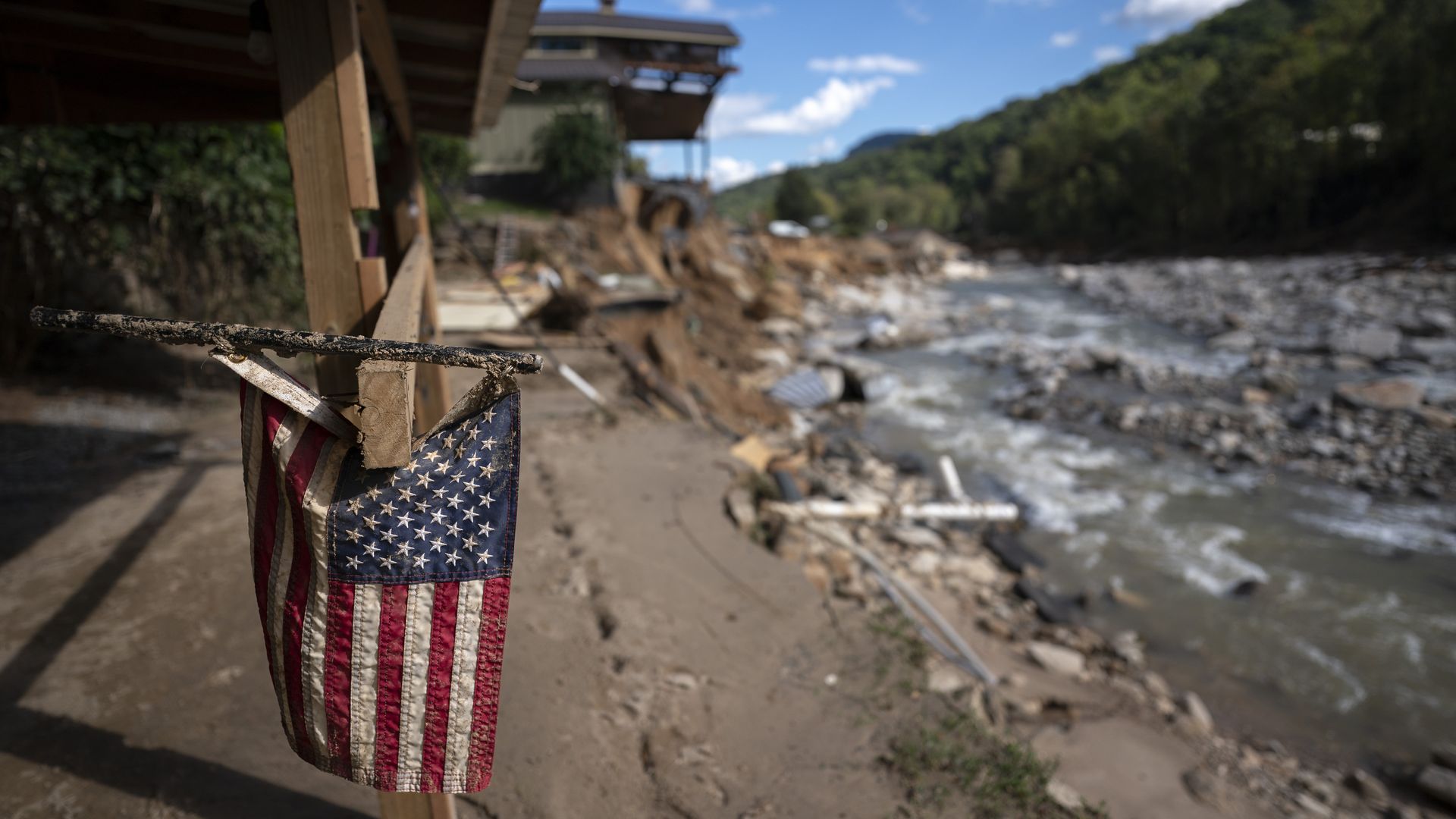
A tattered American flag in the aftermath of Hurricane Helene on Oct. 2 in Chimney Rock, North Carolina. Photo: Sean Rayford/Getty Images
Hurricane Helene is its own disaster, but New Orleans knows its blueprint.
Why it matters: Recovery is a loaded term, and what we learned after Hurricane Katrina is that there's no going back. There's only going forward.
Zoom in: Though casualties are expected to increase in the coming days, Helene is already the second-most deadly storm in recent U.S. mainland history, leaving Hurricane Katrina still at No. 1 and carving out a grim fraternity of sorts between western North Carolina and New Orleans.
"People didn't expect entire mountains to collapse," says New Orleans chef Amy Sins. "We didn't expect the levees to fall."
It's impossible not to feel like we've seen so many of these images before.
- Rising water, muck-filled homes and businesses, families stranded on rooftops, radio call-ins hoping to find loved ones, a mishmash of communication methods as the phone lines fail, the cacophony of rumor-fueled confusion and the bottom-line shock at just how suddenly everything can get so bad.
- But where there are 100 similarities between the two, there are also 1,000 differences.
Hurricane Katrina was a manmade disaster, levee failures exacerbated by nature, and so far, it appears what happened in western North Carolina was the inverse, a natural disaster made crueler by manmade ones.
Between the lines: There's a lot we learned from Hurricane Katrina, lessons in emergency management, and the Xs and Os of how to help a community and individual families and people navigate a disaster.
- We learned why you should empty your refrigerator if you evacuate, how high up to cut the drywall when it floods and to know our neighbors' plans before a storm hits.
- We learned that the simplest things can be the most complicated to get working again, that homeowners' insurance doesn't cover floods, and disasters brutally crack open any pre-existing disparities and create new ones.
- And we learned that nothing feels as good as going home.
"We've seen all the problems, and they're repeating themselves over and over and over again every disaster," says Sins, who founded Fill the Needs as a way to help combat some of those problems.
- The organization steps in after disasters to coordinate small nonprofits for immediate, boots-on-the-ground response while larger ones, like FEMA and the Red Cross, get operational.
- "Looking back into the past, we can relate with what is happening to people right now," Sins says. "Technically, I had a mudslide in my living room. I was on the levee break at the 17th Street Canal, and I see this one [in North Carolina] and I know how much work it's gonna be."
Zoom in: These were hard-earned, painful lessons we never asked for.
- That's why, when someone would say "this is so-and-so's Katrina," a sentiment that's been repeated again with Helene, it can twist like a knife, salt gritting in the most painful of wounds.
- "I was not prepared for the horrifying shit that I saw," photographer Crista Rock tells me. She was a videographer for WDSU when Katrina hit. "It's OK to compare trends, because we are getting more hurricanes that are stronger. … But don't compare the devastation. It's too hard on the survivors."
Some of those wounds won't ever heal. But it is possible that, with time, we've gotten a little more perspective.
- As Sins says, "I'm a different person than I was 19 years ago."
- Where once we looked on with heat and anger, perhaps something different can start to take its place, and Sins hopes that might be a commitment to help in western North Carolina long past changes in the media cycle.
- "Two weeks from now, three weeks from now, the media will move on to another disaster," she says, a statement that especially strikes true as attention already refocuses on Hurricane Milton heading toward Florida. "But three weeks after Katrina, we still needed a lot of help, and I think New Orleans … understands the long-term commitment, because we lived it."
- And, in so many ways, we still are.