Louisiana doctors prepare for nation's first law reclassifying abortion drugs as controlled substances

Add Axios as your preferred source to
see more of our stories on Google.
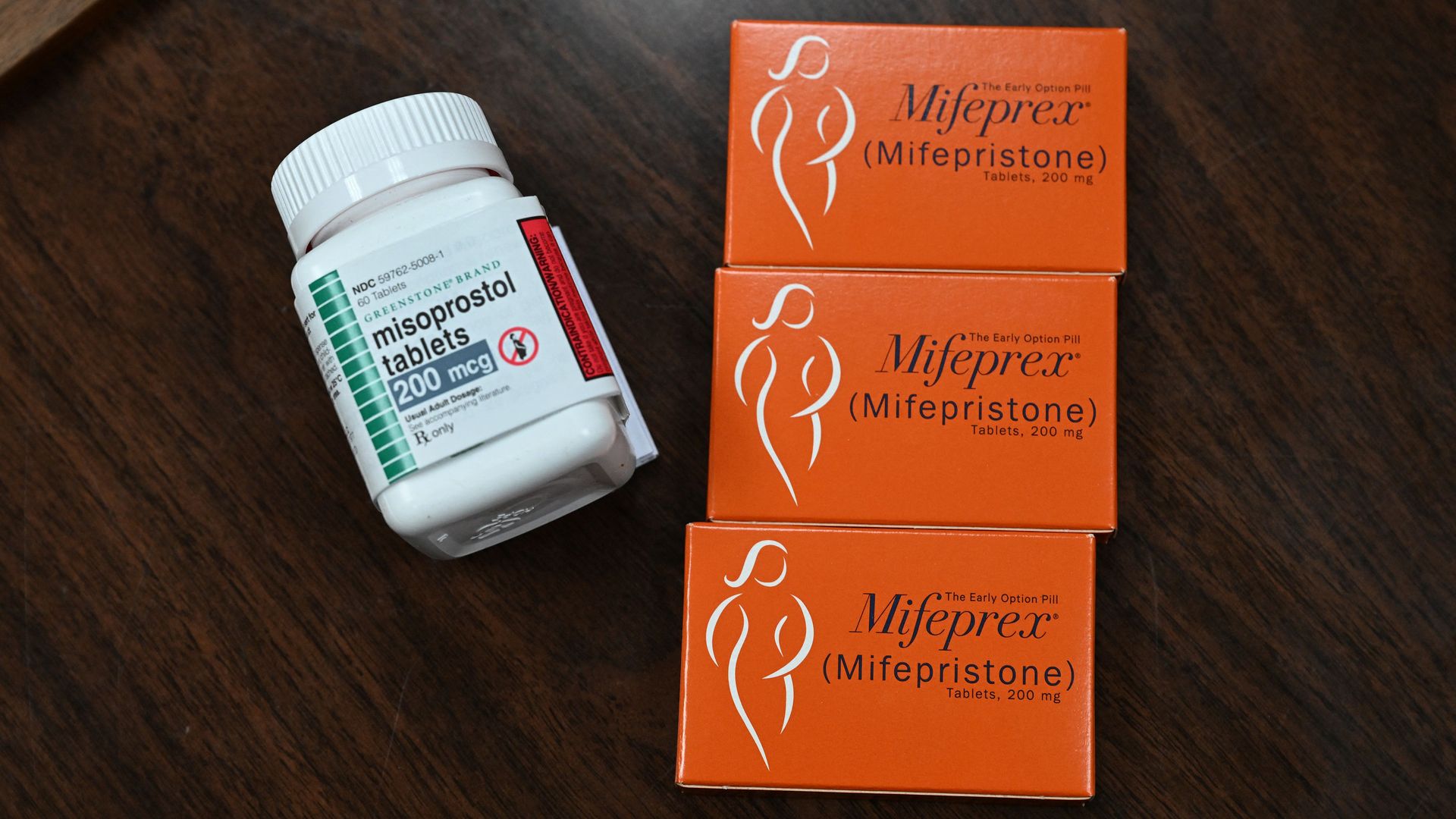
Mifepristone and misoprostol, two drugs used in medication abortion, are about to become controlled substances in Louisiana. Photo: Robyn Beck/AFP via Getty Images
With a new Louisiana law reclassifying two drugs that can be used to induce abortions as controlled substances set to take effect Oct. 1, doctors are practicing how quickly they can get their hands on the lifesaving medication while also abiding by new state guidance, reports say.
Why it matters: "Most patients would likely make it," New Orleans Department of Health director and emergency medical doctor Jennifer Avegno told the Washington Post of the delays caused by added restrictions to the drugs, which have uses beyond abortion. "But I've seen myself what can happen when someone is bleeding out from a miscarriage. And a few minutes could mean life and death in some cases."
The big picture: Louisiana will become the first state to classify misoprostol and mifepristone as controlled substances as abortion rights become a flashpoint in the presidential election.
- The drugs are also used for ulcer prevention and as treatments for constipation and postpartum hemorrhages.
- Before it became law, hundreds of doctors signed a letter opposing the bill, Jezebel reported.
The latest: New Orleans City Council members are expected to vote Thursday on a motion directing Avegno's office "investigate and study any delay of care issues," a statement from Council member-at-large Helena Moreno's office says.
- "Child-bearing women are not safe in Louisiana, and that will cause economic consequences to the state, our city," said Council member Lesli Harris before a committee vote preliminarily approving the motion Wednesday. "If hearts and minds can't swing it, let's take a look at the business case for how this will impact the economy of Louisiana."
Between the lines: Louisiana already bans nearly all abortions and has one of the country's highest maternal mortality rates, according to the CDC.
Zoom in: A Sept. 6 memo from the Louisiana Department of Health to the state's medical community says misoprostol and mifepristone can be legally used to treat postpartum hemorrhages and incomplete miscarriages.
- But to comply with the law, hospitals will have to keep the drugs in a "locked/secured cabinet, compartment or other system," in a "secured automated medication dispensing/delivery system," or "in a locked or secured area of an obstetric hemorrhage cart or 'crash cart.'"
What they're saying: That guidance doesn't really work in practice, Avegno told the Washington Post.
- "It's not medically correct to make these drugs controlled substances," she said. "It's like the goal is to stop all abortions. But there's not much concern about collateral damage. Now who knows what will happen?"
The other side: "This legislation does not limit a healthcare provider's ability to use, prescribe, or fill these medications for legitimate health purposes nor does it impose restrictive burdens on access for emergency purposes," said Louisiana Attorney General Liz Murrill in a lengthy statement outlining her office's stance on state laws and definitions around abortion, miscarriage and maternal medical care.
- Murrill is not a medical doctor.
- "My office is not aware of a single Louisiana doctor who has declined emergency care," she wrote.
- When Gov. Jeff Landry signed the legislation, he called the bill a "commonsense" way to protect women.
Go deeper:
- Exclusive poll: 72% of Americans back abortion pill access
- Medication abortion makes up 63% of American abortion, study says
- More than half of U.S. states, including Louisiana, can't vote to support abortion access because they lack the process for citizen-led initiatives.