Cicada Brood XIX may be extinct in Louisiana



Add Axios as your preferred source to
see more of our stories on Google.
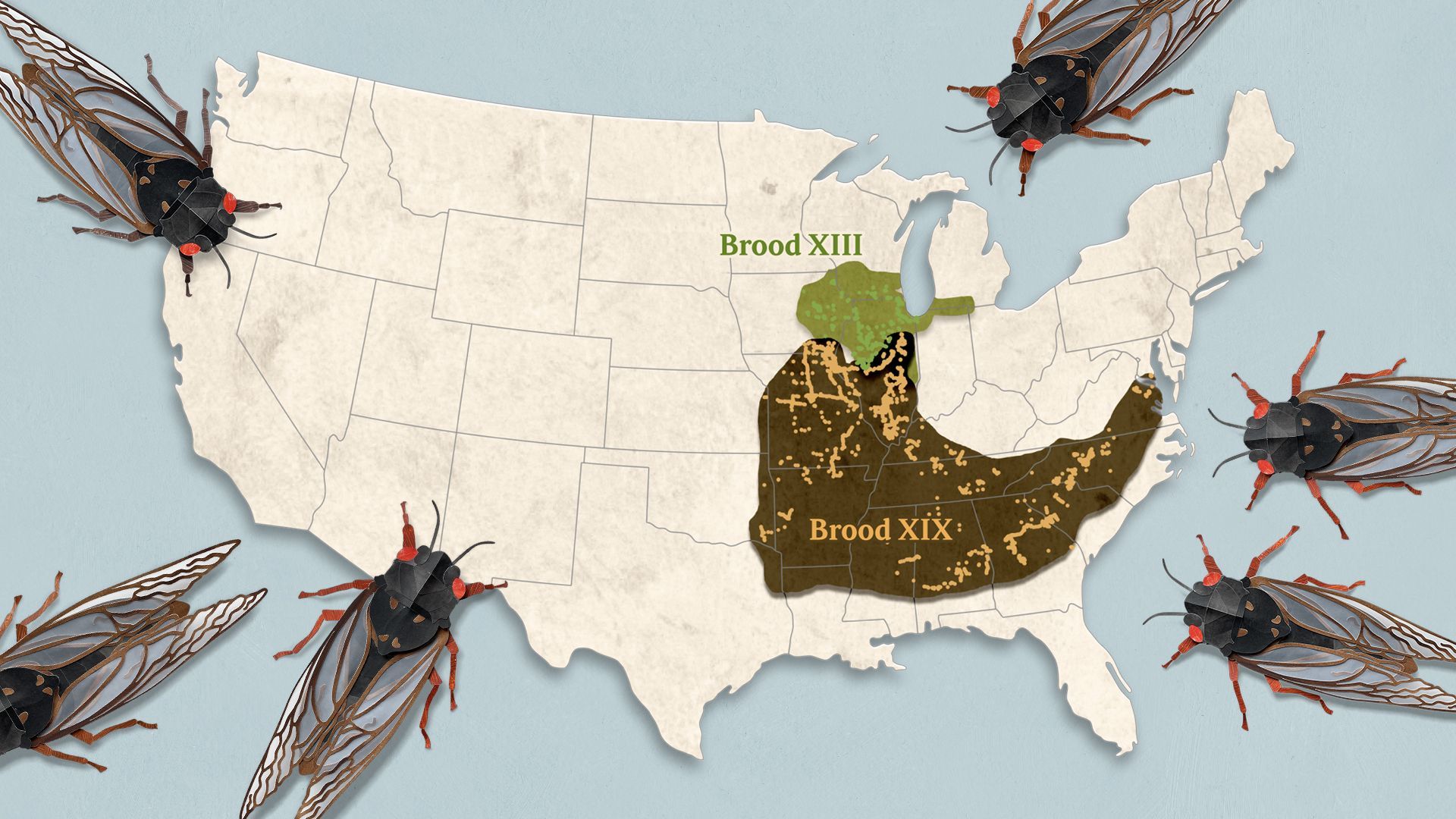
Illustration: Maura Losch, Shoshana Gordon and Will Chase/Axios
The cicadapocalypse hitting the U.S. isn't expected to reach New Orleans.
Why it matters: We'll get our usual summer cicadas, but we aren't going to get the massive numbers circulating in viral videos.
The big picture: There are 15 surviving periodical cicada broods, each identified by Roman numerals.
- This year is the first time in 221 years that Brood XIX (on a 13-year cycle) and Brood XIII (on a 17-year cycle) will emerge together.
- Brood XIX's emergence area includes Shreveport and part of north Louisiana.
Yes, but: LSU AgCenter researchers say the brood may be extinct in the state because no sightings were recorded in 2011, the last time it emerged.
- Any disturbance to the forests during the cicadas' time underground, such as residential development, can exterminate the localized population, said Christopher Carlton, an entomology diagnostician with the AgCenter.
- "Once they are gone, they never recover," Carlton said.
Meanwhile, New Orleans will gets its annual cicadas this summer.
- These cicadas usually have a one- or two-year life cycle, the AgCenter says.
- They leave their exoskeleton on tree trunks, walls and other outdoor items.
Fun fact: Some of the red-eyed Brood XIX are expected to surface with a fungus that turns them into hyper-sexual, frantically-mating zombies that spread the fungus like an STD and keep going until their genitals fall off, writes Axios Richmond's Karri Peifer.
Dig in: Some people are experimenting with eating cicadas.
- Zack Lemann at Audubon Insectarium cooked cicada dishes with the Associated Press last month, which led PETA activists to dress up like giant cicadas and pretend to eat a human.
- The insectarium continues to serve other bugs to guests, but says cicadas aren't on the regular menu for now.
Threat level: Cicadas are loud, but they don't pose a threat to people and they are good for the ecosystem.
- Cicada holes — about the size of your pinky — create helpful tunnels to funnel water and nutrients to tree roots, ecologist and CEO of Landmark Pest Management Rebecca Fyffe tells Axios.
- When cicadas lay eggs in the smallest outer tree branches they do natural pruning, making trees "healthier, evidenced by more fruits and flowers after a cicada emergence," Fyffe says.
- "When cicadas die at the end of the season, their bodies, which accumulate at the base of trees, provide important nutrients for the trees," she says.
What's next: Louisiana features more prominently in future cicada brood emergences.
Go deeper: