New Orleans parks experimenting with "No Mow May" initiative

Add Axios as your preferred source to
see more of our stories on Google.

Illustration: Lindsey Bailey/Axios
Audubon and City Park are mowing less right now to encourage bees and other pollinators in New Orleans.
Why it matters: Bees pollinate one-third of the food we eat, and their numbers have been shrinking nationally, according to the Bee Conservancy.
The big picture: No Mow May is a callout to stop mowing your grass for the month in an effort to provide flowers for bees and increase general biodiversity, organizer Bee City USA says.
- Other variations include reduced mowing during the spring months. Example: Mowing every three weeks instead of every week.
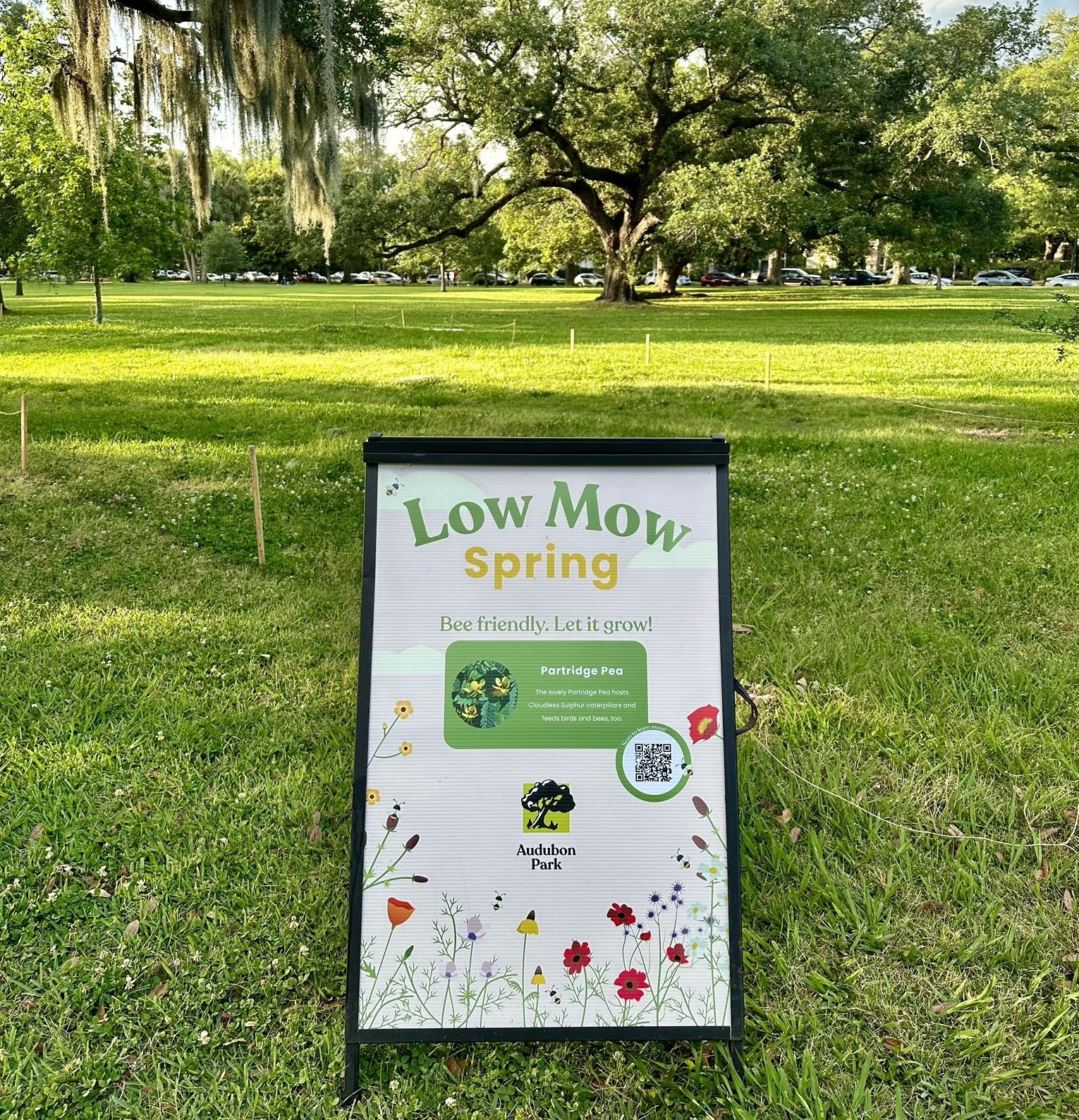
Driving the news: Audubon Nature Institute is experimenting with not mowing parts of Woldenberg Park, Audubon Park and Riverview Park (The Fly) this spring.
- Last year was Audubon's first year and it went well, says Landon Proctor, the director of horticulture for all of Audubon's properties. They doubled the space this year.
- It allows native clover to bloom and the grass to grow 14-18 inches, he says.
- "The idea is it will start to look like a meadow," Proctor tells Axios, with the long-term goal of making this permanent in parts of the parks.
Meanwhile, City Park Conservancy last year transitioned parts of City Park from regularly mowed zones to "reclaimed areas to see the benefits of nature taking its natural course" all year, says spokesman Keith Claverie.
- The efforts are being evaluated as part of the master planning process, he tells Axios.
The city's mowing crews are maintaining their regular schedule, according to Anthony Davis, the city's director of code enforcement.
- Any changes would required new directives from the mayor or City Council, he said.
- Jefferson Parish is not participating in any mowing initiatives either, parish spokeswoman Rachel Strassel says.
Mowing is important for levee safety, says Koren Clark, the spokesman for the Southeast Louisiana Flood Protection Authority-East.
- The height of the grass is regulated by the U.S. Army Corps of Engineers as part of the earthen levees' "armor."
- "Maintaining the grass also allows us to inspect the levees for any deficiencies," he tells Axios.
Residential participation: No Mow May has spread to residences as well, but not everyone can participate due to neighborhood and parish rules.
- Proctor suggests starting with a small patch in the yard and seeing what happens after a month of not mowing.
- You can also plant pollinator-friendly flowers, he said.
The other side: Some cities are backing off on No Mow May initiatives, saying it ruins turf.
- Des Moines rescinded its official endorsement after getting hundreds of complaints about tall grass, reports Axios' Jason Clayworth.
- And, master gardeners in Illinois say leaf blowers are the problem, not mowers.
- Advocates in other states are encouraging reduced mowing frequency instead of a full month of no mowing.
What's next: Audubon is hosting a pollinator celebration June 22 in front of the Audubon Insectarium with vendors for plants and bee-based art.
- There's also a "BioBlitz" that day for Pollinator Week in which volunteers and experts will survey the pollinators in Audubon Park.
Go deeper: