Why New Orleans has no lesbian bars


Add Axios as your preferred source to
see more of our stories on Google.
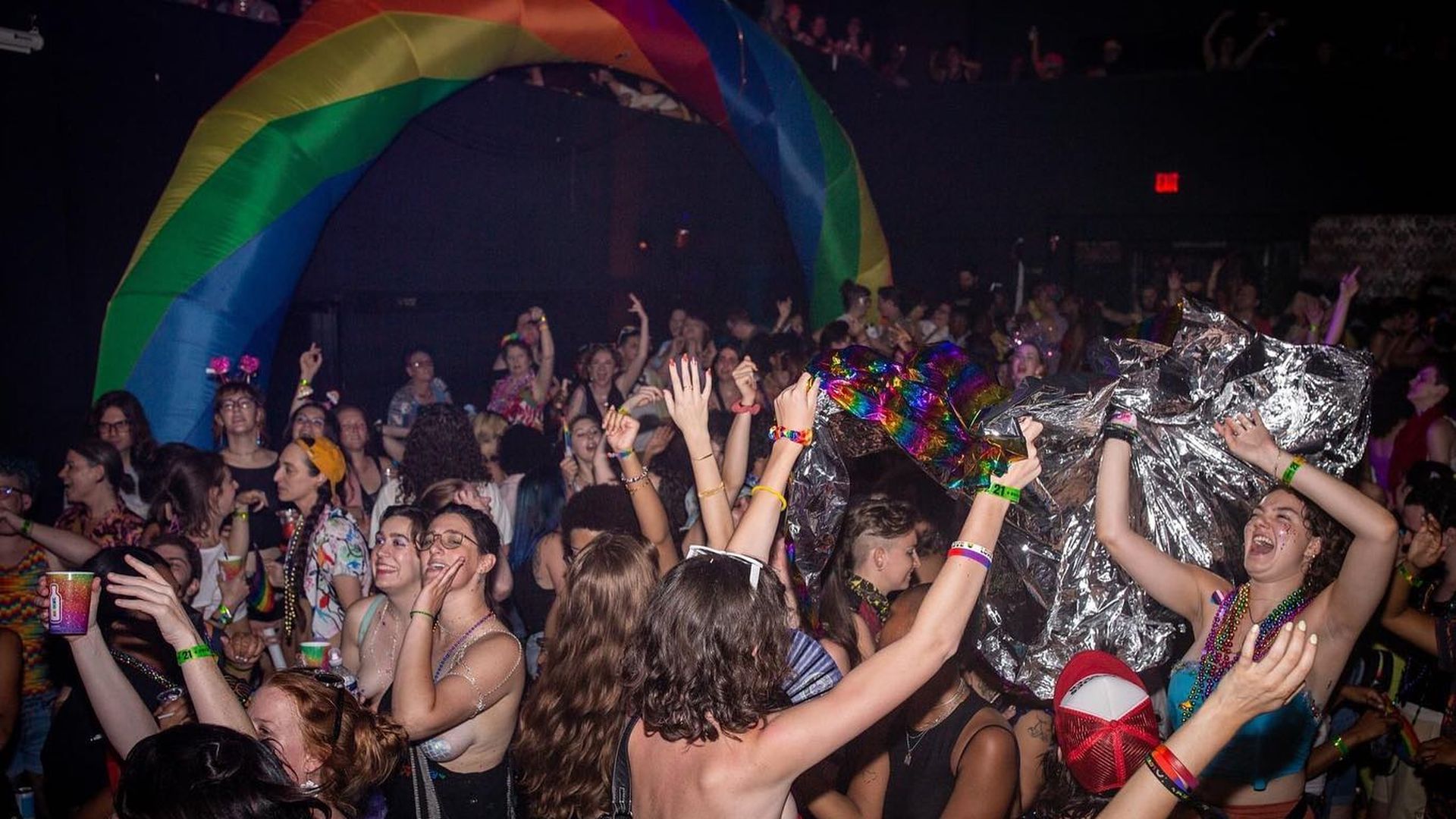
Photo: Courtesy of Rin Ramirez/Grrlspot
New Orleans is home to one of the largest concentrations of LGBTQ+ people in the U.S. with 4.7% of the adult population identifying as members of the community. And yet, it has no brick-and-mortar lesbian bars.
- It does, however, have a thriving "pop up" lesbian bar in GrrlSpot, which has hosted hundreds at events around town every few months since 2006.
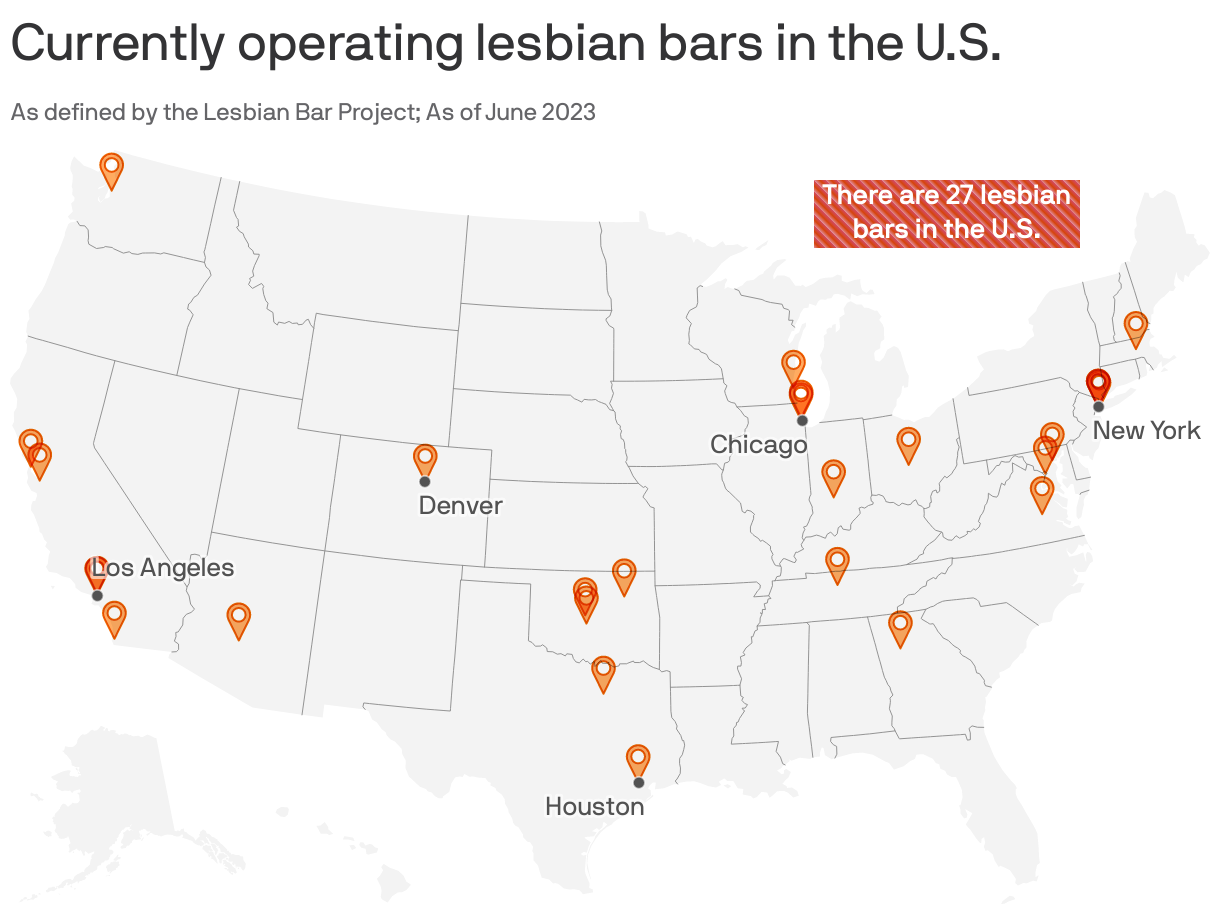
Driving the news: The absence is in line with a national trend. America's lesbian bars have been on a decline since the 1980s when there were around 200, per the Lesbian Bar Project (LBP), which documents the few remaining spaces focused on queer women and transgender and nonbinary people.
- Today there are 27 operating in the country.
Why it matters: Queer people and businesses in some states face an "unprecedented" spike in anti-LGBTQ+ sentiment, per the Human Rights Campaign. These physical spaces historically provided connection away from prejudice.
Zoom in: Jenna Jordan founded GrrlSpot in the wake of Hurricane Katrina to convene friends returning to the city. It's "grown into this big, beautiful dance party ... this crazy, glittery, fun thing," the organizer told Axios.
- She said despite its success, she does not have ambitions for a brick-and-mortar spot, because she prefers switching up the scenery. "I want it to be the prettiest, coolest lesbian bar you've ever been to, but just once every couple months."
- She also worries that there wouldn't be enough of a market during the weekdays to keep one open.
The big picture: Many factors are behind the drop in lesbian bars in the U.S., including growing online communities, a desire for inclusivity with other LGBTQ+ populations and gentrification.
- Over recent decades, growing acceptance of LGBTQ+ people also led to less need for these bars — a trend now challenged by the country's increasing political polarization.
- Historically, many lesbian bars also excluded women of color and transgender people, and some of those spaces either lost relevance or evolved to a more inclusive clientele.
Reality check: Between GrrlSpot events, Jordan said this area has "nothing" in terms of lesbian-specific spaces. The handful of local bars in years past have closed.
The intrigue: While New Orleans has a significant number of bars targeting gay men, many in an area in the French Quarter affectionately known as the "Fruit Loop," that industry appears to be declining too, Jordan said.
- Some that used to operate for 24 hours a day now don't, she said, possibly due to the rise of dating apps targeted at the gay community.
- As to why there are so many more "gay boy bars" than lesbian bars, she pointed to access to capital and said that "men typically go out more. Their relationships seem to look different than lesbian relationships."
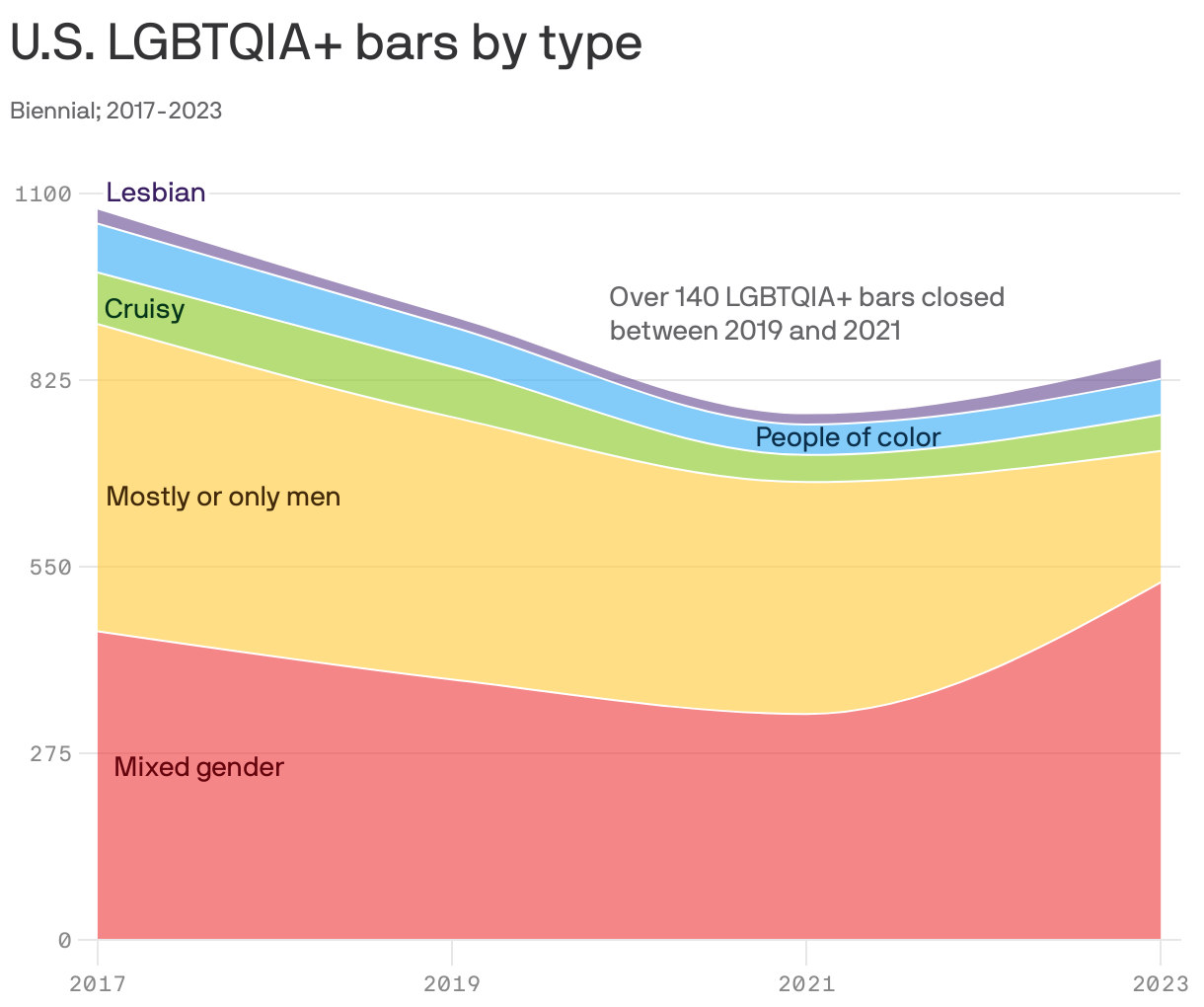
By the numbers: The total number of queer bars fell 37% between 2007 and 2019, from 1,357 to 860, per research from Oberlin College based on business listings.
- The number of lesbian bars has always been smaller but still dropped a greater amount in that time period: 52%, from 31 down to 15.
- LGBTQ+ bars for people of color fell 60%, from 145 to 59.
- A 2021 analysis from UCLA's Williams Institute estimates there are about 46,000 LGBTQ+ community members in New Orleans.
Of note: The figures from Oberlin and LBP are estimates, as bars open and close often, and the definition of "lesbian bar" can be gray.
- Many of these spaces have changed over time as language to describe LGBTQ+ identity evolved. The term "lesbian" itself is debated over who is included and who isn't.
State of play: The discrepancies in where lesbian bars are thriving or failing reflect the country's polarization, as well as wealth inequalities between larger cities and smaller ones, LBP co-creators and filmmakers Erica Rose and Elina Street tell Axios.
- While the only lesbian bar in Alabama closed this spring and Florida's The Lady's Room is seeking help through a GoFundMe to stay afloat, L.A. has a new lounge, and Chicago has "way more than ever, in a way," Dorothy bar owner Zoe Schor told WBEZ.
Between the lines: Even with the difficult climate, lesbian nightlife is still seeing a "resurgence" in some parts of the U.S., Rose says.
- Between 2019 and 2023, lesbian bars doubled from a 1.7% share of total LGBTQ+ bars to 3.6%, per the same Oberlin researcher.
Jordan agrees that it's "getting better." The growth of her event — and others like it around the country — are indicators. Lesbian Social Detroit drew 800 people during Pride Month last year for an alleyway block party in the Motor City's downtown.
- More spaces are emerging as "we recognize that we may not want to go there every single night, but we recognize the need to be around other queer women," Jordan said.
- "As things [politically] get more conservative, these spaces are becoming more obviously necessary."
What's next: GrrlSpot's next event is tied to late summer's Southern Decadence, a festival sometimes called "Gay Mardi Gras." The 5-decade-old event has historically been dominated by gay men.
- But it has begun including GrrlSpot, and more and more women have been attending. In 2015 they were the largest indoor event at the festival. "And the boys had no idea we existed!" she said.
- "Southern Decadence is really, really fun. It's always predominantly been for the boys, but we're changing that," Jordan said.