Meharry chief requests funding to address doctor shortage

Add Axios as your preferred source to
see more of our stories on Google.
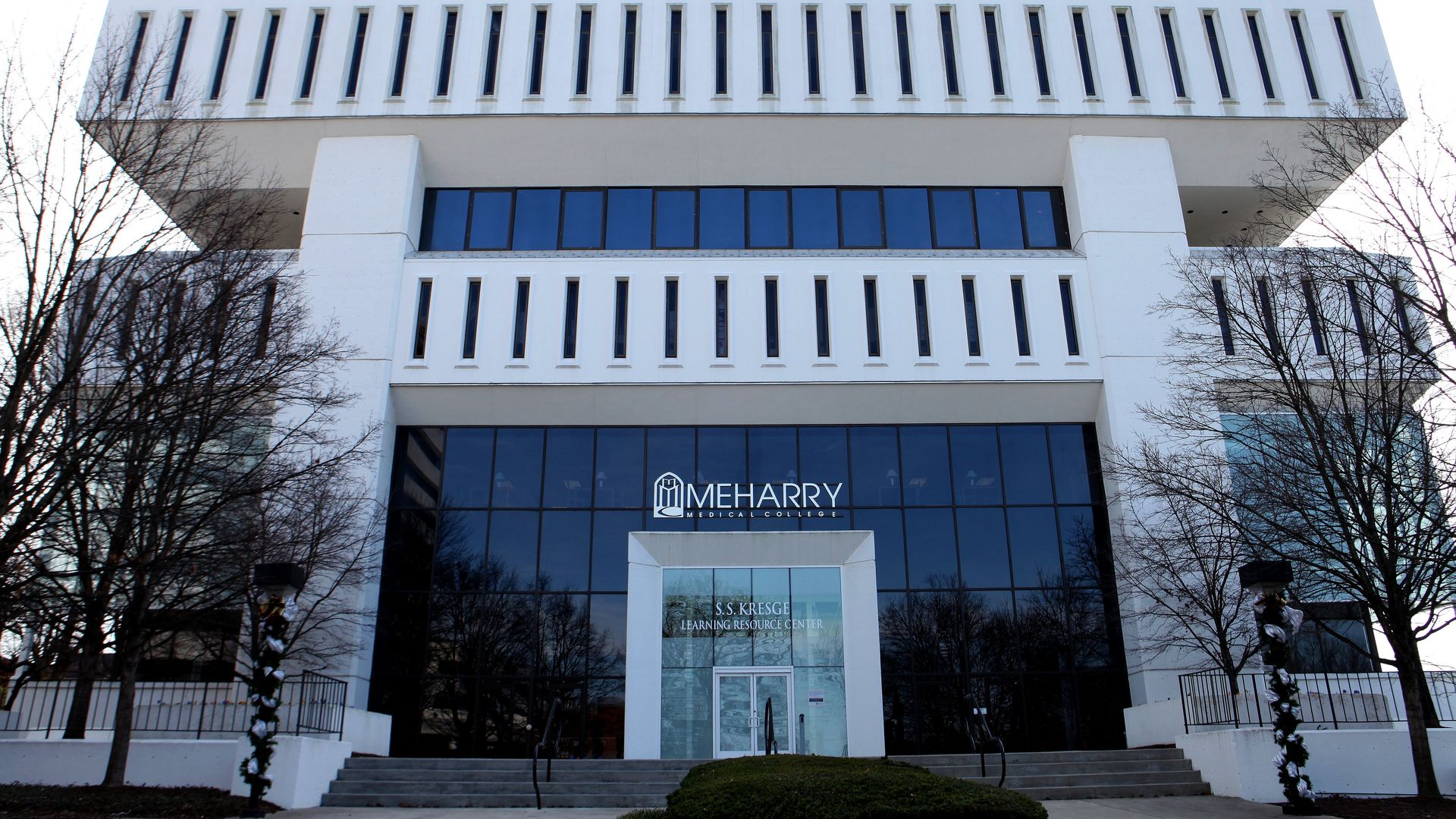
Meharry Medical College in 2016. Photo: Raymond Boyd/Getty Images
Meharry Medical College could be key to fixing a nationwide doctor shortage, president James Hildreth said.
- But to realize their full potential, he said, Meharry and other historically Black medical schools need an influx of federal dollars to upgrade "egregiously underfunded" facilities.
Driving the news: Hildreth spoke to the U.S. Senate's health committee last month about the massive gap in the nation's health care workforce.
- The U.S. could see a shortfall of as many as 124,000 physicians by 2034, including 48,000 primary care doctors, according to data from the Association of American Medical Colleges.
- As Hildreth noted, the shortage coincides with another problem: Black doctors are underrepresented.
Why it matters: The double whammy of a doctor shortage and a lack of diversity poses clear risks to underserved communities.
- "When the health care workforce reflects the population they care for, outcomes are better," Hildreth told the senators.
- "That's what we lose by not having a diverse workforce: the best outcomes for our communities."
Zoom in: Meharry is already seeking to address the primary care shortage through multiple programs, including a partnership with Middle Tennessee State University that creates a state-subsidized fast track for students who agree to work in rural Tennessee.
Yes, but: Underfunding at Meharry and the country's other historically Black medical schools limits their progress, Hildreth said.
- Infrastructure needs like broadband access and study space were key factors when Meharry's medical degree program was placed on probation last year.
- Hildreth asked lawmakers to consider $5 billion in funding over five years to help the consortium of historically Black medical schools.
What he's saying: "We have been training health care professionals who are really competent and skilled — connected to their communities — for decades. But our challenge is the infrastructure we have to do that."
- Hildreth said the schools would like to have updated classrooms, smaller teaching groups or high-tech simulations available at other institutions, "but we don’t have the resources."
- "If you gave us those resources, the payoff would be tremendous for the country."
What we're watching: Senators on the committee were optimistic they could find common ground on the health care jobs gap, although they didn't commit to specifics.
- "There is a great deal of interest in legislating in this space," Sen. Lisa Murkowski (R-Alaska) told Kaiser Health News.
- "What it's going to look like, I can't tell you yet."