Highlights of the World Cup's Green Corridor in Houston

Add Axios as your preferred source to
see more of our stories on Google.
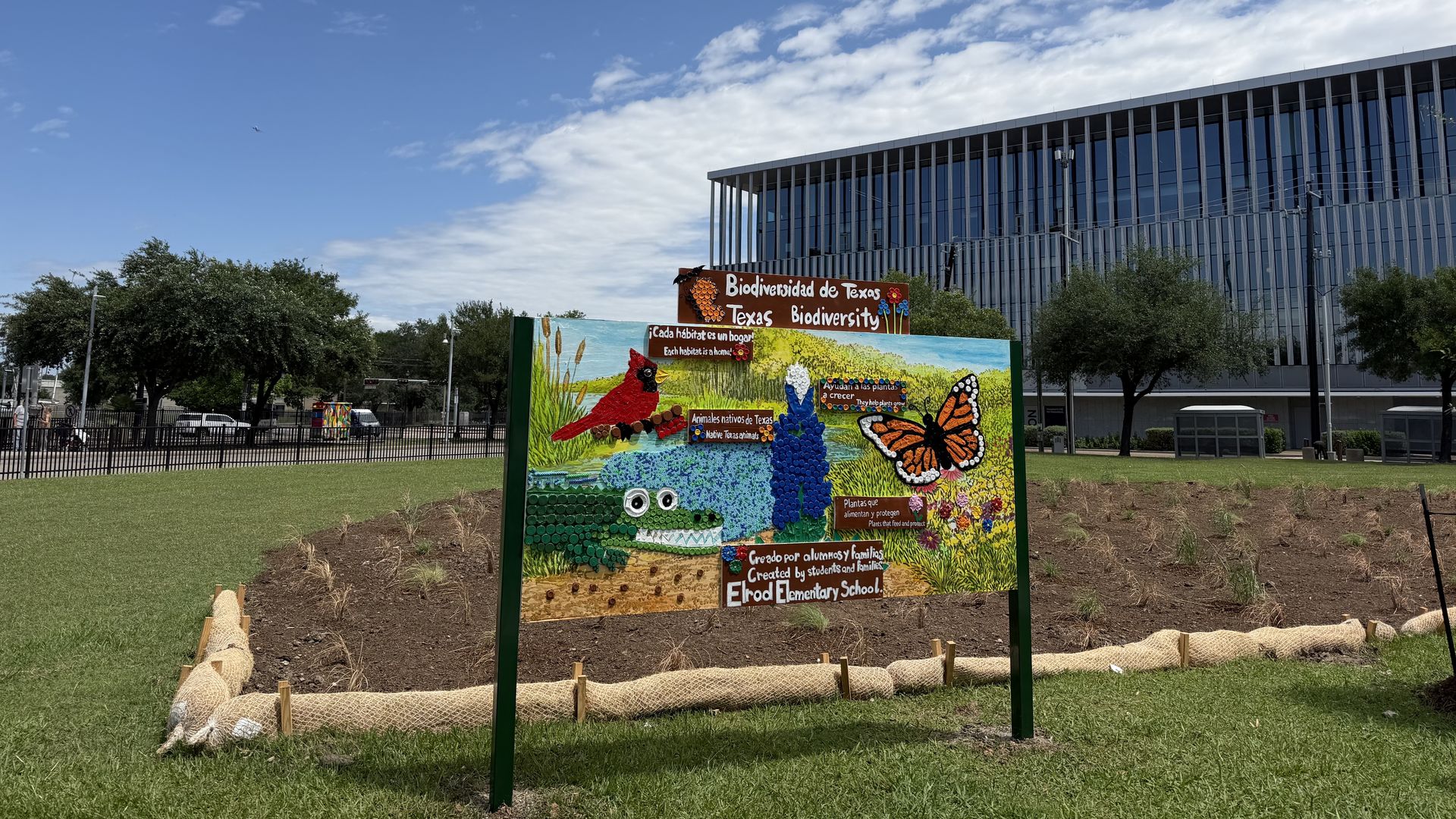
New art and native plants by the Ion. Photo: Shafaq Patel/Axios
Houston's World Cup organizers are using a 14-mile route linking the Fan Festival in East Downtown to Houston Stadium to showcase sustainability projects they hope will outlast the tournament.
Why it matters: Organizers are promoting the corridor as a way for visitors to travel between World Cup destinations by foot, bike and public transit instead of relying solely on cars.
The big picture: The Green Corridor is part of Impact Houston 26, the host committee's legacy initiative. Organizers say the effort is privately funded through corporate partners, including Airbnb, but declined to disclose the total investment.
- Houston is hosting seven matches. Organizers expect 500,000 visitors.
What they're saying: "What we tried to do is tell the story of Houston's resilience and innovation through that corridor," Elizabeth Carlson, the chair of the host committee's sustainability subcommittee, said during a media tour.
Along the route, there are projects focused on shade, trees, air quality, public art and climate resilience.
Columbia Tap Trail: A large component of the Green Corridor, the trail runs from East Downtown through Third Ward to Brays Bayou. New additions include a shade structure built from recycled wind turbine blades, while a separate project is bringing more than 300 solar-powered lights to the trail.
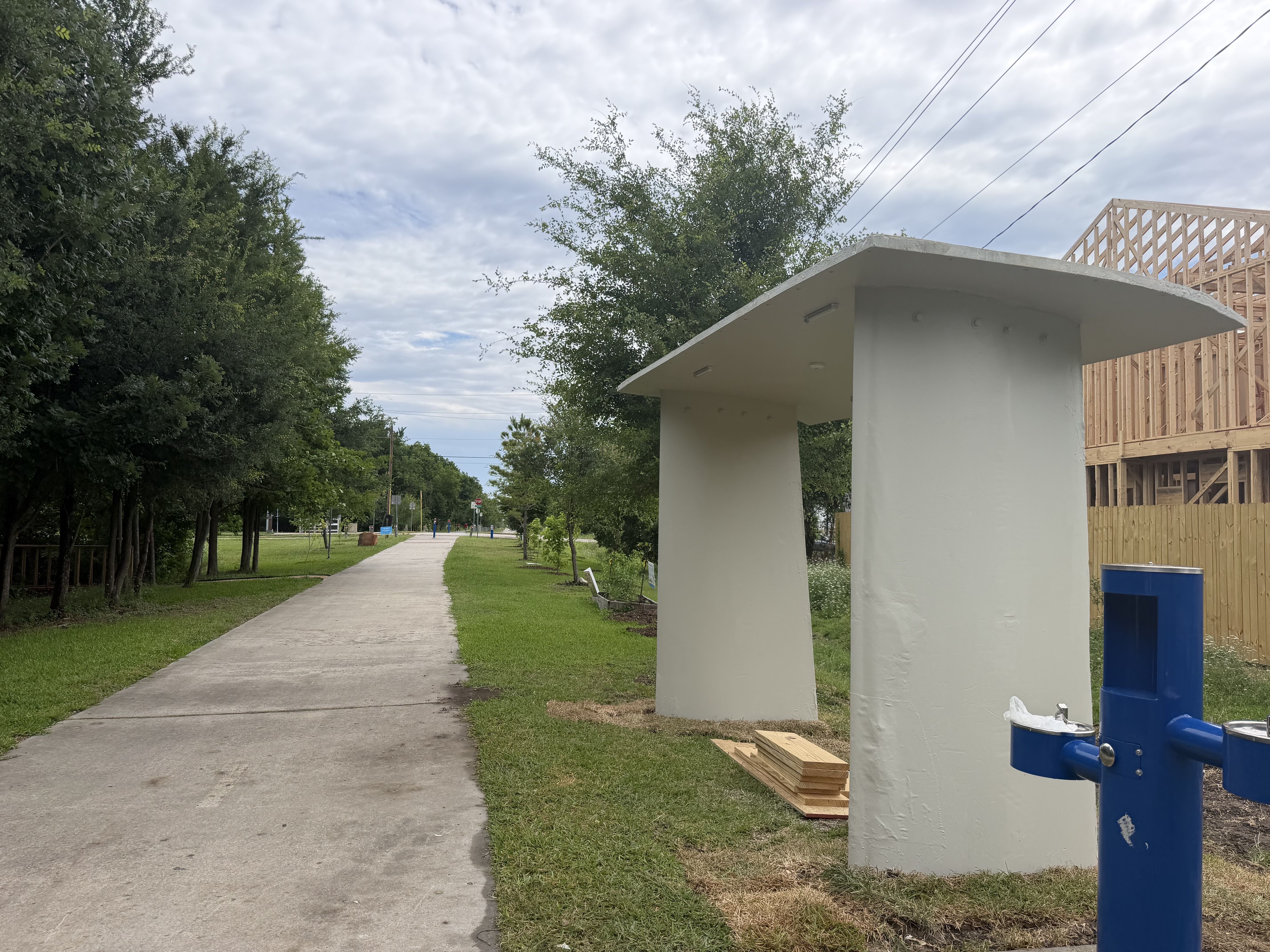
Cooling tech: Along with newly planted trees, new bike racks and a bike repair station, the Midtown Park is testing a cooling technology. SolarMantle installed paneling on a rooftop that the company says can lower temperatures by at least 10 degrees.
Air quality monitors: Air Alliance Houston is installing 15 air quality monitors and two larger monitoring stations along the trail. The roughly $30,000–$40,000 network will monitor air pollution and give the community access to local air quality data.
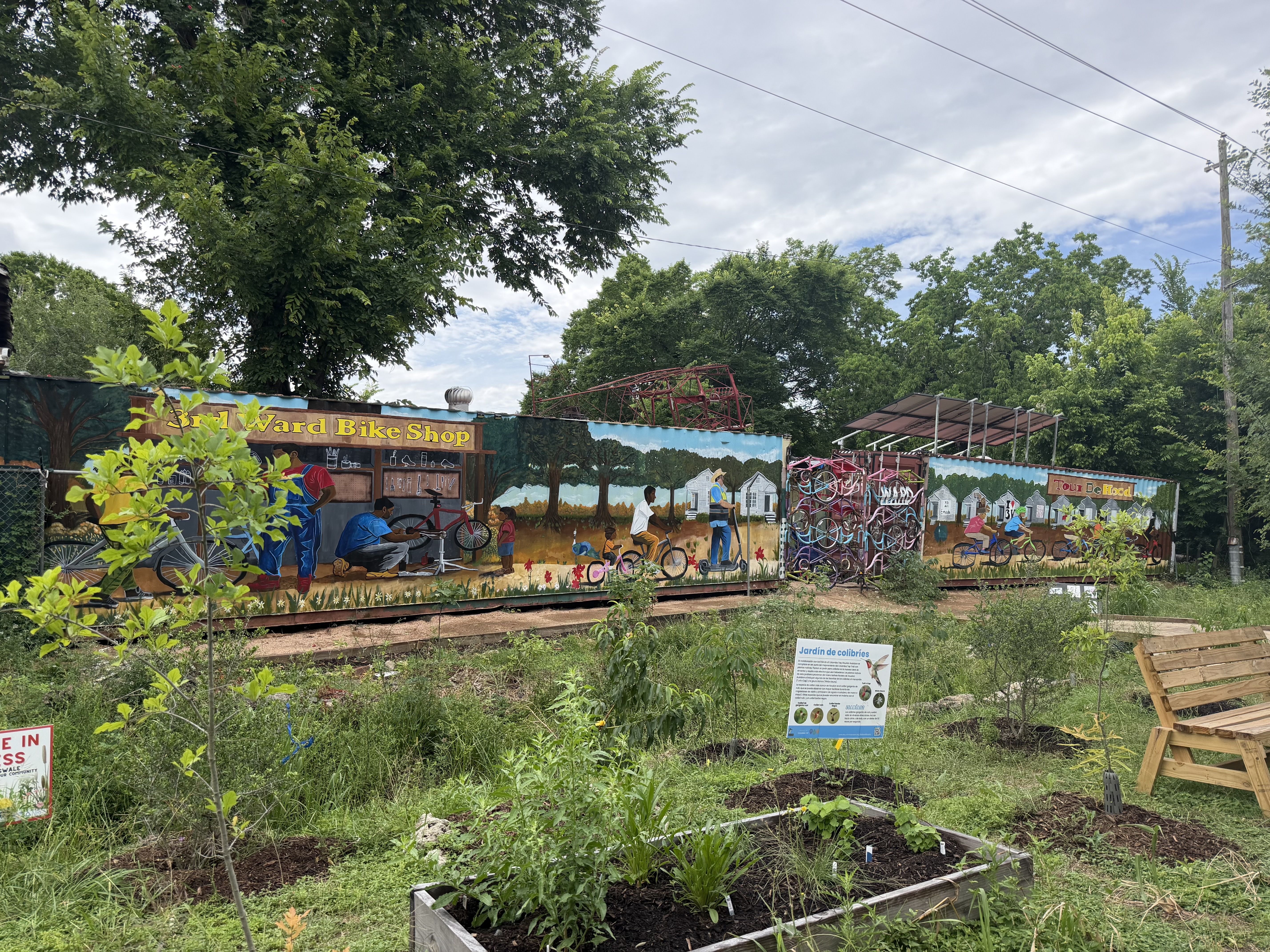
Art installations: Student-created murals and public art pieces highlighting Houston's diversity and local ecosystems will be displayed.