Why Houston allergies are so bad


Add Axios as your preferred source to
see more of our stories on Google.
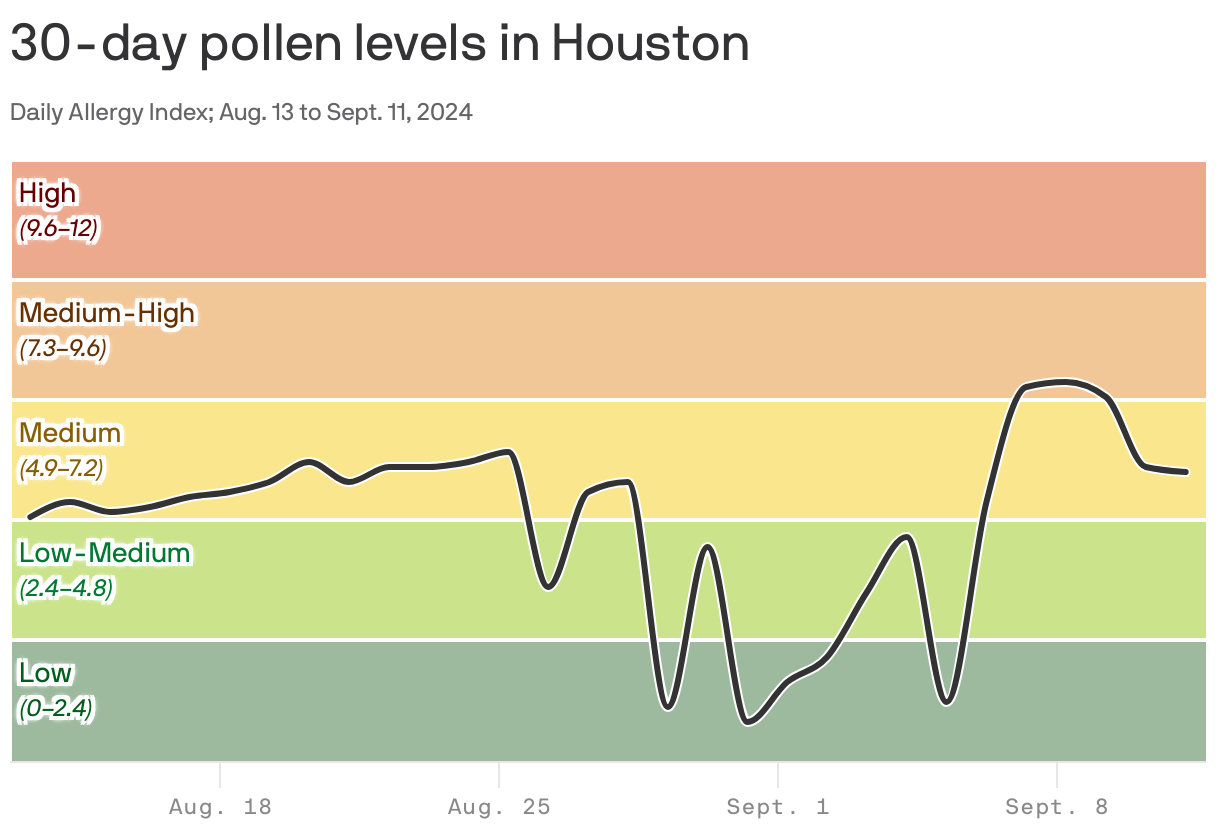
Have you felt like you've experienced the list of symptoms from an allergy pill commercial this week?
- Sneezing, itchy eyes, runny nose … You're probably not alone. Pollen counts have been high in Houston, largely due to ragweed season.
Why it matters: Climate change is making allergy seasons longer and more intense. This fall could be a prime example.
- September can be one of the toughest months for allergy sufferers in this part of Texas.
Zoom in: Pollen levels were high this week, according to Houston Health.
- Our top allergens right now are ragweed and elm, per Pollen.com.
State of play: Ragweed typically reaches its peak season in late September or early October in Houston.
Reality check: Living in Houston means living with allergies year-round.
- Grasses pollinate in the spring, trees and weeds during the summer and fall, and mountain cedar during the winter, according to Baylor College of Medicine.
- And if it's not pollen, it could be mold spores, which can trigger allergies year-round, especially after rainy days when conditions are warm and humid.
Pro tips: Newer antihistamines like Claritin, Allegra and Zyrtec offer relief without the drowsiness associated with older antihistamines like Benadryl. They can be combined with nasal steroid sprays like Flonase.
- Closing windows in the morning and showering before bed can reduce exposure.
What's next: We're bracing for Ashe juniper season, which usually hits Houston in December through February and causes cedar fever — flu-like symptoms such as itchiness, watery eyes and blocked nasal passages.
- The likelihood of a drier winter could impact cedar season. Federal forecasters estimate a 77% chance of La Niña developing, which drives up the "likelihood of returning to drier, warmer-than-normal conditions in late 2024."
- "In drier winters, we can see a worse cedar fever season since the pollen can remain in the air for longer durations, compared to wet winters," Alison Baylis, regional urban ecologist for Texas A&M Forest Service, told Axios.