Tipping culture rises as tipping system faces debate in Michigan


Add Axios as your preferred source to
see more of our stories on Google.
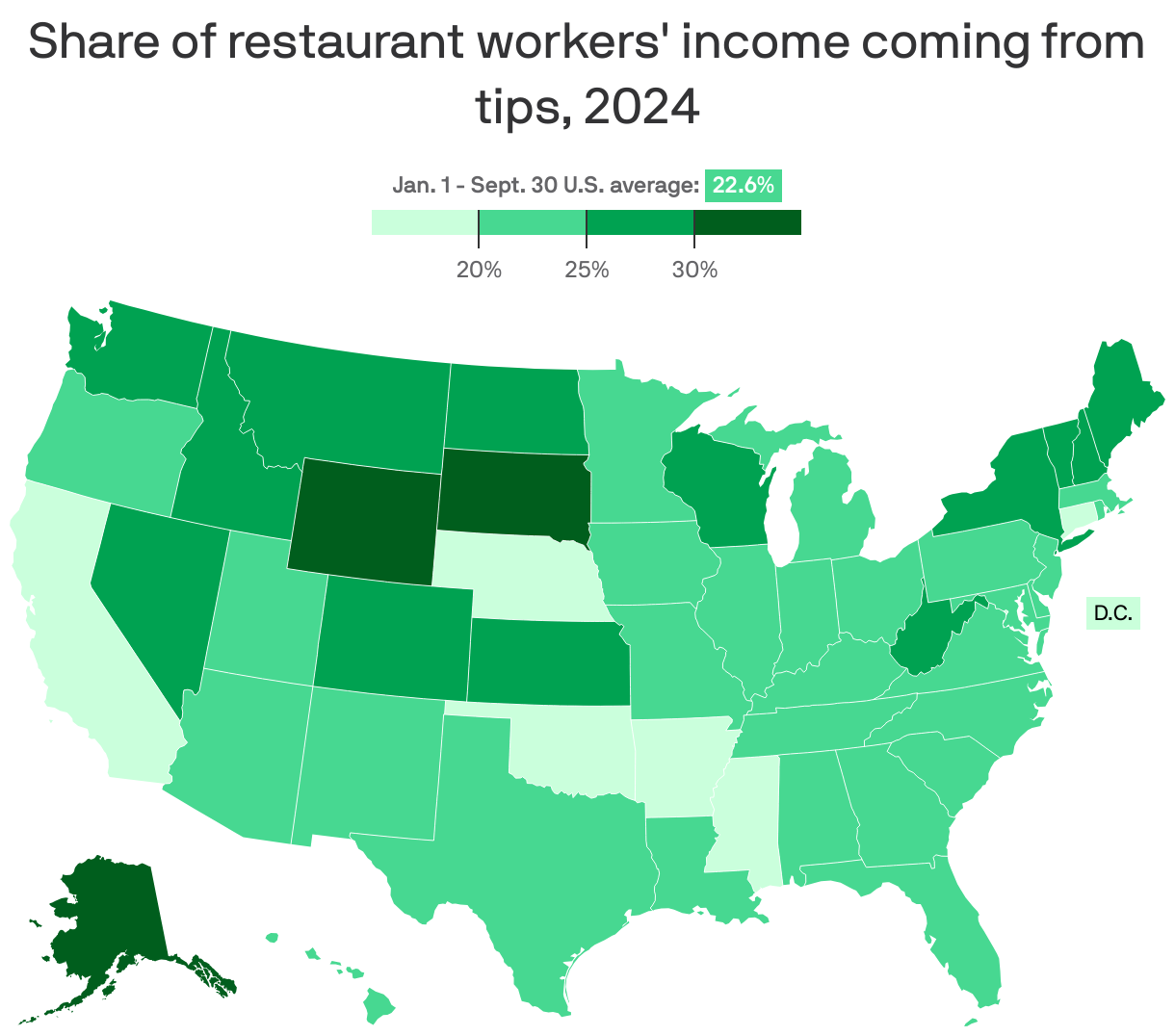
Tips now account for a growing portion of U.S. restaurant workers' pay, according to recent data from the payments company Square.
Why it matters: The rise of tipping culture nationally means servers and bartenders are getting tipped more frequently for services — including takeout orders — that used to go without gratuities.
- In Michigan, the tipping system has been highly debated. A new bill in the state legislature would keep the tipping status quo, MLive reports.
By the numbers: In October, tips made up 23% of U.S. restaurant worker pay — an increase from 14% in 2019, according to Square's review of payroll data.
- In Michigan, restaurant workers earned 21% of their income from tips between January and September this year, per Square.
- The state's average tip percentage was just under 16%.


Catch up quick: Following a state Supreme Court ruling this summer, changes are scheduled for February. Michigan's minimum wage will rise from $10.33 an hour to $12.50, and tipped wages will go from $3.93 an hour to $6, per the Detroit News.
- The wages will increase in subsequent years, eventually increasing tipped wages to meet the minimum wage rate.
Yes, but: New bipartisan legislation would amend those changes, keeping the tipping system the same as it is now, with tipped workers' base pay equalling 38% of the minimum wage.
Friction point: Those in favor of keeping the current tipping system say the changes slated to begin in February would eventually make restaurant workers minimum-wage employees, lowering their incomes and increasing costs unsustainably for small businesses, according to the advocacy group "Save MI Tips."
- Supporters of the February changes want to see more stable, liveable wages for tipped workers, according to MLive.
Zoom out: The restaurant business fell off a cliff during the pandemic but bounced back quickly. Michiganders returned to dining out, and restaurants scrambled to hire, increasing wages and prices.
- The national industry has seen a slowdown in recent months. But overall, restaurants have seen increased sales volume over the post-pandemic years, translating into more customers per hour — and more tips, says Ara Kharazian, research lead at Square.
- However, relying more on tips leaves workers in a more precarious position with economic ups and downs.