Methane-infused cow burps meet climate science

Add Axios as your preferred source to
see more of our stories on Google.
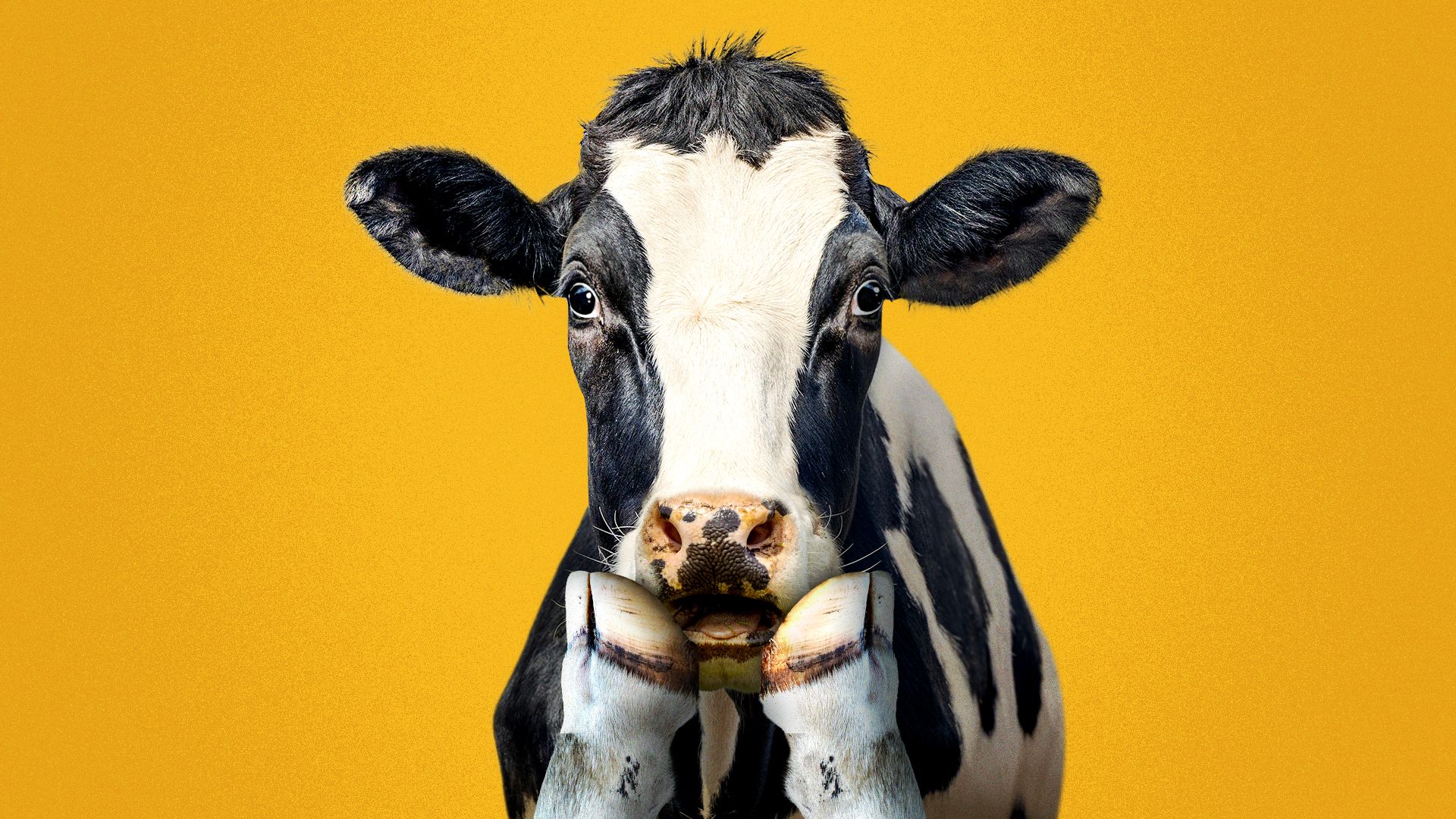
Illustration: Allie Carl/Axios
Methane-belching cows may leave a significantly smaller environmental footprint in the future thanks to a synthetic compound added to their feed.
Why it matters: Methane is far more potent than carbon dioxide at trapping heat and livestock is a major source.
- Groups such as the Food and Agriculture Organization of the United Nations are calling on countries to reduce emissions, and scientific advancements could offer solutions.
Driving the news: Minerva Foods and Rumin8 announced last month the results of a Brazilian trial using bromoform, an ingredient added to cattle feed.
- Their formula reduced methane emissions by more than 50% over the four-month study, the companies said.
Context: Cows produce methane because they're ruminants — animals with a specialized stomach system that lets microbes break down grass and other fibrous plants humans can't digest.
- In the U.S., livestock digestion accounts for more than a quarter of greenhouse gas emissions from the agriculture sector, per the EPA.
Zoom in: Iowa has more cows (3.45 million) than people (3.2 million).
- Any added costs or efficiency gains from methane-cutting feed could ripple through thousands of farms, feedlots and rural communities.
What they're saying: At an Axios event in Des Moines last month, Bryan Whaley, CEO of the Iowa Cattlemen's Association, discussed some of the methane research underway in Iowa.
- The developments might give farmers a chance to address climate concerns voluntarily and avoid potential mandates from regulators or buyers, he told Axios in a follow-up interview.
Reality check: The Brazil results were announced in a company press release rather than in a peer-reviewed journal article, and the release stated that independent verification was still underway.
Yes, but: A recent analysis of 17 other beef-cattle studies found that methane-reducing feed additives reduced emissions by an average of 36%.
The intrigue: Some estimates put the cost of methane-cutting feed ingredients at over $100 per cow annually.
Yes, but: Some makers claim their additives improve feed conversion efficiency, which measures how efficiently animals convert their food into body weight.
- If proved effective, the additives could save cattle farmers money, Whaley said.
What we're watching: Whether feed additives can deliver similar results outside controlled studies — and whether feed-efficiency gains are sufficient to offset the added cost, or whether carbon markets or government incentives might be necessary.