Countries lagging on curbing methane emissions, new report says

Add Axios as your preferred source to
see more of our stories on Google.
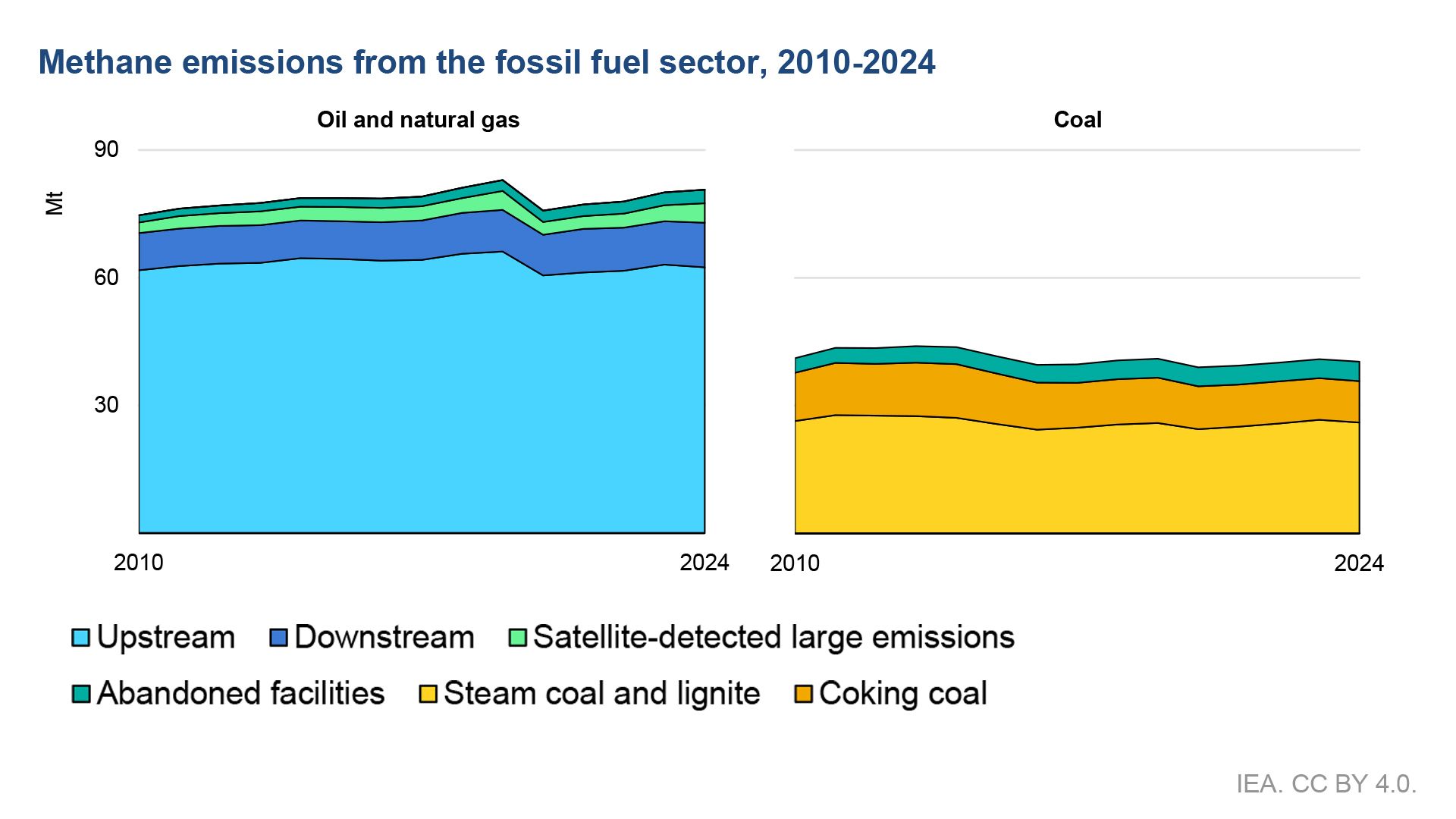
Image: Courtesy of the International Energy Agency
Countries' pledges to cut methane aren't translating into nearly enough on-the-ground action to send emissions downward, the International Energy Agency finds in a new report.
Why it matters: The powerful planet-warming gas is responsible for nearly one-third of global temperature rise since the Industrial Revolution, IEA said.
- The energy sector accounts for over 35% of methane from human activity.
The big picture: Recent years have brought moves like the Global Methane Pledge, a multinational effort launched at the 2021 UN climate summit to drive a 30% cut in human-induced emissions by 2030.
- Another is the Oil and Gas Decarbonization Charter in 2023.
Reality check: While a number of oil and gas companies are curbing methane, their efforts are not yet game-changing on a global basis.
- "[S]o far, few countries or companies have formulated real implementation plans for these commitments, and even fewer have demonstrated verifiable emissions reductions," IEA notes.
State of play: Record oil, gas and coal production, combined with "limited" mitigation, have kept emissions above 120 million metric tons annually, IEA said.
- Agriculture is the biggest human-caused source, and waste is large, too. But energy has the greatest potential for near-term, cost-effective cuts, IEA said.
- Democrats included a fee on oil and gas industry methane emissions in the 2022 climate law, but both chambers of Congress this year voted to overturn it.
Friction point: The IEA study wades into whether natural gas has a climate edge over coal on a lifecycle basis, i.e., including methane emissions in the value chain.
- IEA's answer? Generally yes, but comparing gas only to coal "sets the bar too low."
- The report also reveals that IEA's working on a big analysis of LNG-linked emissions and options for cutting them.
Stunning stats: This year's tracker has first-time IEA estimates of methane from abandoned infrastructure.
- Former coal mines released 5 million tons last year, while another 3 million came from abandoned oil and gas wells.
- "Combined, these sources would be the world's fourth-largest emitter of fossil fuel methane," IEA finds, behind operational sites in China, the U.S. and Russia.
- IEA estimates around 8 million abandoned oil and gas wells globally, with many in the U.S., though they note that properly-plugged wells emit little.
What we're watching: The latest version has other new features, like an interactive tool to explore international initiatives.
