Transforming America's racist landmarks
Add Axios as your preferred source to
see more of our stories on Google.
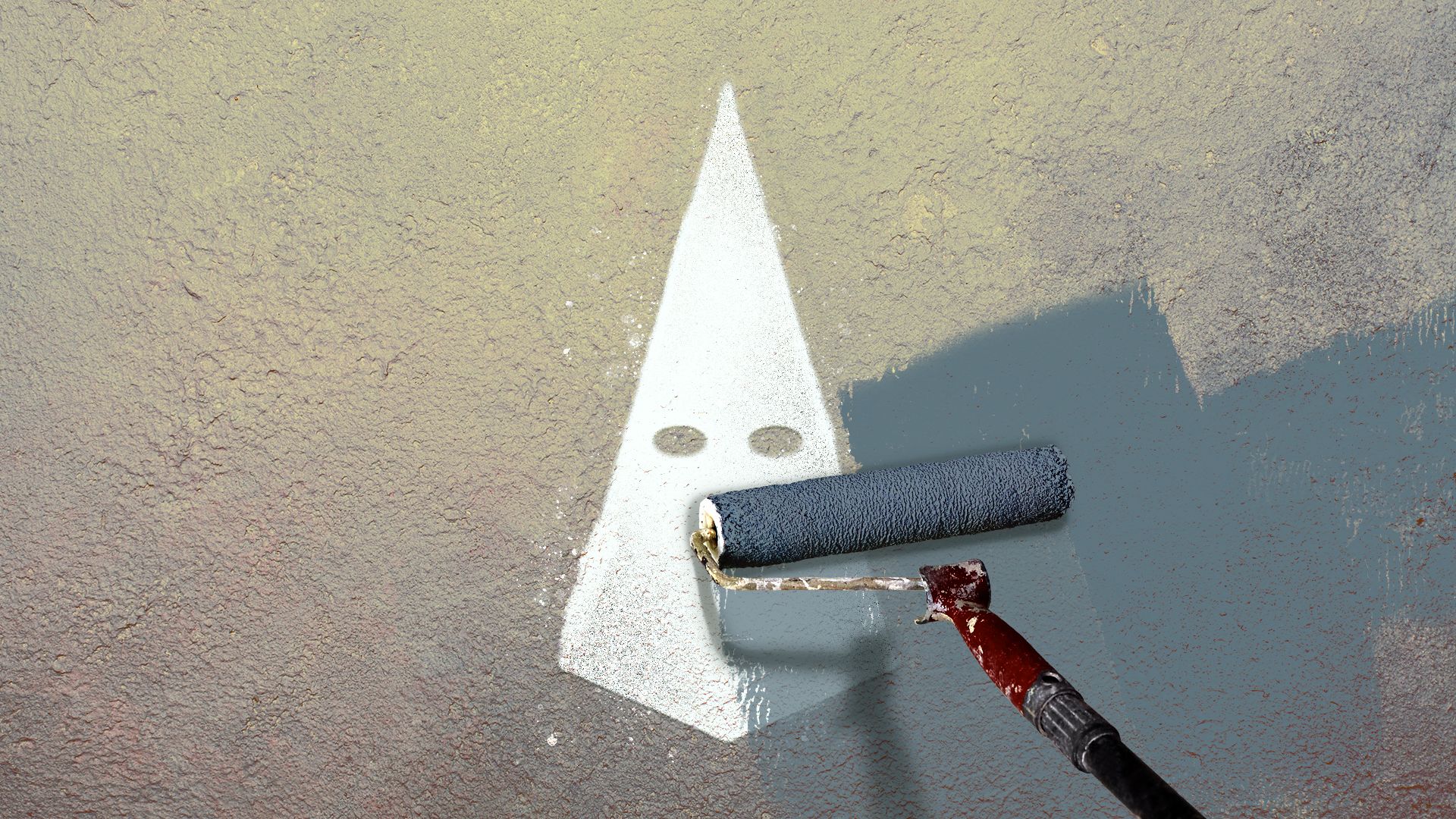
A former KKK auditorium in Fort Worth is being remade into an arts center — a local test of whether a site built for intimidation can become a place for healing.
Why it matters: Transform 1012 N. Main Street is trying to move past the usual choice for racist landmarks: demolish them or preserve them as frozen reminders.
The big picture: Years after the backlash against Confederate monuments, new fights have emerged over what to do with remaining physical reminders of particularly hurtful racism.
- The changes are happening at a time when the U.S. is more racially and ethnically diverse than ever — and as the Trump administration pushes federal sites and national parks toward a more "uplifting" version of American history.
Zoom in: Community conversations began in 2018 over whether to destroy or save the former KKK Klavern No. 101 auditorium.
- Transform 1012 formed three years later as a nonprofit to reimagine the Fort Worth building.
- Residents helped select architects, who listened to the community's needs and dreams.
Zoom in: The planned Fred Rouse Center for Arts and Community Healing would include galleries on the building's Klan past and North Texas race relations, plus a 200- to 250-seat theater, 400-seat outdoor amphitheater, rehearsal spaces, classrooms, conference rooms and offices.
- "How can we use this space that was used to teach hate into a place to teach understanding, to teach love, to teach healing?" executive director Carlos Gonzalez-Jaime tells Axios.
What's next: The board approved the concept design in February, and architects are now in schematic design, Gonzalez-Jaime said.
- The group plans three more community conversations this summer and fall to show renderings, present a model and ask residents how to activate the center before its planned opening in late 2028 or early 2029.
Zoom out: Other communities are rethinking racist sites, too — a former KKK museum in Laurens, South Carolina, a slave auction block in Fredericksburg, Virginia and a Mississippi barn tied to Emmett Till's 1955 murder.
What we're watching: Whether Transform 1012 can keep skeptical residents engaged while turning a former site of intimidation into a working civic space for Fort Worth's North Side and the broader North Texas region.