Growth slows across U.S.


Add Axios as your preferred source to
see more of our stories on Google.
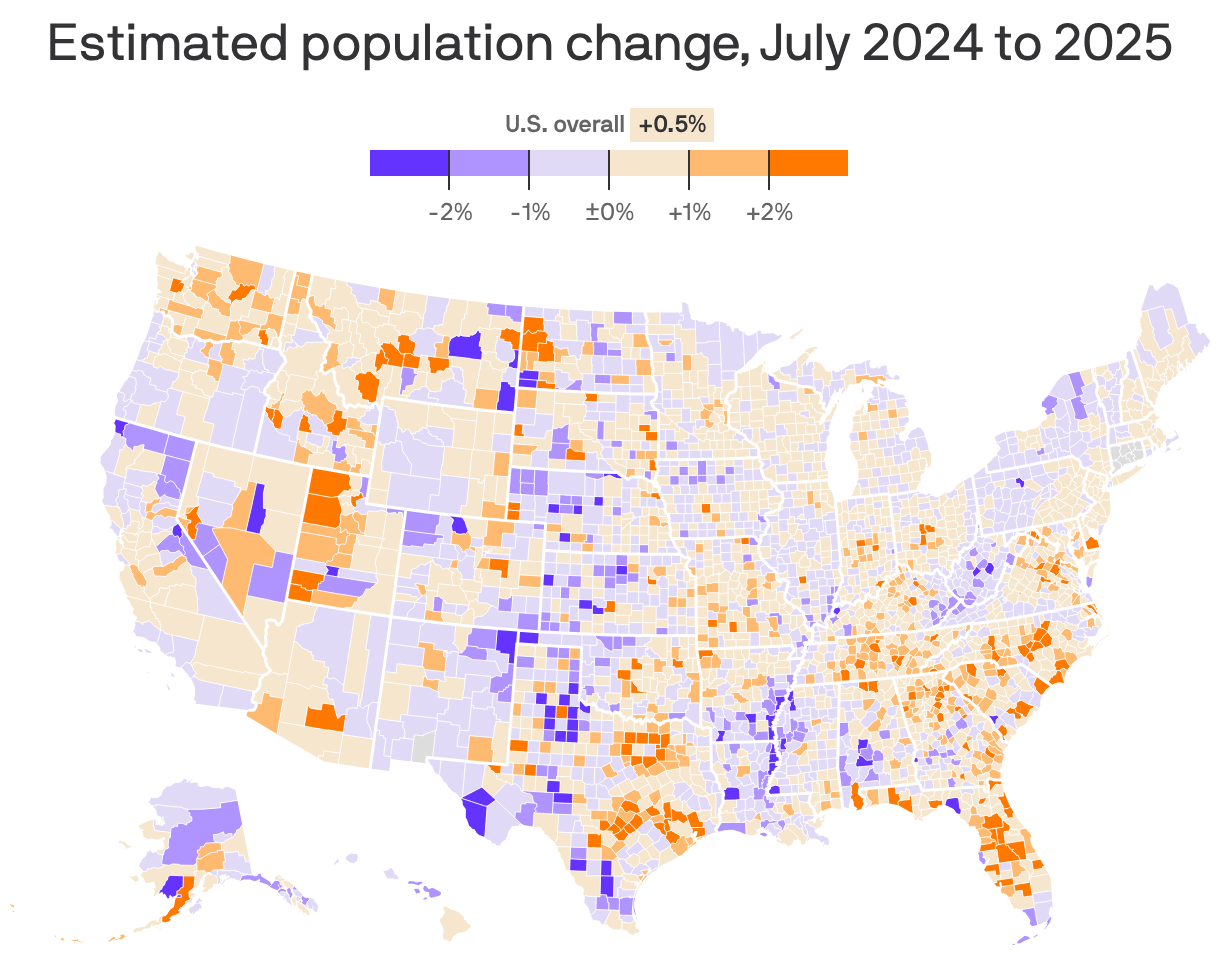
Dallas-Fort Worth was second only to the Houston metro in the number of residents who moved to the region between 2024 and 2025, per new U.S. Census Bureau data.
The big picture: Population growth is slowing in most counties nationwide amid a massive drop in immigration amid tighter enforcement.
- The U.S. overall still grew by 0.5% between 2024-25. But that's down from 1% over the previous period.
Zoom in: Dallas-Fort Worth added 123,557 between July 2024 and July 2025, only about 3,000 fewer than Houston.
- Collin County, which added 42,966 residents, was second in population growth nationwide. Harris County, where Houston is, was first with 48,695 new residents.
The intrigue: D-FW's growth is largely due to migration, not births.
- The region added 55,444 people from other countries and 18,197 from domestic migration.
Zoom out: International migration fell in nine out of 10 U.S. counties between 2024 and 2025 compared to the prior period, the Census Bureau says.
- Nationwide natural change (births minus deaths) held steady, while international migration plummeted from about 2.8 million people to 1.3 million — about a 55% drop.
- Caveat: The Census Bureau' international migration data include both foreigners and Americans coming home from abroad, including military service members.
Between the lines: Regional growth is driven by population increases in the suburban counties outside Dallas and Fort Worth.
- For example, Kaufman County continues to be one of the fastest growing counties with a population over 20,000 with 5.7% growth.
- Nearly 210,000 people now live in Kaufman County, up from just over 145,000 in 2020.