Is it cedar fever or the flu?



Add Axios as your preferred source to
see more of our stories on Google.
Cedar fever and a "super flu" strain are adding to the misery of returning to work after the holidays.
Why it matters: The "winter vomiting bug," COVID, whooping cough and a rapid rise in flu cases are all slamming the country this winter.
- Texas, Oklahoma, Arkansas and parts of Louisiana are also seeing high levels of mountain cedar pollen. Fun.
State of play: Last week, CDC data showed at least 7.5 million illnesses, 81,000 hospitalizations and 3,100 deaths from the flu so far this season.
- Nearly 90% of new flu cases in the country were from a flu strain that spreads quickly, most recent CDC tracking data shows.
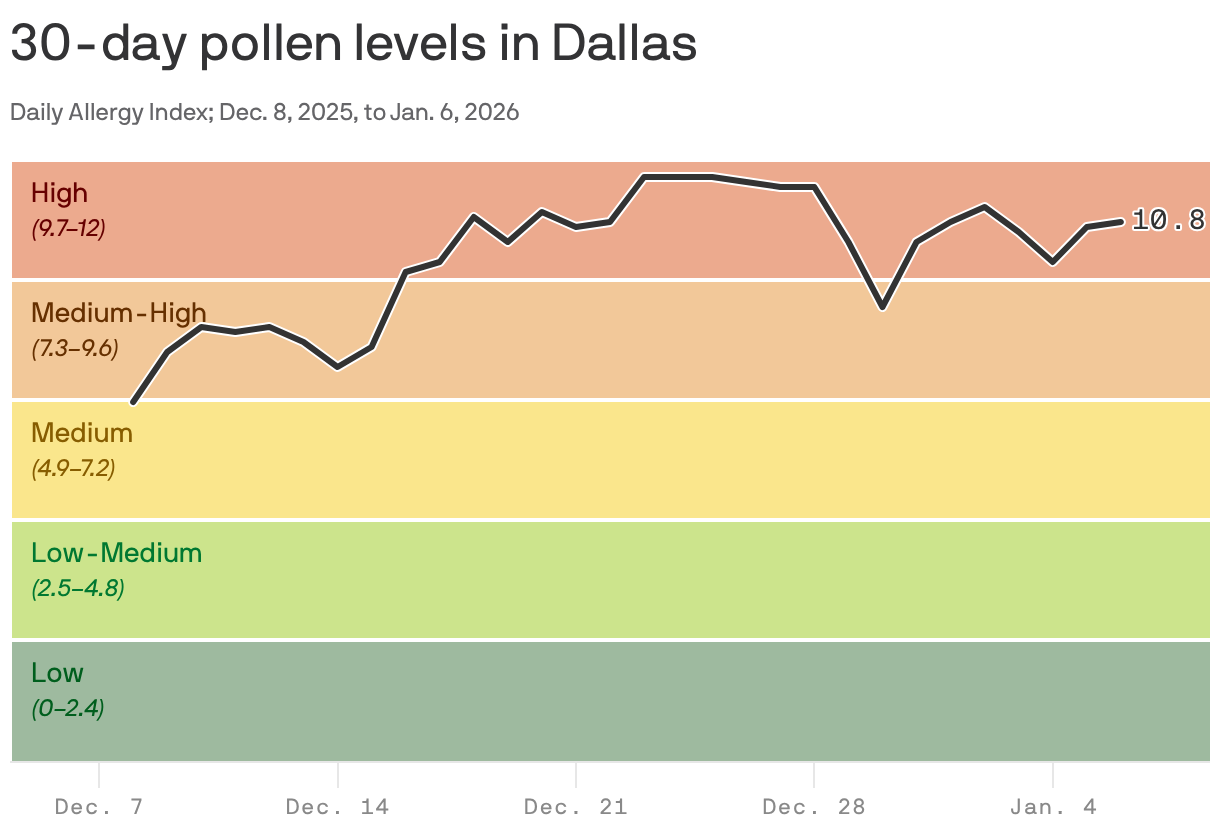
- Meanwhile, the Dallas area has seen high pollen since mid-December. Pollen levels are forecasted to stay high.
Zoom out: Mountain cedar, or Ashe juniper, covers around 8.6 million acres in Texas, with each tree releasing billions of pollen, per Baylor Scott & White.
Zoom in: Cedar fever symptoms often mimic symptoms of a cold or sinus infection, but cedar fever doesn't usually cause body aches or fevers over 100 degrees.
- "If you notice your symptoms worsen on windy days or improve when you're indoors, cedar pollen is likely the culprit," Baylor says.
Pro tips: The health system suggests trying both environmental changes and medical treatments to help with cedar fever.
- These include limiting outdoor activities when pollen counts are high, using air purifiers with HEPA filters at home, showering and changing clothes after spending time outside and washing bedding regularly in hot water.