American Airlines, DFW Airport plan $4B terminal

Add Axios as your preferred source to
see more of our stories on Google.
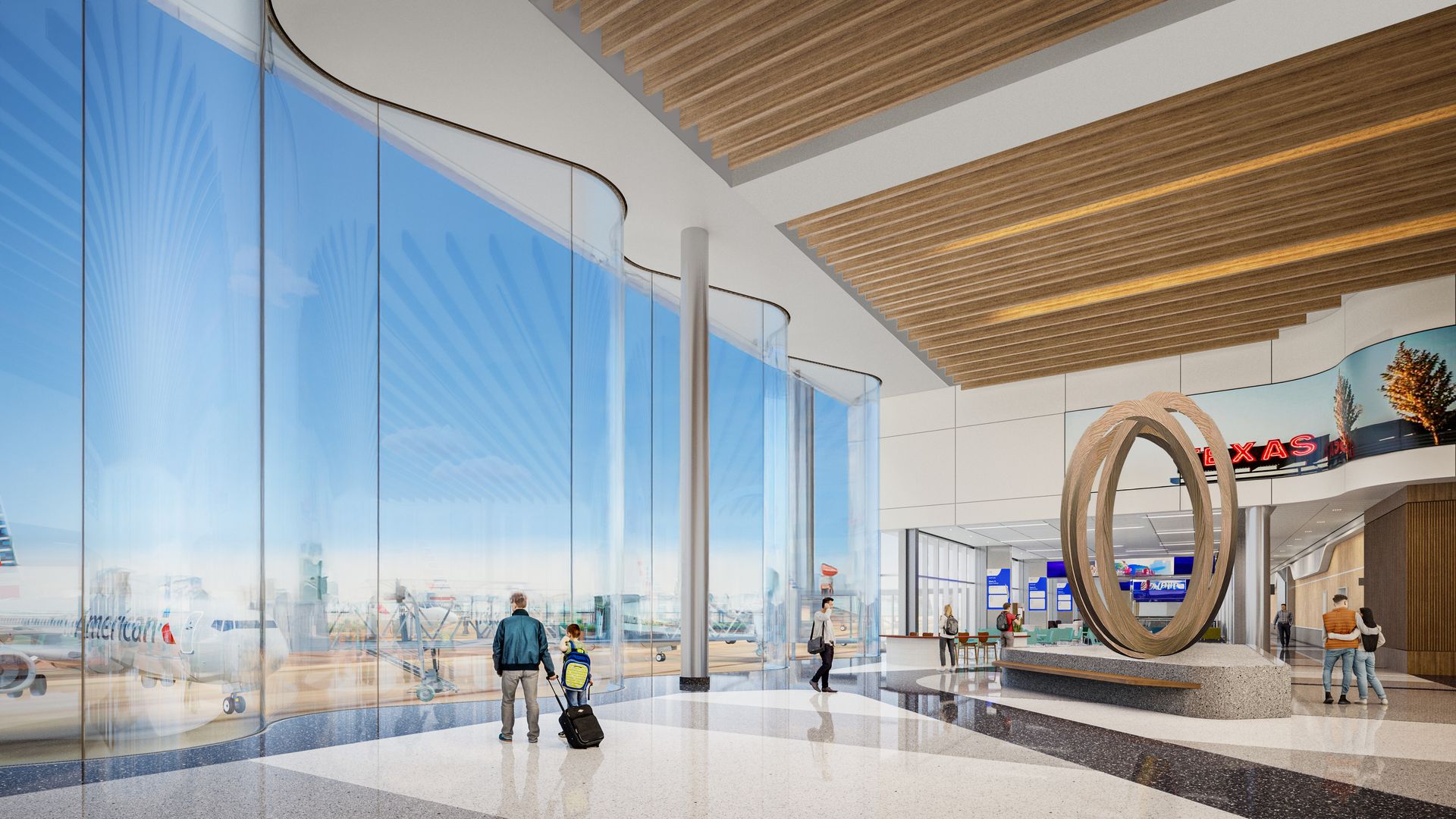
Terminal F is going to be fancy. Rendering: Courtesy of DFW Airport
DFW Airport's sixth terminal will be almost double its originally planned size and will have only American Airlines flights, the airport announced Thursday.
Why it matters: The airport, almost midway between Dallas and Fort Worth, has been critical to the population and business growth of the region.
- "We as an airport have to stay ahead of that growth. We can never be a constraint," DFW Airport CEO Sean Donohue said at a news conference Thursday.
The big picture: DFW Airport was the world's third-busiest airport last year, following Atlanta and Dubai.
- Terminal F will give American Airlines and DFW Airport a "clear path to building the largest single airline hub in the world," American Airlines CEO Robert Isom says.
The latest: The Fort Worth-based airline plans to spend $4 billion on the terminal, which will have 31 gates and its own parking, baggage claims and security area.
- The initial design had 15 gates and would have required travelers to check in at Terminal E, then take the Skylink to Terminal F.
State of planes: American will operate exclusively in the terminal, freeing up gates at Terminal E for other domestic airlines.
- Renovations in Terminals A and C should be completed before the FIFA Men's World Cup next year, Donohue said.
- Terminal C already has a few upgraded gates with digital signs, a robotic barista and a restaurant that serves Dirk Nowitzki's favorite meals.
What they're saying: "I've always called Terminal D the crown jewel of DFW Airport. When Terminal F opens, it's going to take that forward," Donohue said.
Between the lines: Construction in the terminals, on bridges and along International Parkway can snarl traffic near the airport.
- Check wait times at checkpoints and check-in counters before heading over.
What's next: The first phase of Terminal F is scheduled to open in 2027. The terminal should be fully operational by 2030.