North Texas car sales surge as buyers anticipate Trump tariffs

Add Axios as your preferred source to
see more of our stories on Google.
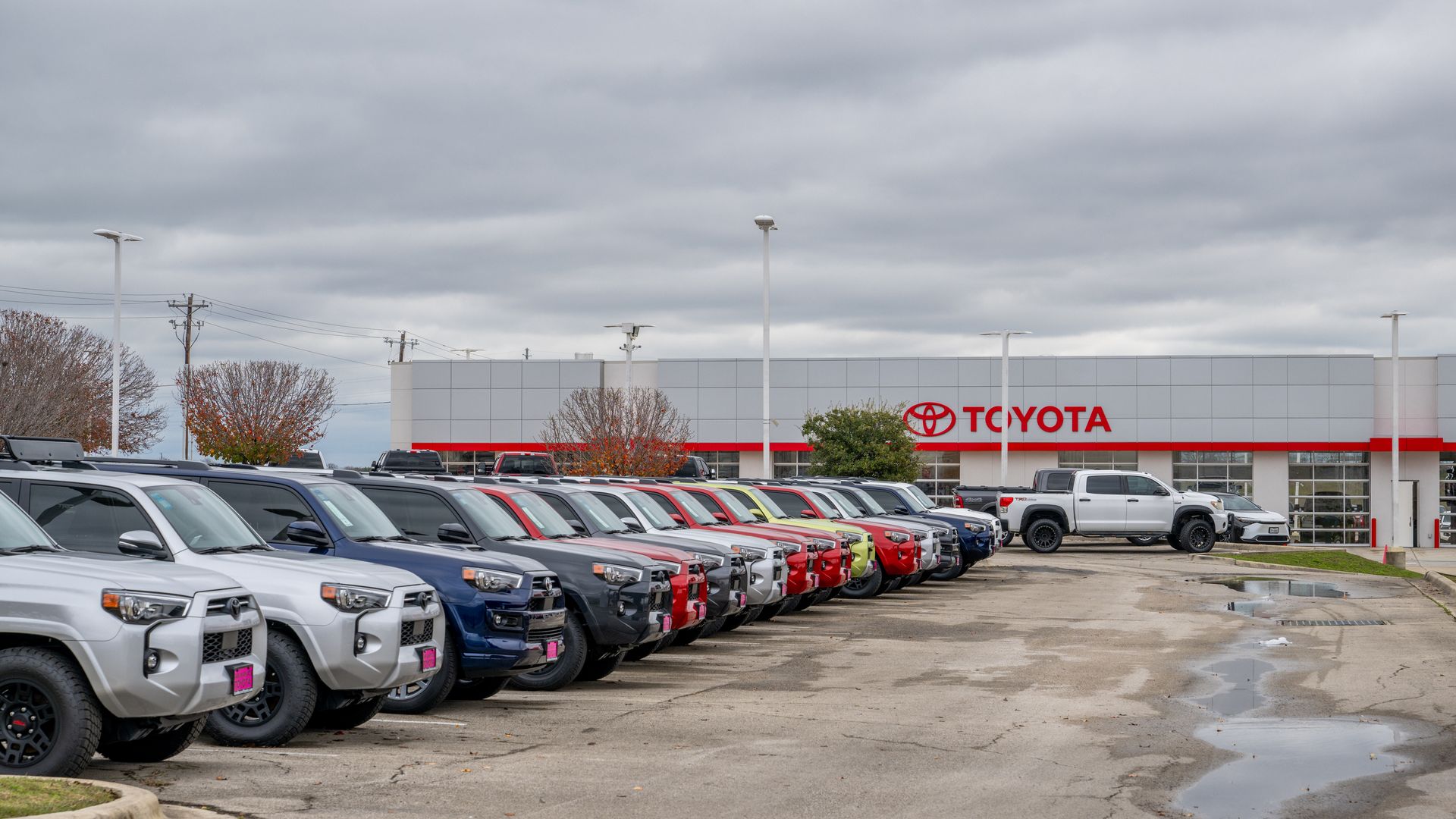
Foreign-made cars will likely get more expensive after tariffs. Photo: Brandon Bell/Getty Images
Car sales have surged at North Texas dealerships in recent weeks as buyers anticipate higher prices due to President Trump's new tariffs on auto imports.
Why it matters: Tariffs could complicate the car market if they last longer than three months, car dealers say, as consumers plan to reduce spending.
- If the auto tariffs continue, people may keep their current vehicle longer, buy used vehicles, or use flexible financing options.
The latest: Trump's 25% tariffs on foreign-made vehicles and auto parts took effect this week. Trump says tariffs will incentivize companies to produce vehicles in the U.S.
- He has also announced a baseline 10% tariff on U.S. imports, with steeper reciprocal levies on goods from the European Union, Japan and China, among other places.
Follow the money: The Yale Budget Lab forecasts vehicle prices will rise 8.4% on average, or about $4,000 on the average new car.
Zoom in: Don Herring, who chairs the North Texas Automobile Dealers Association and owns two Dallas-area dealerships, tells Axios most dealers have at least a 90-day supply of tariff-free vehicles on hand.
- "We do expect to see the MSRP go up. There may be about a 90-day lag between when the tariffs hit and when the MSRPs go up because those vehicles are already built," Herring says.
State of sale: Herring's dealerships saw increased demand last month because buyers were nervous about prices going up later.
- Meanwhile, auction prices of used cars have spiked as auto dealers stock up in anticipation of increased demand for those cars, Herring says.


Between the lines: Automakers will face a dilemma as the tariffs pile up: They can raise car prices, sacrifice profit margins, or redirect research and development spending to expand U.S. manufacturing.
- Stellantis, which owns car brands like Jeep, Citroën and Ram, announced Thursday that it will pause production at two assembly plants in Canada and Mexico and temporarily lay off about 900 workers at supporting plants in the U.S., per Reuters.
The bottom line: Herring says he believes the auto tariffs are Trump's "bargaining chips" to negotiate trade deals with other countries.
- "It's probably in the best interest of everybody if we get a trade deal done sooner rather than later," Herring says.
Go deeper: Trump's trade announcement is the start of global economic uncertainty