Dallas Fire-Rescue pilots blood transfusions in ambulances

Add Axios as your preferred source to
see more of our stories on Google.
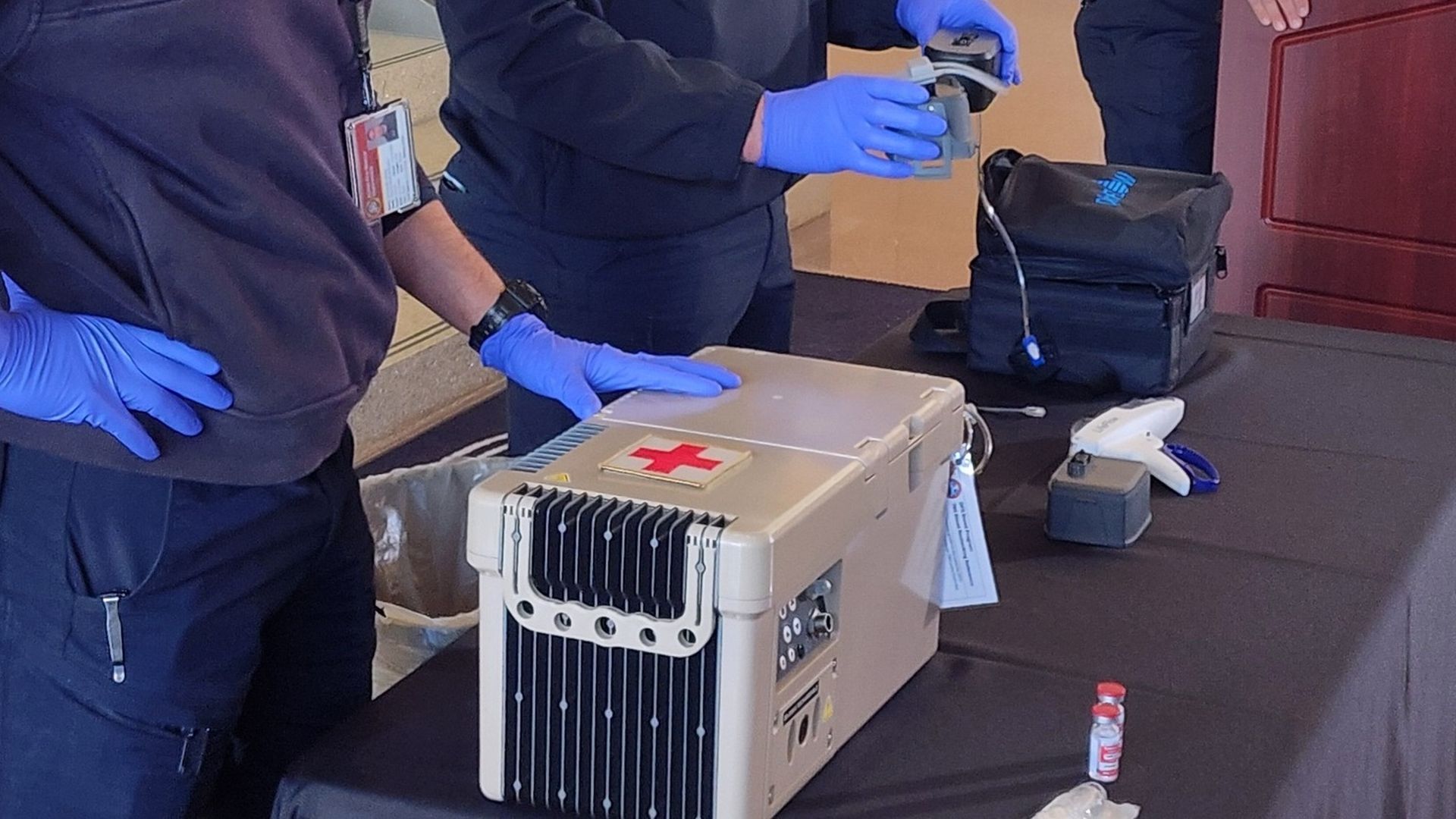
Paramedics hope this device can help save more lives. Photo: Courtesy of Dallas Fire-Rescue
Dallas Fire-Rescue is testing equipment that will allow paramedics to start blood transfusions on critically wounded patients before arriving at the hospital.
Why it matters: Pre-hospital transfusions are a head start on treatment and can dramatically increase a patient's chance of survival if they are more than 30 minutes from a hospital, the department says.
The big picture: Trauma patients nationwide are "dying needlessly" from blood loss that could have been prevented, per a 2023 series by the Dallas Morning News and San Antonio Express-News.
- Taking other Texas cities as an example, the series suggested that pre-hospital blood transfusions could be a solution for North Texas.
State of play: Dallas-Fire Rescue will test the blood transfusions for six months with help from the American Red Cross and Parkland BioTel, which provides medical direction for EMS agencies.
How it works: The Red Cross will supply the blood units, which will be stored in military-grade coolers that keep them at a steady temperature.
- Station 32 in Pleasant Grove and Station 42 near Dallas Love Field will have the equipment, and EMS personnel will be able to offer the transfusions in the ambulances using a portable blood warming unit and tubing.
- The treatment can reduce the effects of blood loss before the patient arrives at the hospital, per DFR.
Threat level: Dallas Fire-Rescue has responded to over 273,000 incidents in the past year. Car crashes and medical emergencies were the most common calls.
What they're saying: "If it saves one life, it's worth it — but we know it's going to have a much bigger impact than that," interim Dallas Fire-Rescue chief Justin Ball said at a news conference last week.
Zoom out: Pre-hospital blood transfusions could also help people in rural areas and small towns that don't have a hospital nearby.
- In September 2023, over 121 EMS systems in the United States carried blood products, according to a 2024 National Institutes of Health study. "Prehospital blood programs represent an invaluable resuscitation capability," the author wrote.
How you can help: The Red Cross says blood donations are typically slow during the winter. You can make an appointment to donate.
- Type O blood and platelet donations are especially needed, the organization says.