Texas food banks pushing for summer food benefits

Add Axios as your preferred source to
see more of our stories on Google.
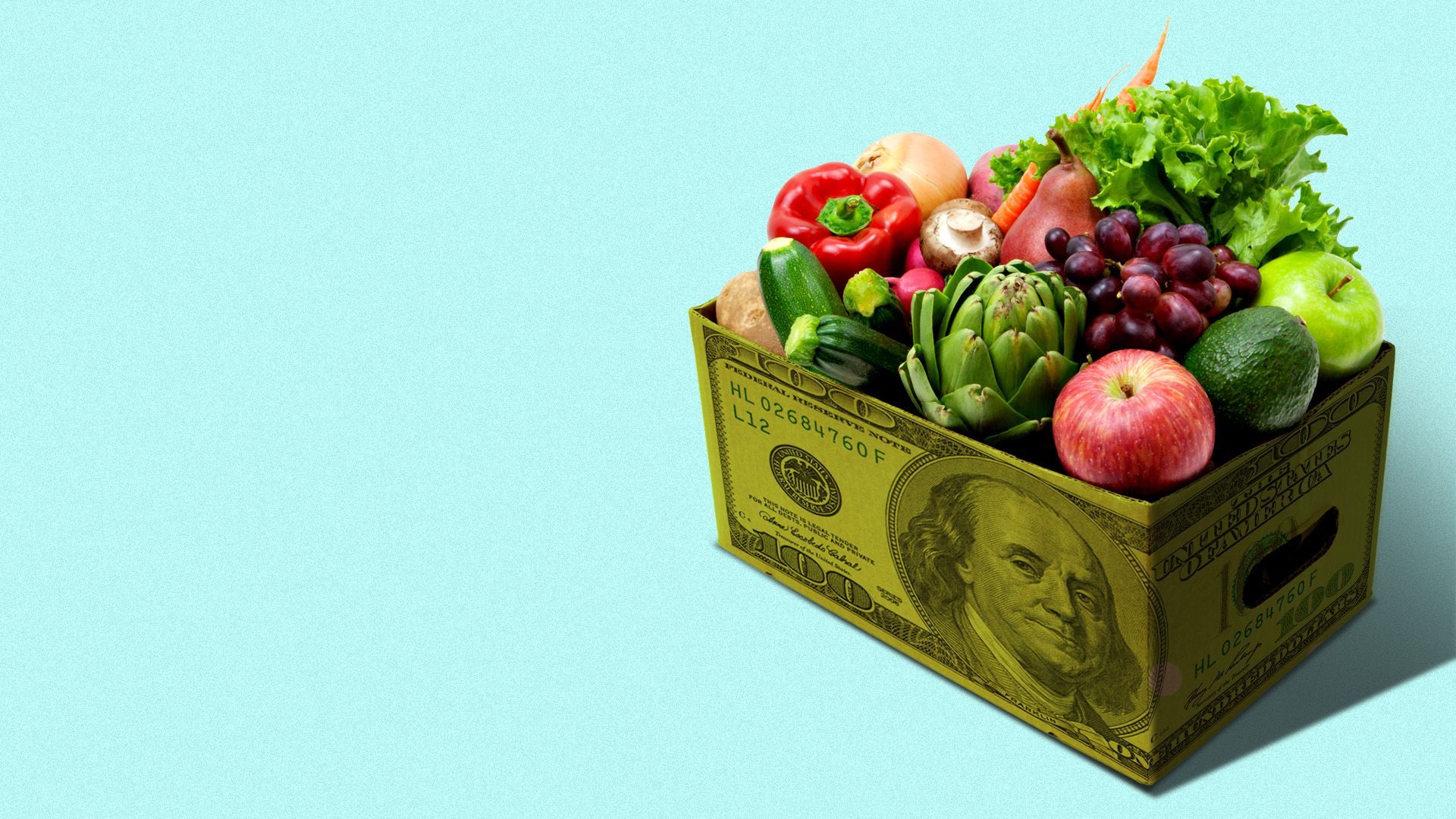
Illustration: Sarah Grillo/Axios
Texas food banks are asking state lawmakers to approve a budget with federal benefits to ensure low-income students still have access to food over the summer break.
Why it matters: 1 in 6 Texas households is food insecure, and an estimated 3.75 million Texas students are eligible for a U.S. Department of Agriculture program that would give them money to buy food during the summer.
- The eligible students would typically get free lunches during the school year.
The big picture: Texas was among 13 states that did not accept the federal money last year, the program's first year.
- A Texas Health and Human Services Commission (HHSC) spokesperson told the Texas Tribune last year that there wasn't enough time to set up the program.
- State officials have already missed a Jan. 1 deadline but still have a chance to opt in by March 1 to take part this summer.
Driving the news: Feeding Texas and the North Texas Food Bank are lobbying state lawmakers to direct the HHSC to accept the federal money.
- Feeding Texas has posted a letter online that Texans can send to their state representative or senator.
Zoom in: About 680,000 North Texas children are eligible to receive the summer food money, equaling more than $100 million in federal funds funneled back to the region.
- More than 342,000 Dallas County children are eligible — the most of any county in North Texas.
- Nearly 236,000 low-income children in Tarrant County qualify.
Threat level: Demand at North Texas food banks has remained high, even among middle-class families, as grocery prices have skyrocketed in recent years.
- "We're seeing more people looking for food assistance than we ever had" — even during the pandemic, North Texas Food Bank spokesperson Jeff Smith tells Axios.
How it works: Texas could receive $450 million in federal funding for the summer program, which would give $120 EBT cards to every qualifying student.
- "That's federal tax dollars coming back to Texas," says Clarissa Clarke, the food bank's government relations officer.
- It would cost about $110 million to implement the program in Texas, of which the state would have to pay half.
- The benefits work like Supplemental Nutrition Assistance Program (SNAP) benefits.
Between the lines: Qualifying low-income families would spend the funds at grocery stores, reducing stress on food banks.
Yes, but: HHSC is already backlogged processing regular food benefits and Medicaid applications and renewals.
- The state office has added temporary staff to handle the issue, which food bank officials hope will be fixed in time to process the summer benefits.